From Prague down the Vltava to the Elbe, then north through Saxony, with a detour to Berlin, and on along the Elbe all the way to Hamburg. Along the way we found baroque palaces, a car factory with glass walls, steam trains, bears in a castle moat and a canal that crosses over a river. Below are some of the highlights.
Warming Up in Prague (Sunday, September 13, 2026)
A short warm-up ride around Prague to make sure the tandem had survived the journey and we remembered how to ride it. All good - time to head north.
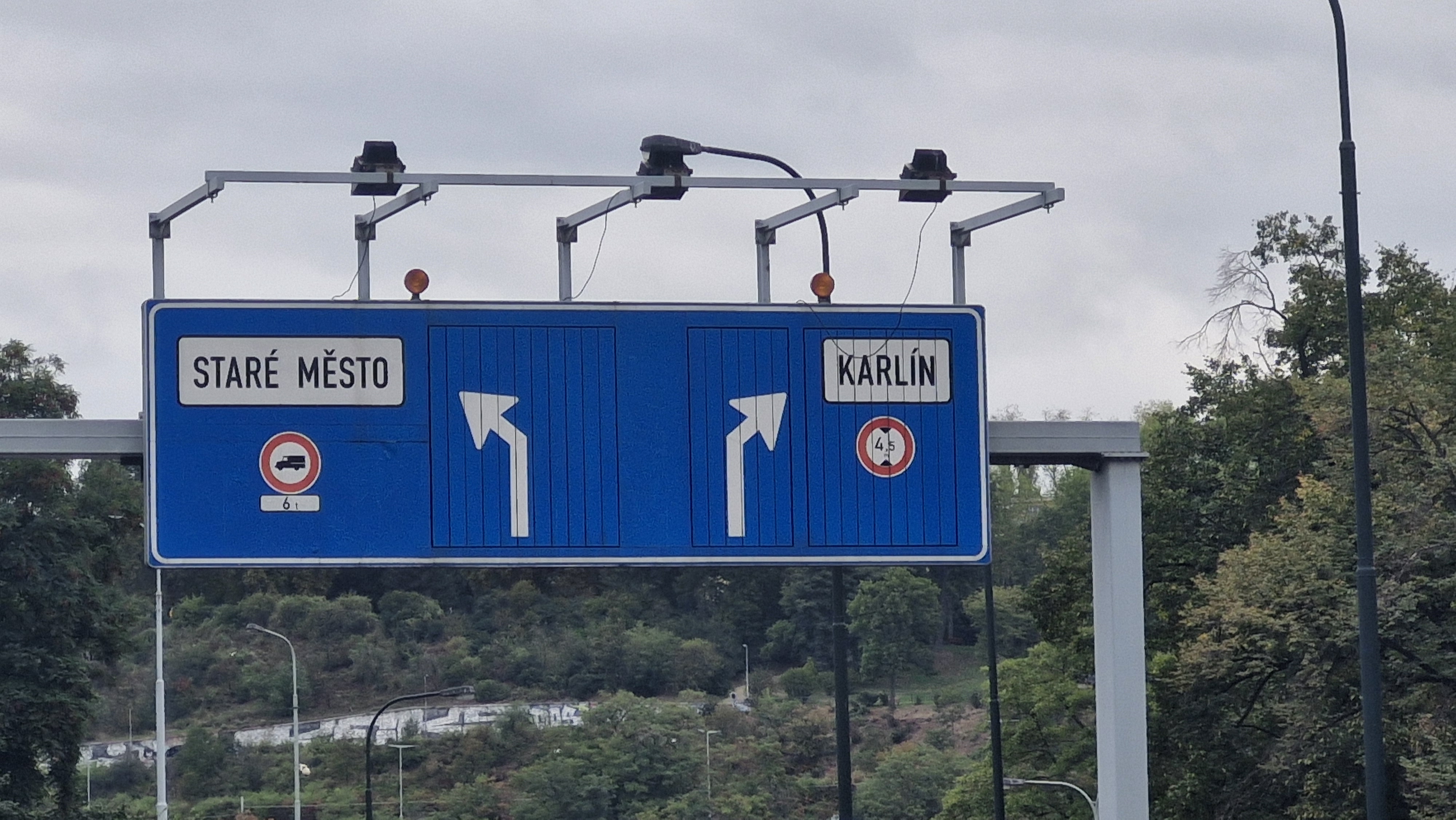
Finding our way around Prague on the warm-up ride - left for the Old Town (Staré Město), right for Karlín.
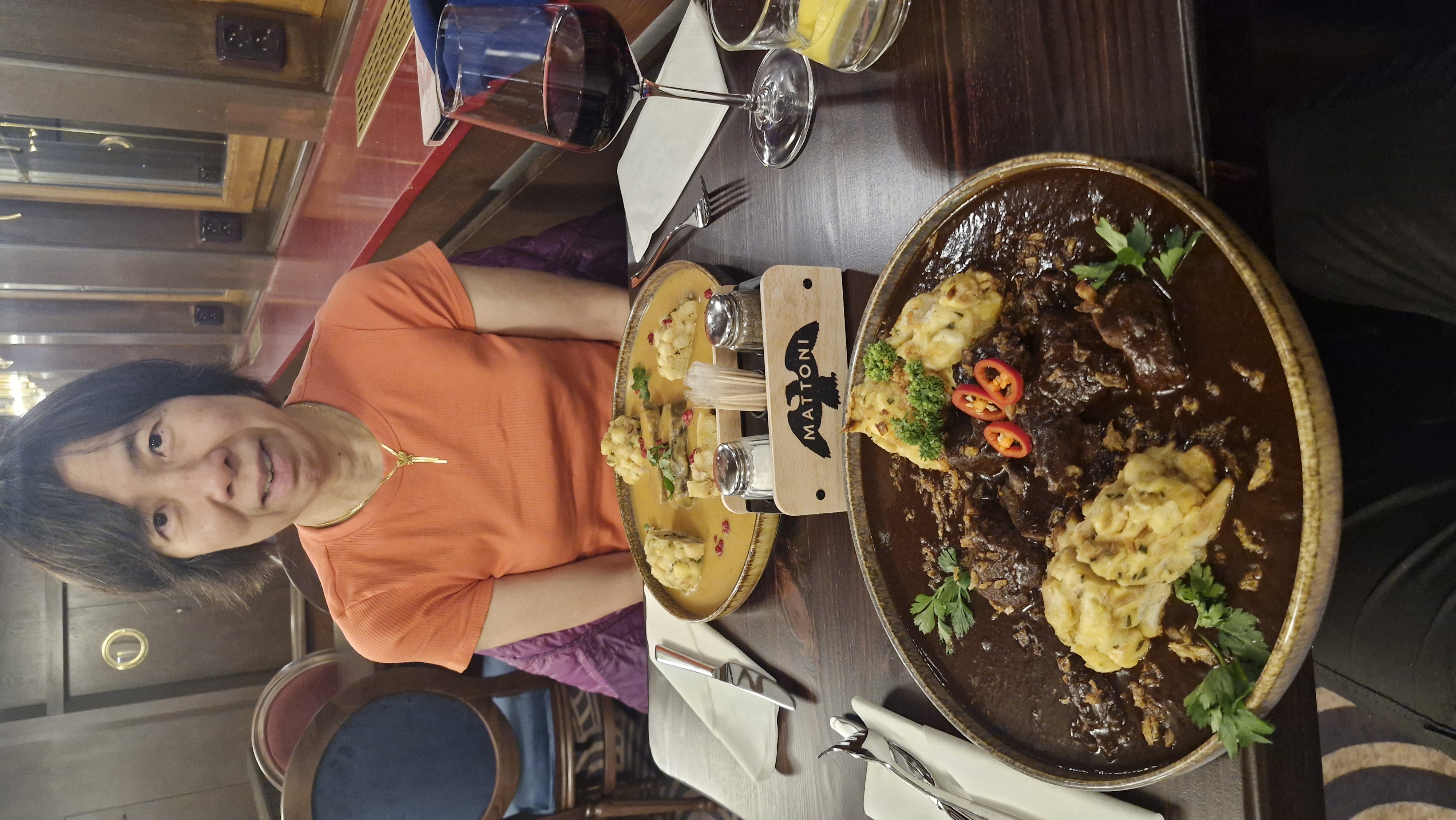
Choy tucks into a rich Czech beef dish aboard the Albatros, a restaurant boat moored on the Vltava embankment.
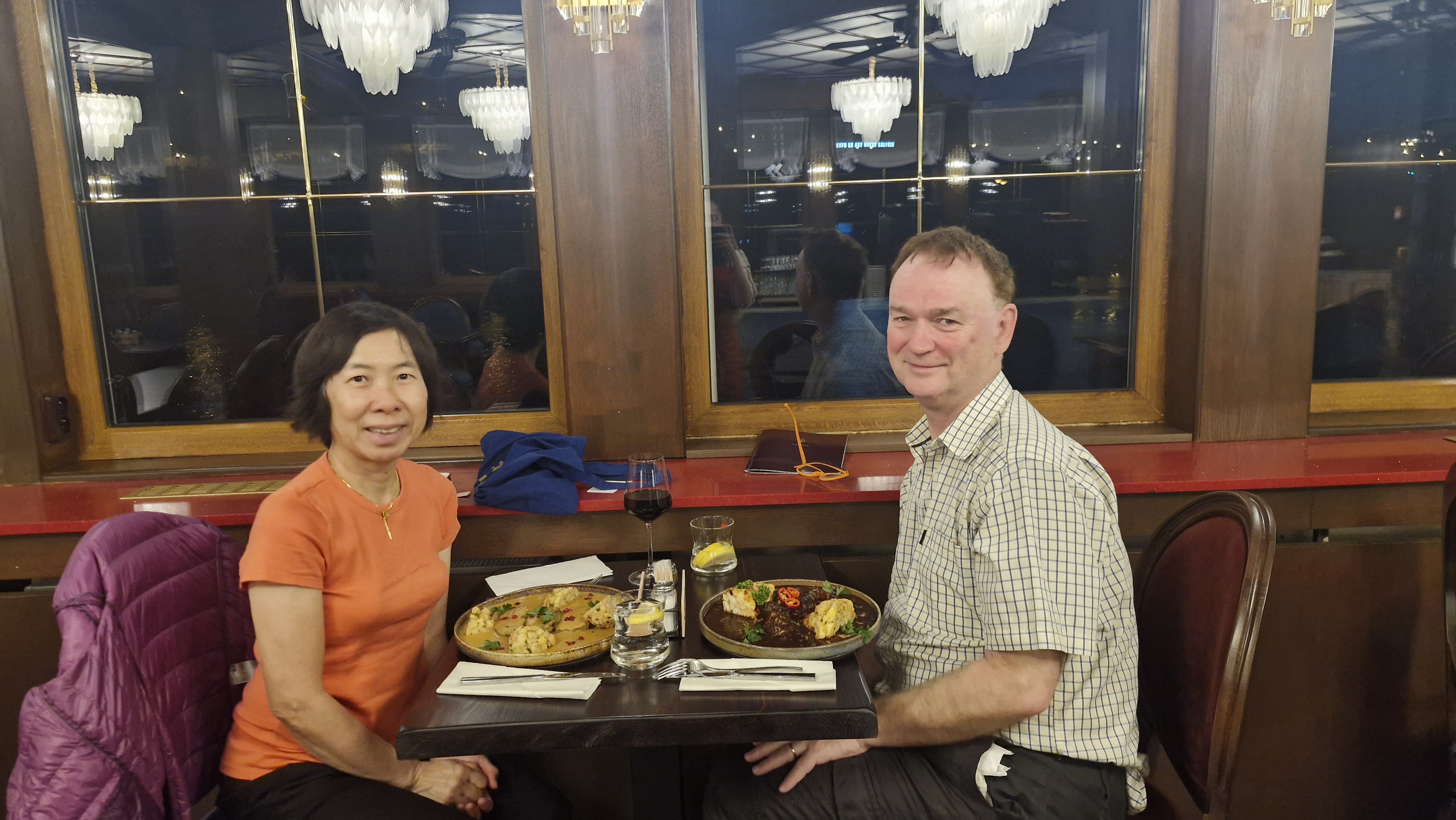
Both of us at dinner on the Albatros on our first evening - a good feed before the start of the ride proper.
Dvořák's Birthplace (Tuesday, September 15, 2026)
Heading north from Prague along the Vltava, our first stop of note was the small village of Nelahozeves, where one of the Czech Republic's most famous sons was born.
We finished the day in Mělník, a hilltop town where the Vltava flows into the Elbe. Its château sits on the ridge looking straight down onto the confluence, surrounded by vineyards - a fine first night on the road and the point where we picked up the Elbe that we would follow for the rest of the trip.
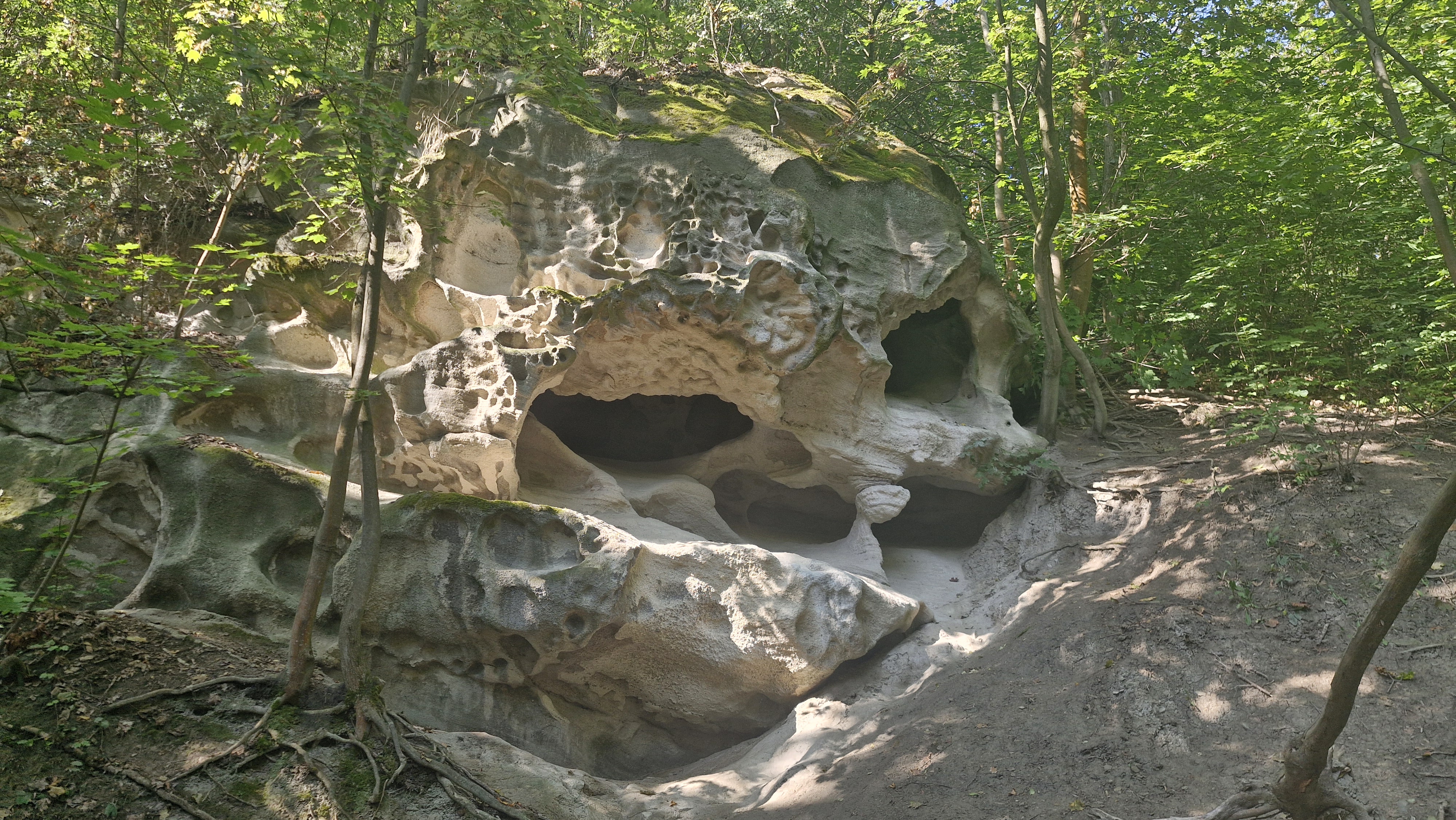
Wind-carved sandstone caves along the Dvořák trail (Dvořákova stezka) near Kralupy nad Vltavou, on the way to the composer's birthplace.
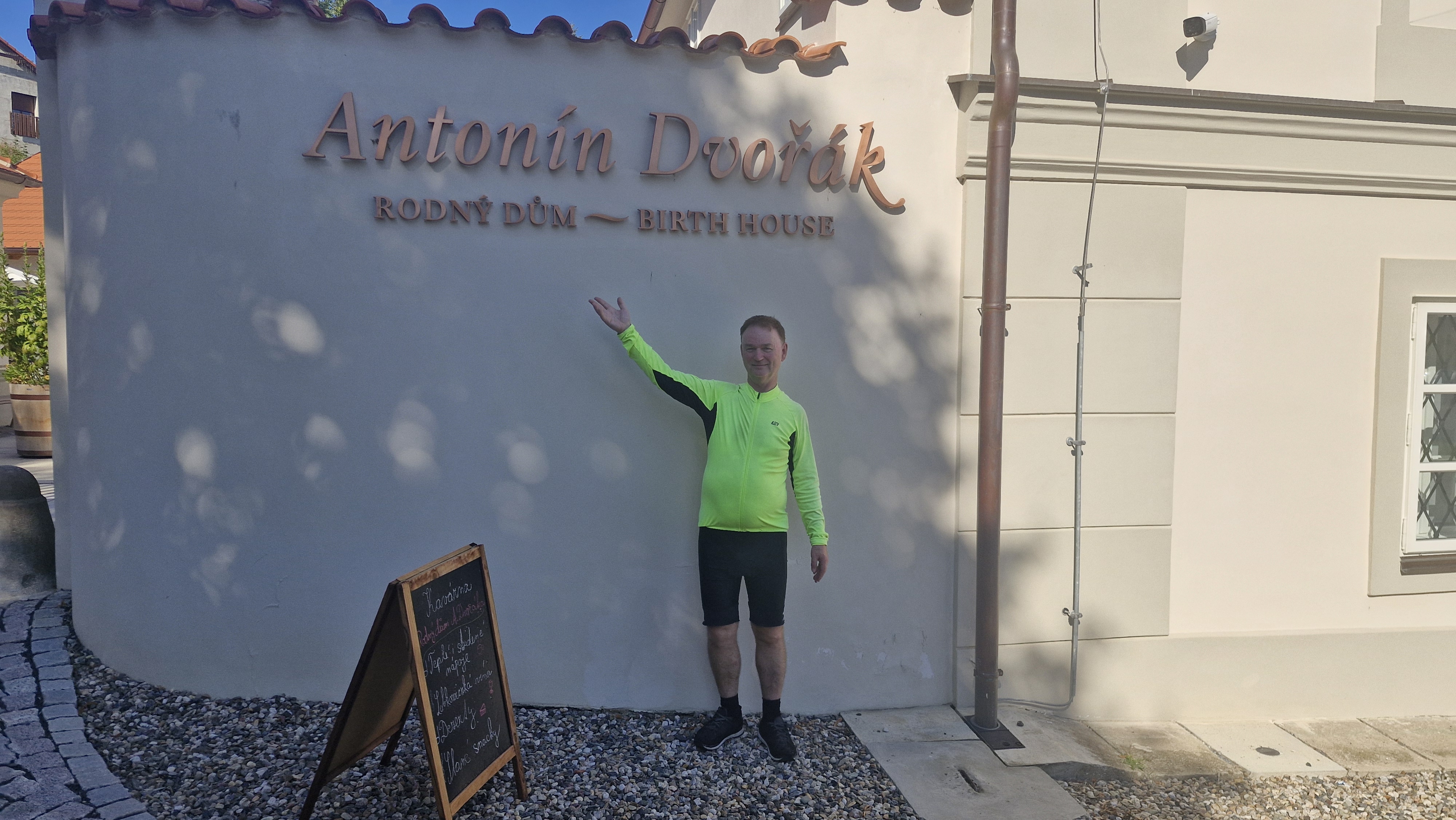
Paul introduces us to the birth house of composer Antonín Dvořák in Nelahozeves - the man behind the New World Symphony was born right here in 1841, the son of the local innkeeper and butcher.
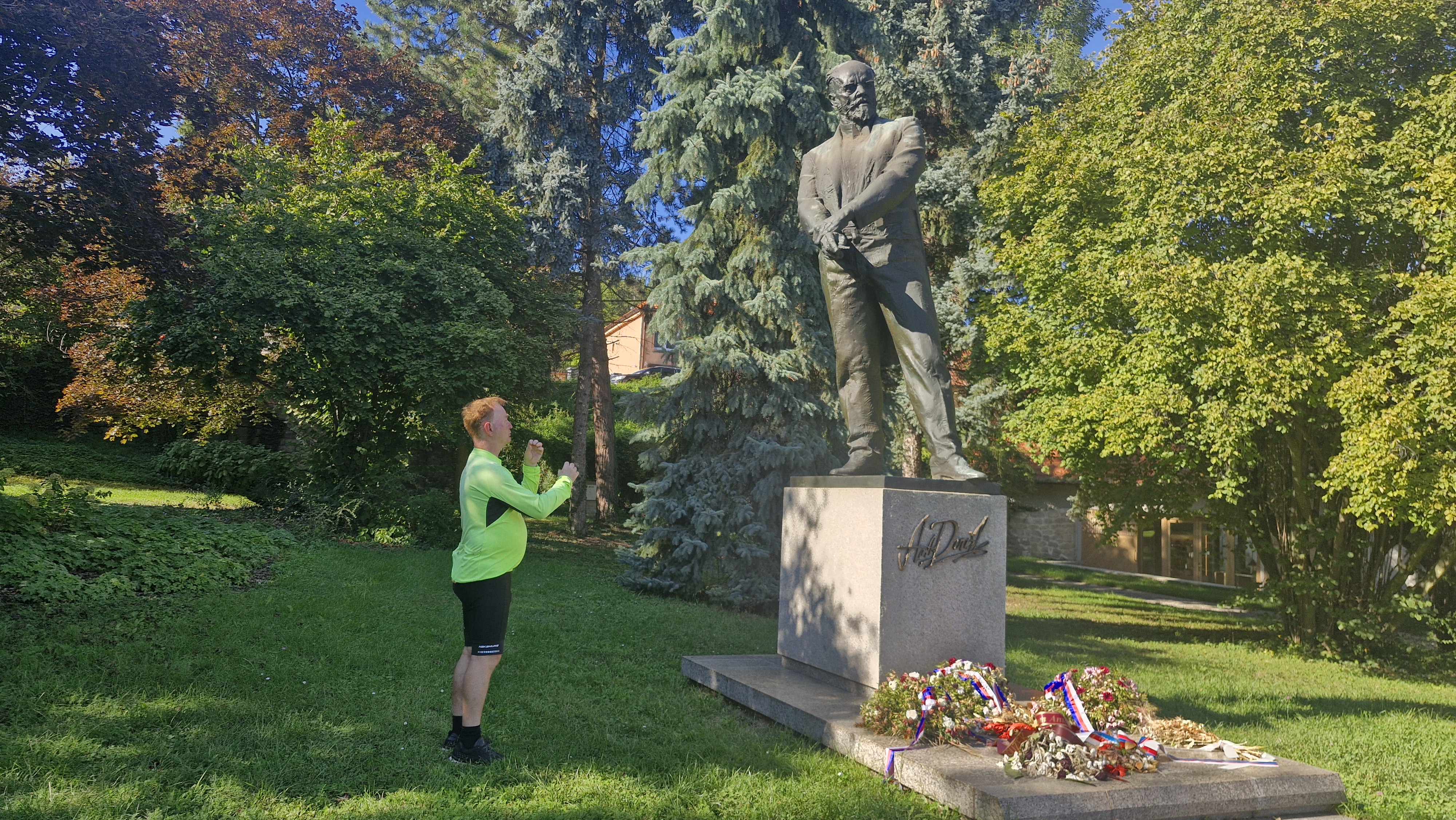
Paul photographs the statue of Antonín Dvořák in the garden at Nelahozeves, with fresh flowers laid at its base.
Mělník to Ústí nad Labem (Wednesday, September 16, 2026)
A long day downstream brought us to Ústí nad Labem, an industrial city where the Elbe cuts through the volcanic hills of the České středohoří. Strekov Castle, perched on a cliff right above the river, makes for a dramatic welcome.
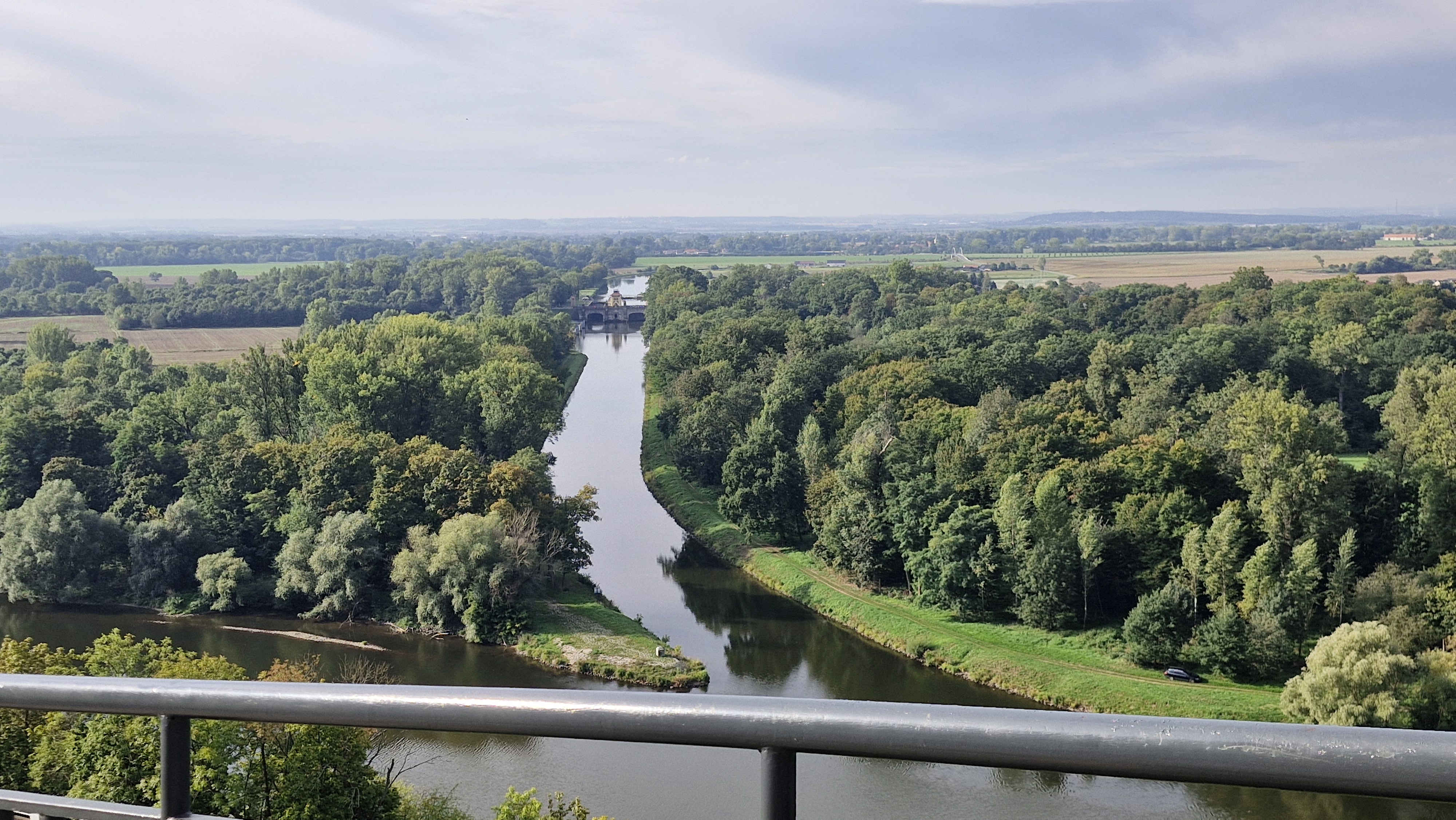
The view from Mělník château, looking down on the Vltava (left) flowing into the Elbe, with the navigation canal and its lock stretching away in the distance.
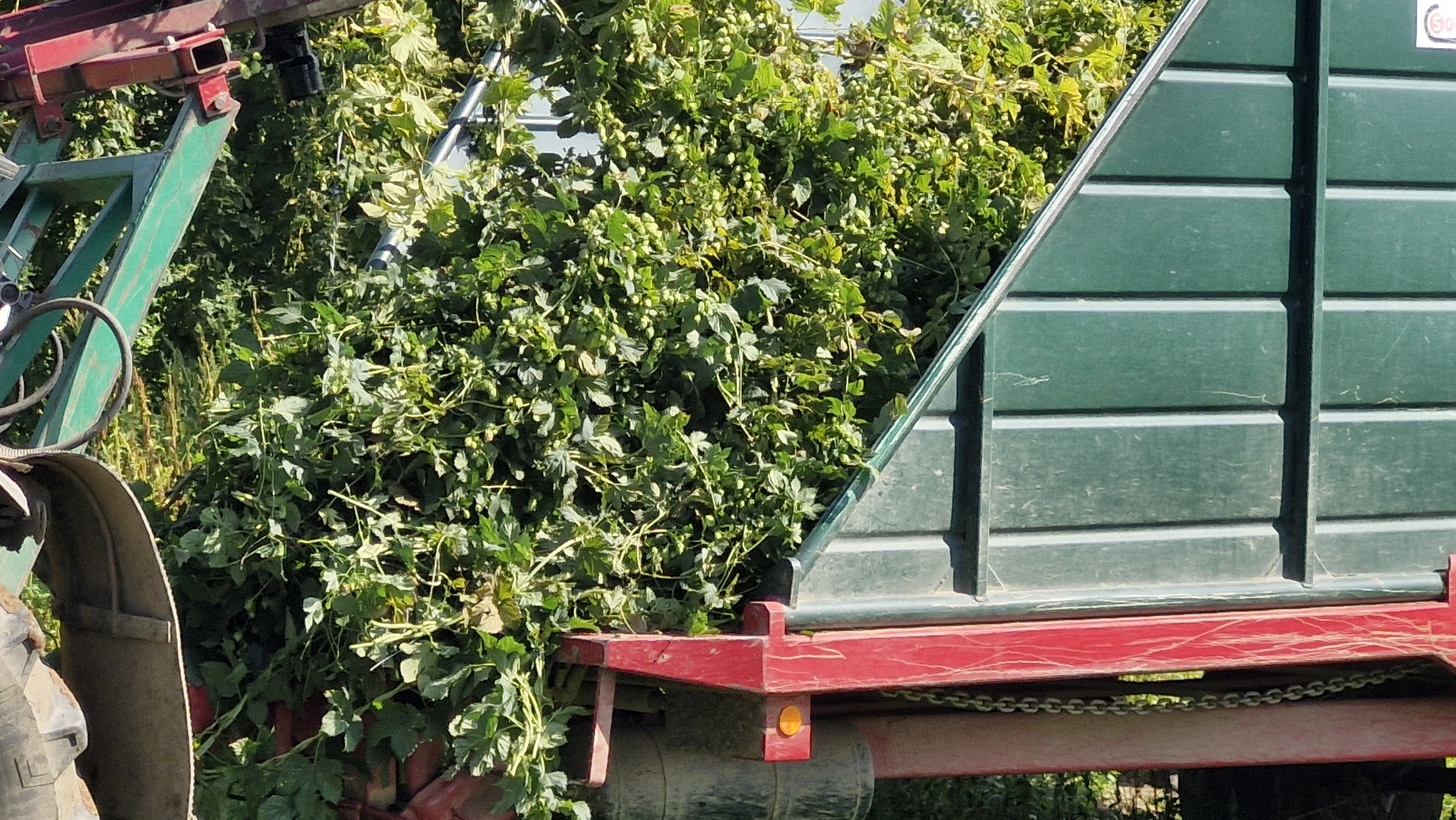
A trailer piled high with freshly cut hop bines near Libotenice - this part of northern Bohemia is hop-growing country, supplying the famous Czech beers.
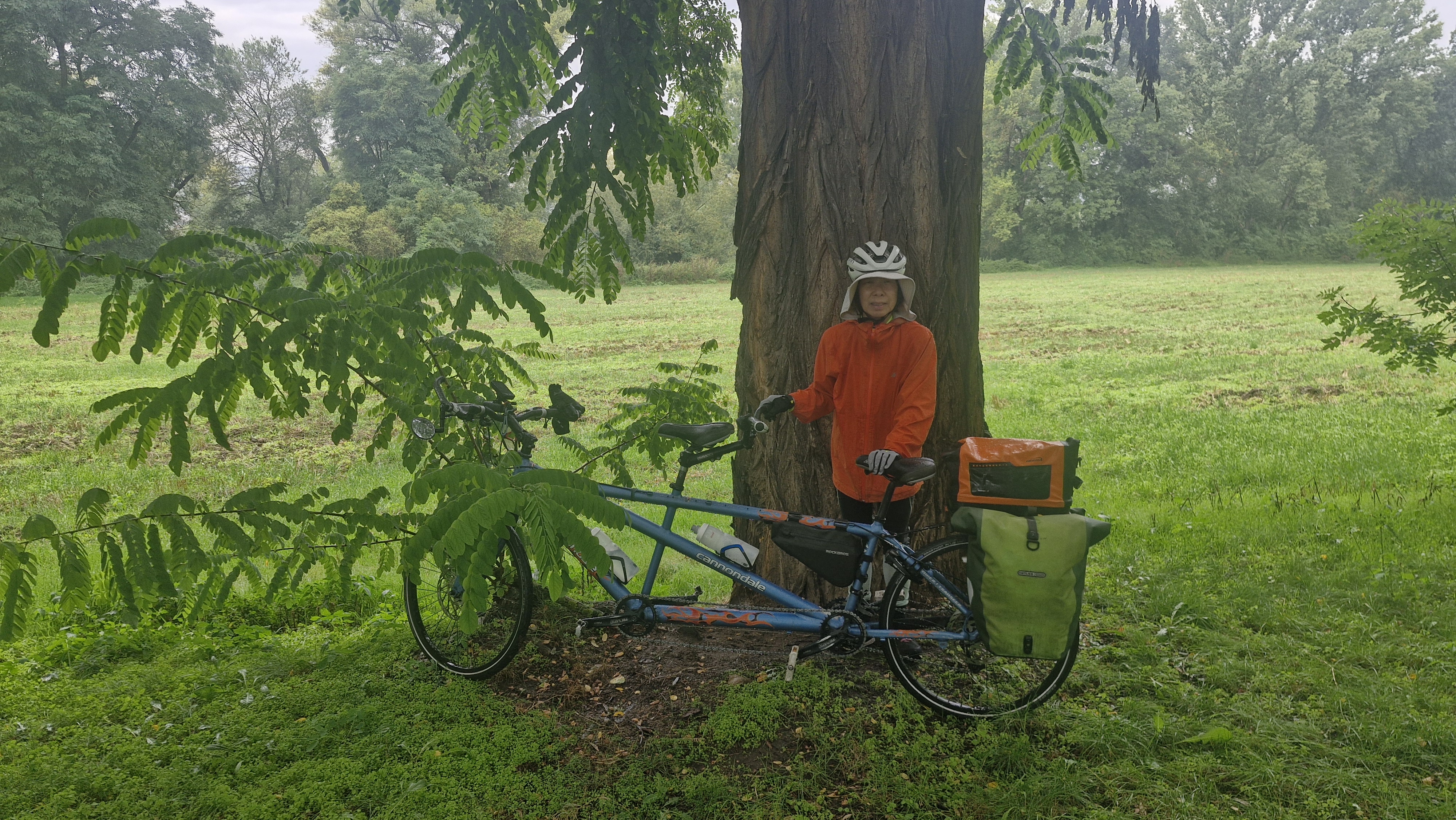
Choy and the tandem take a break under a big old tree near Velké Žernoseky as the grey drizzle set in.
Through the Elbe Gorge (Thursday, September 17, 2026)
By now we had joined the Labe - the Czech name for the Elbe - the river we would follow for much of the trip, all the way to Hamburg. North of Ústí nad Labem the valley narrows into steep, wooded hills.
Our last night in Czechia was in Hřensko, a tiny village squeezed into a sandstone gorge right on the German border. At around 115 m it's the lowest point in the Czech Republic, and it's the gateway to the rock towers and arches of Bohemian Switzerland National Park.
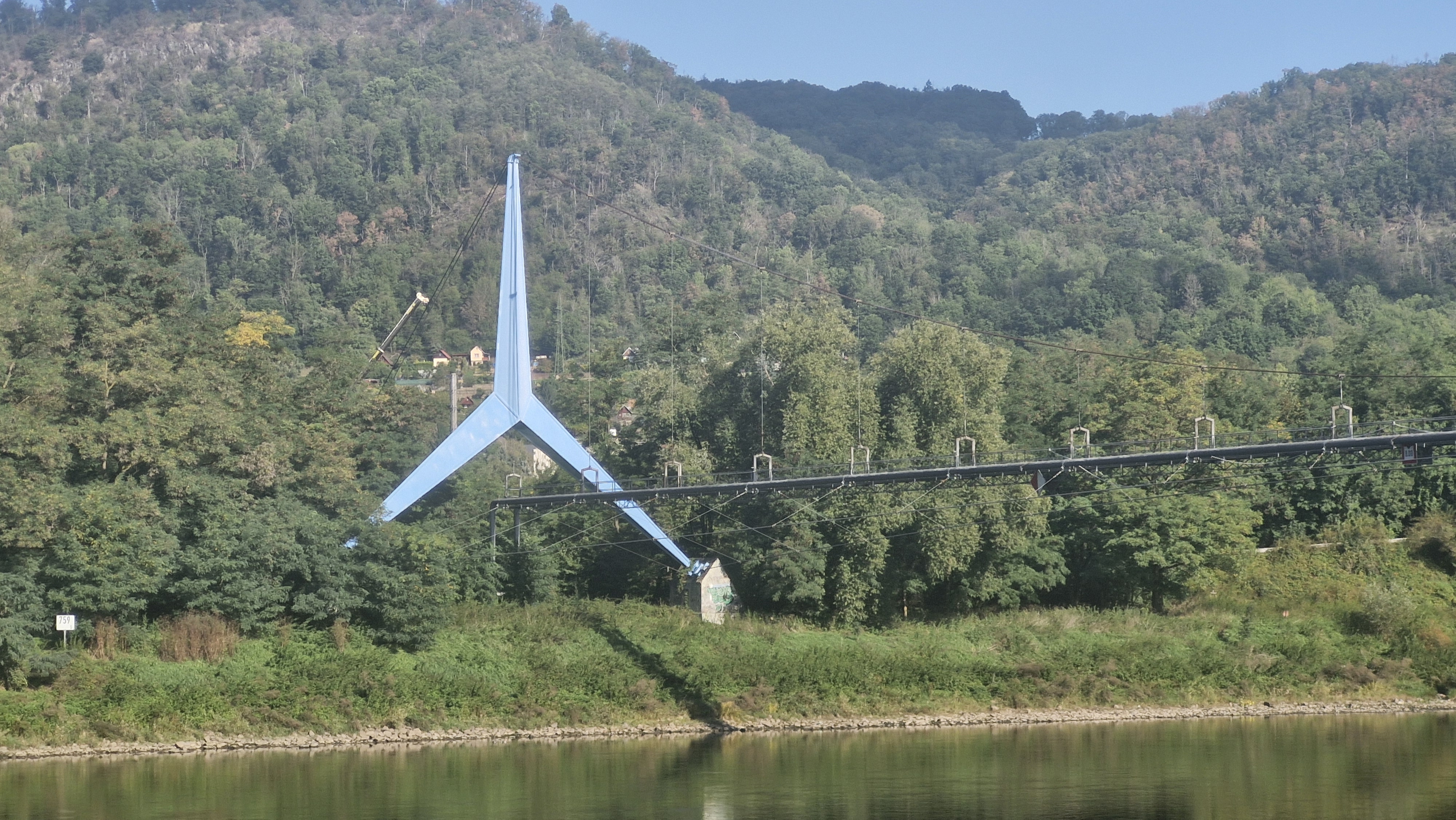
This striking blue A-shaped pylon, rising out of the trees on the far bank near Velké Březno, was impossible to miss as we rolled along the river path.
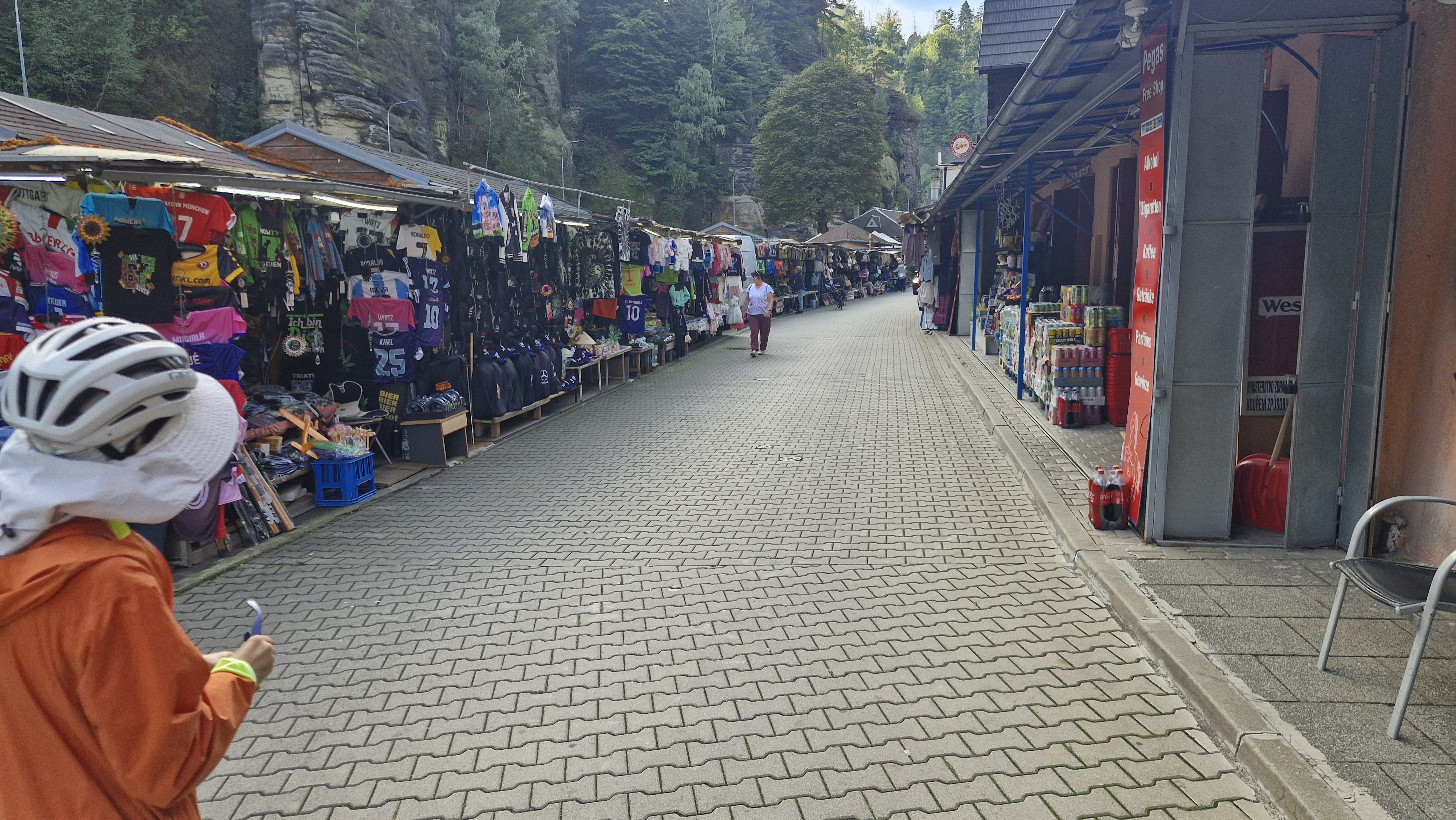
Hřensko's main street, lined with market stalls selling everything from football shirts to cheap cigarettes to day-trippers from Germany, all squeezed beneath the sandstone cliffs.
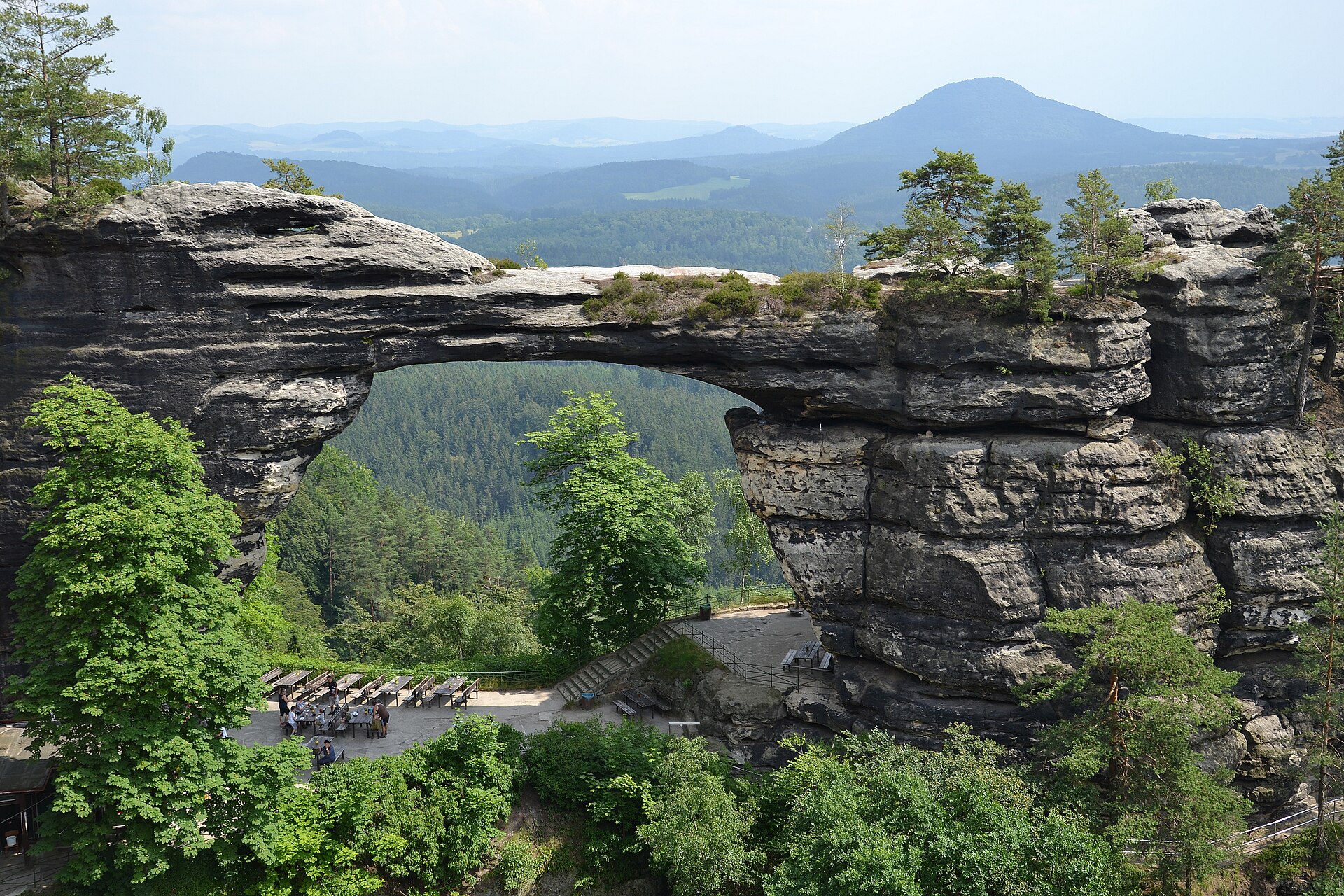
A short hike from Hřensko is Pravčická brána, the largest natural sandstone arch in Europe and the symbol of Bohemian Switzerland National Park.
Photo: Pudelek, Wikimedia Commons, CC BY-SA 4.0
Dresden (Friday & Saturday, September 18-19, 2026)
Across the border and into Saxony, we reached Dresden - rebuilt from the ruins of 1945 into one of Germany's most beautiful baroque cities. We gave the legs a rest the next day and explored the city on foot - from 18th century palaces to a 21st century car factory.
Across the border we rode through Saxon Switzerland, with sandstone cliffs and table mountains towering above the river, before the valley opened out and the spires and domes of Dresden came into view.
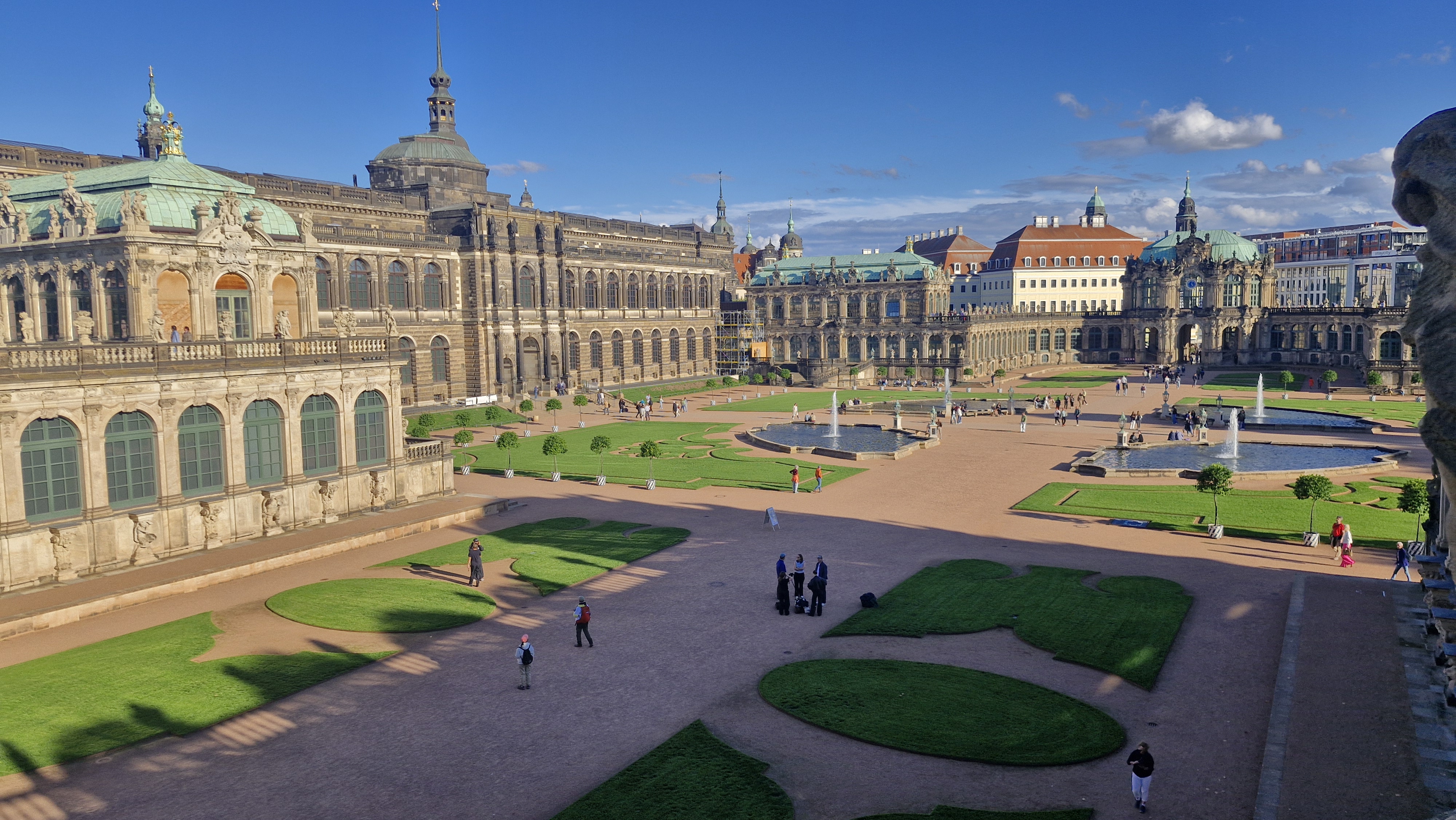
Looking out over the Zwinger's courtyard, fountains and pavilions from the gallery walkway, with the late afternoon sun lighting up the baroque stonework.
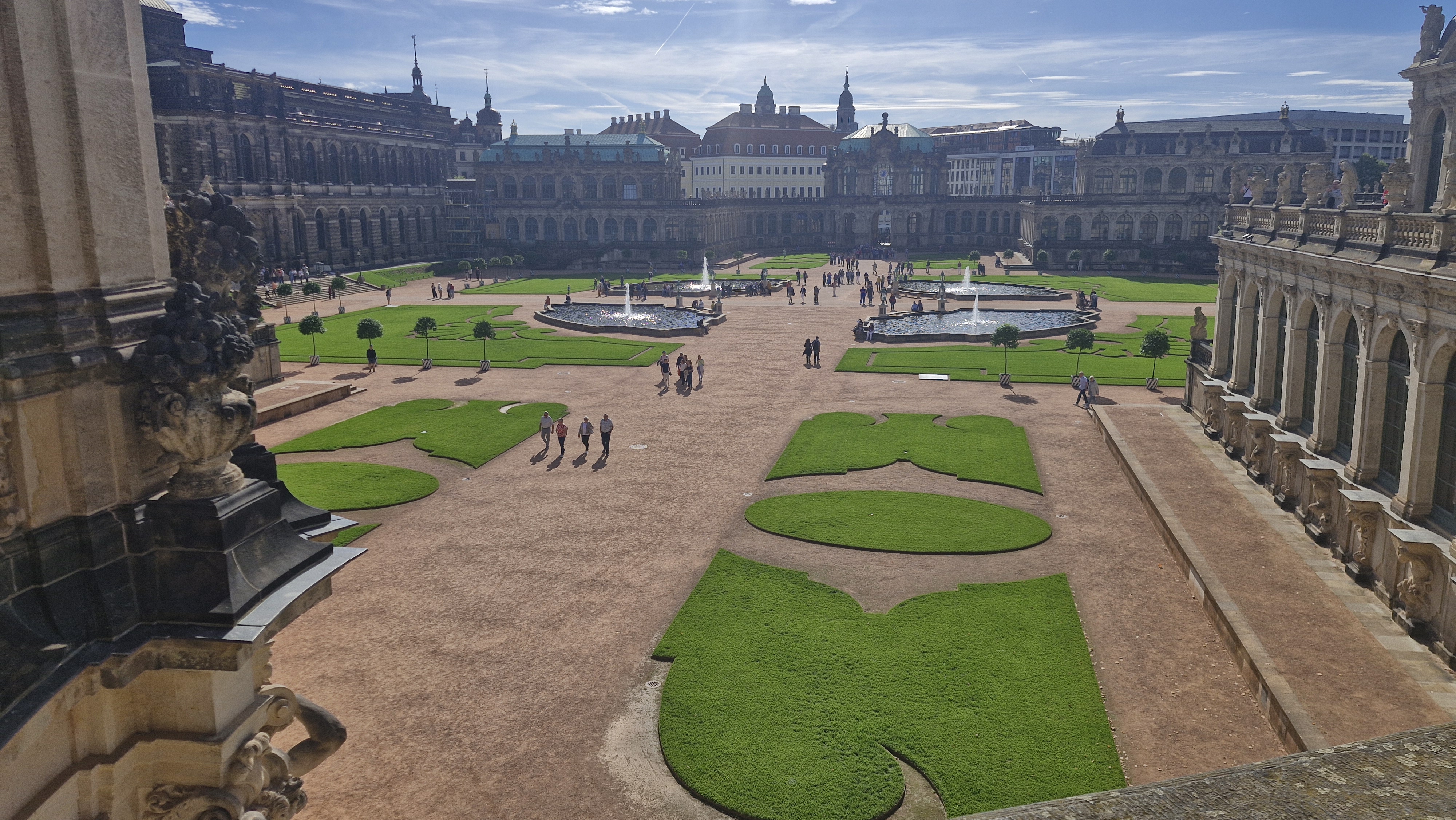
Back for a second look in the morning - the view across the formal lawns and fountains towards the Crown Gate side of the complex.
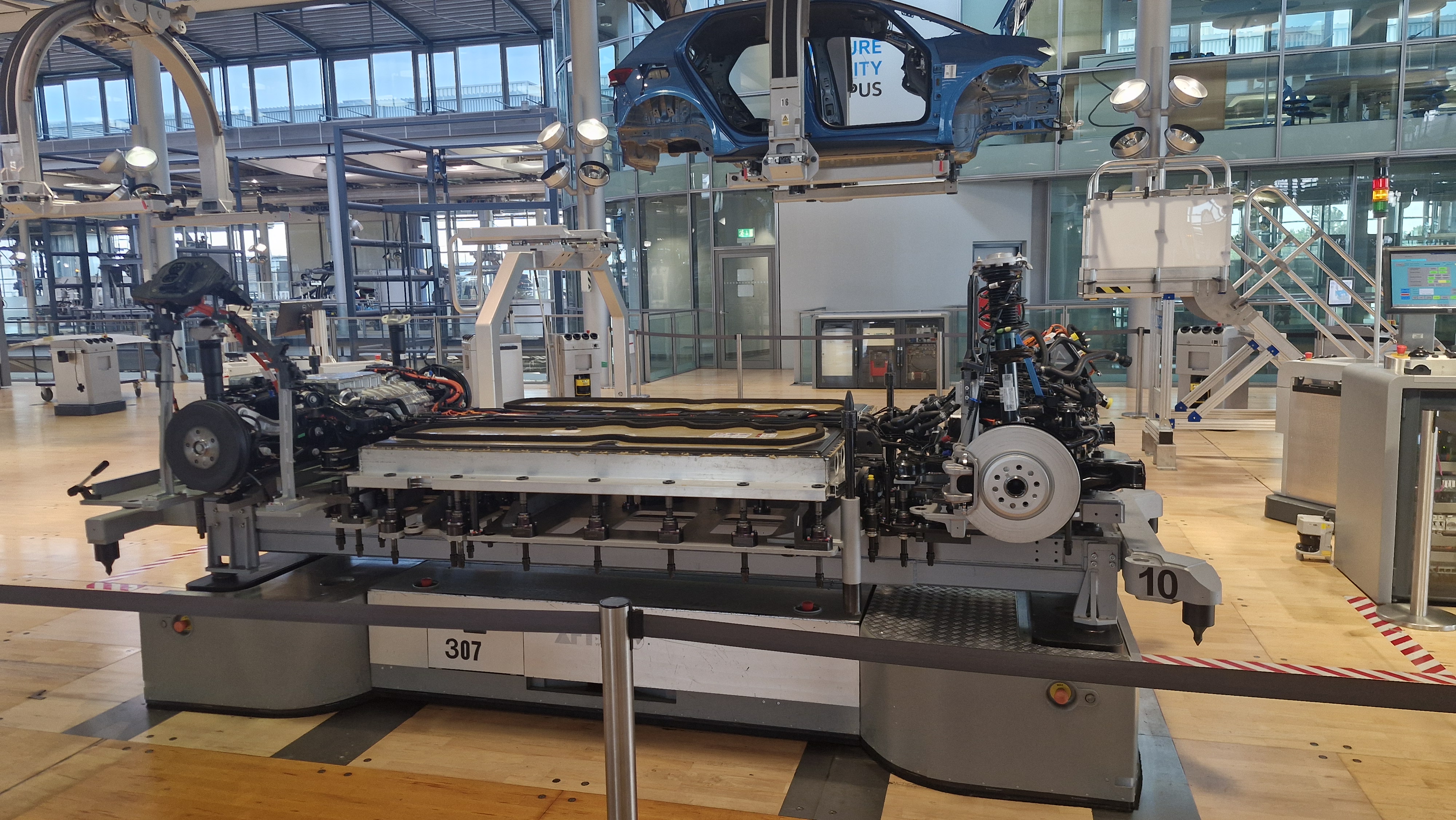
On our guided tour of Volkswagen's Gläserne Manufaktur (Transparent Factory), where the electric ID.3 is assembled behind glass walls on parquet floors. Here the battery pack and drivetrain wait on the line for the car body hanging above to be lowered onto them.
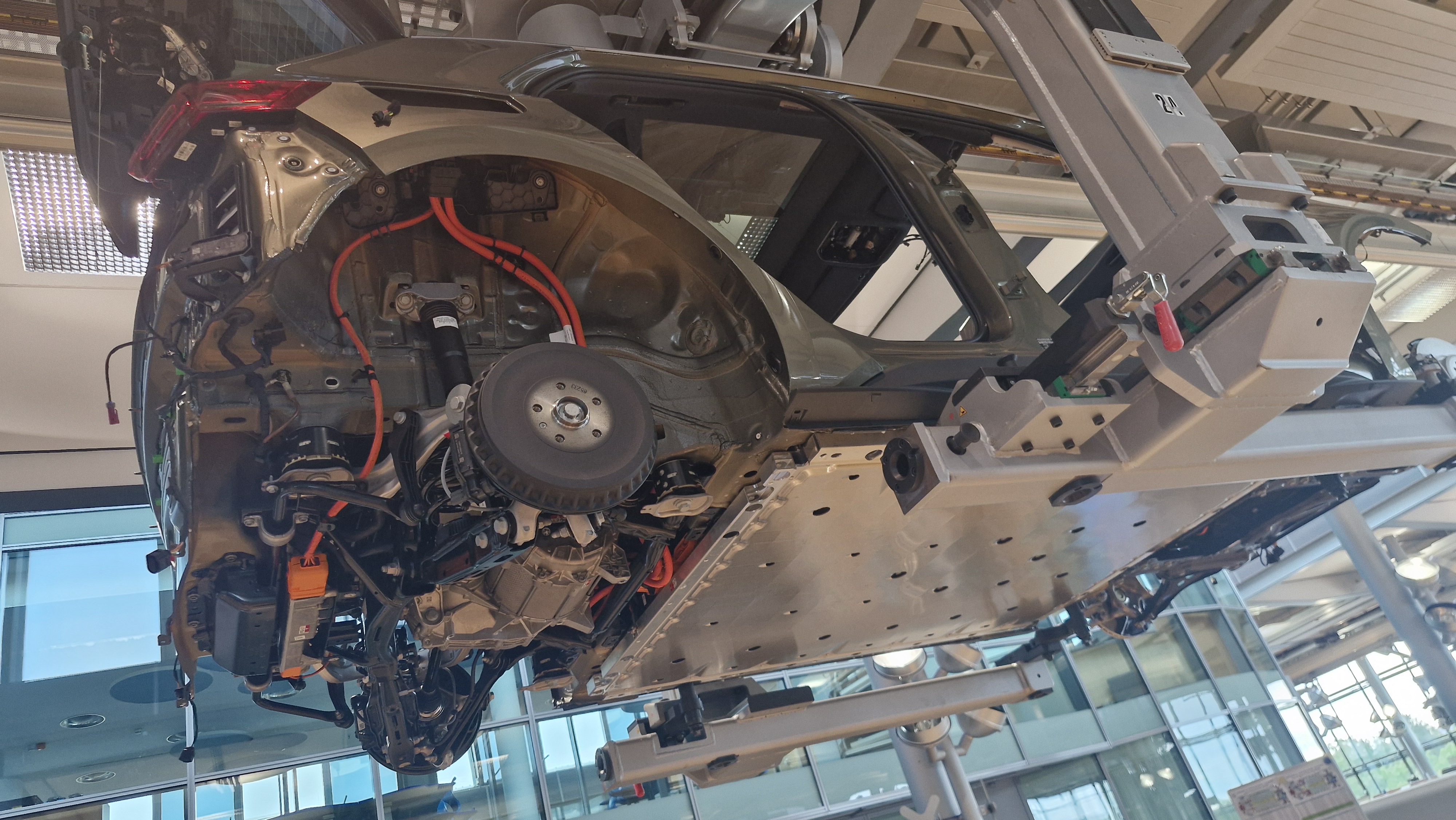
The tour gets you right up close to the ID.3 final assembly - this is the view from underneath a car body on the overhead line, with the orange high-voltage cabling and rear motor all on display.
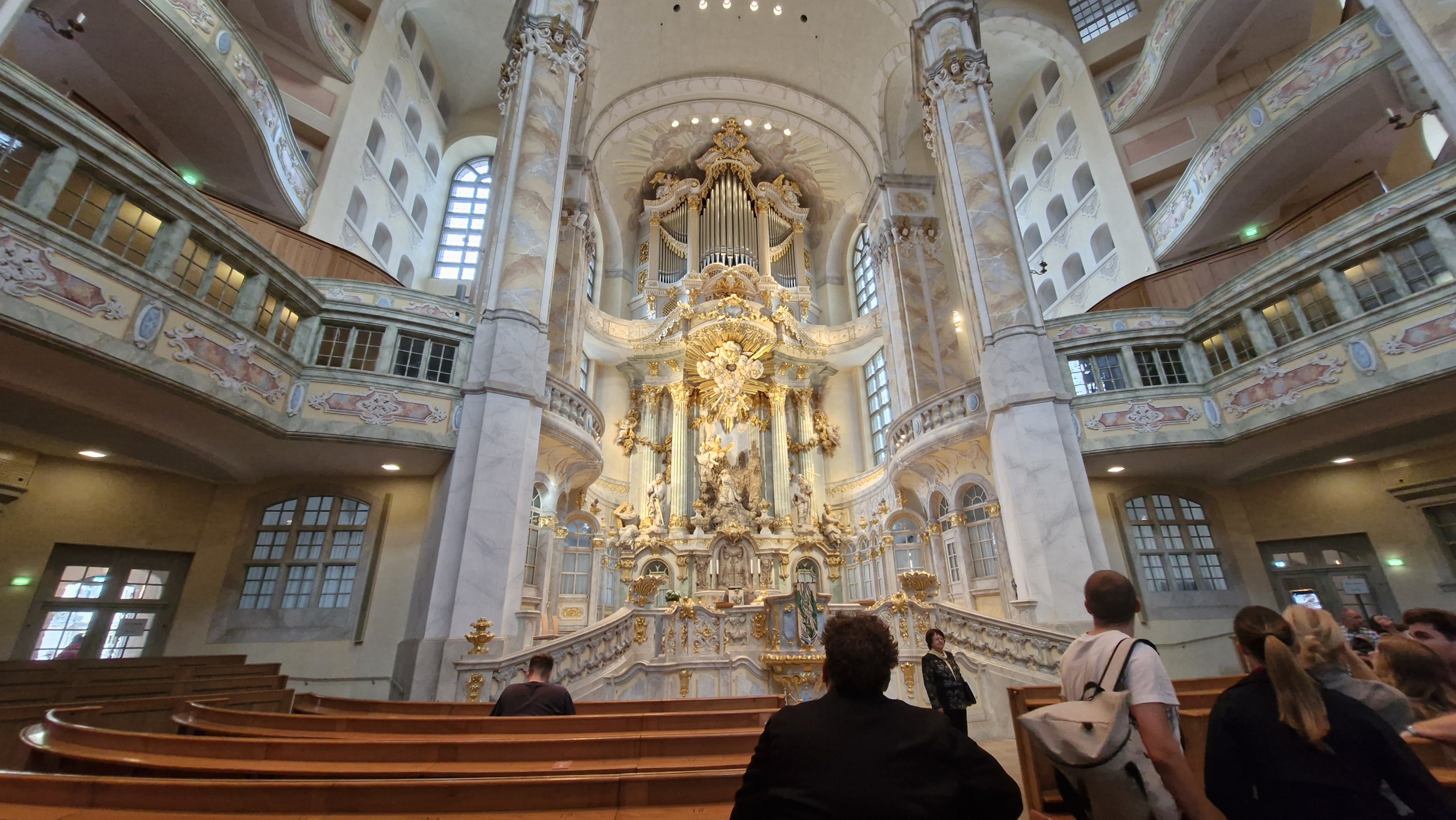
The interior of the Frauenkirche, destroyed in the 1945 bombing and painstakingly rebuilt, reopening in 2005. The pastel galleries and gilded altar and organ are breathtaking.
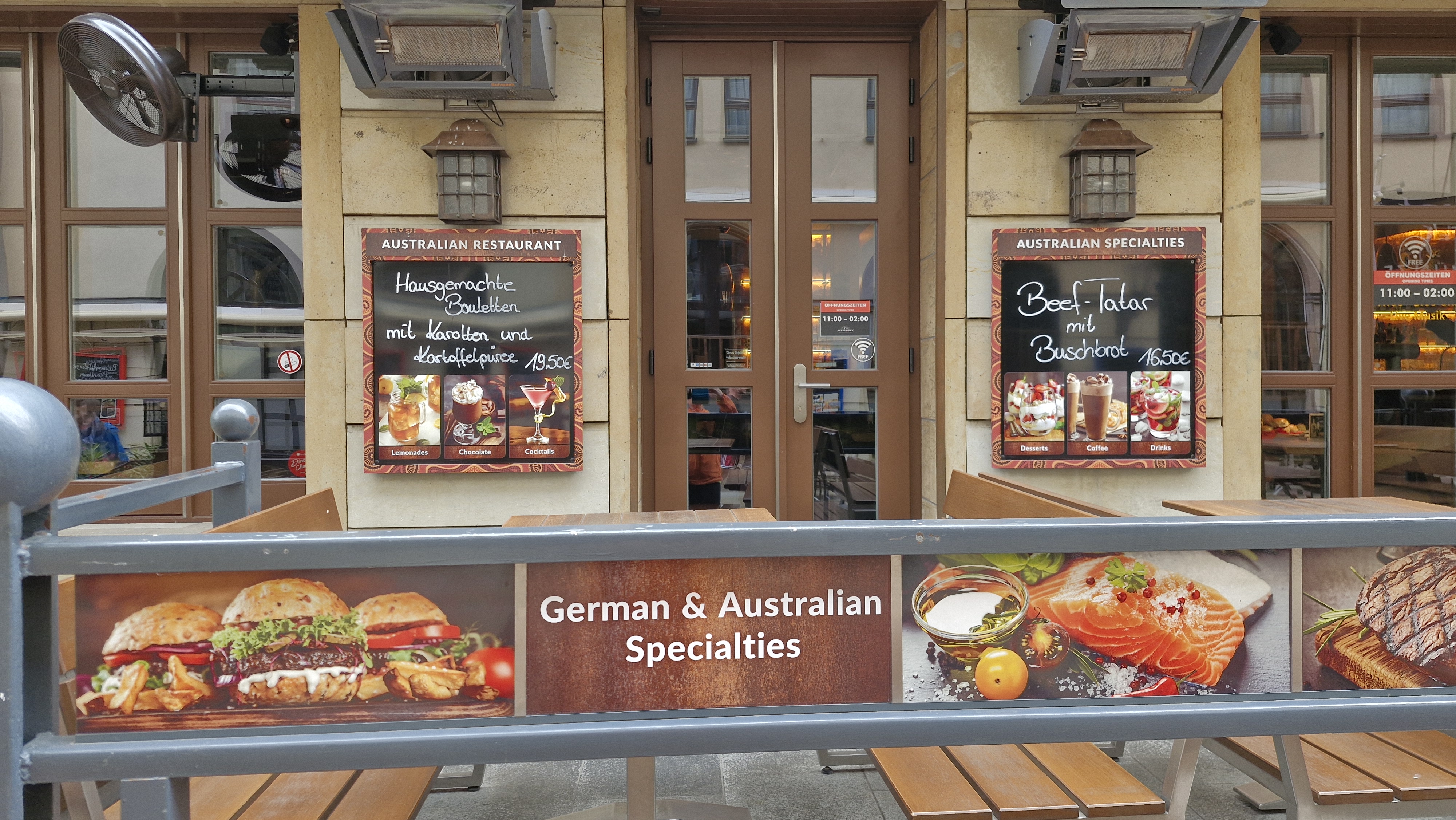
An Australian restaurant called 'Ayers Rock' in the middle of Dresden's old town - we had to stop for a photo.
Steam in Radebeul (Sunday, September 20, 2026)
Leaving Dresden down the Elbe, we stumbled onto a steam railway in Radebeul.
From Radebeul the Elbe path took us past the vineyards and through Meissen, home of Europe's first porcelain factory, before arriving in Riesa - a working river town best known in Germany for its pasta factory.
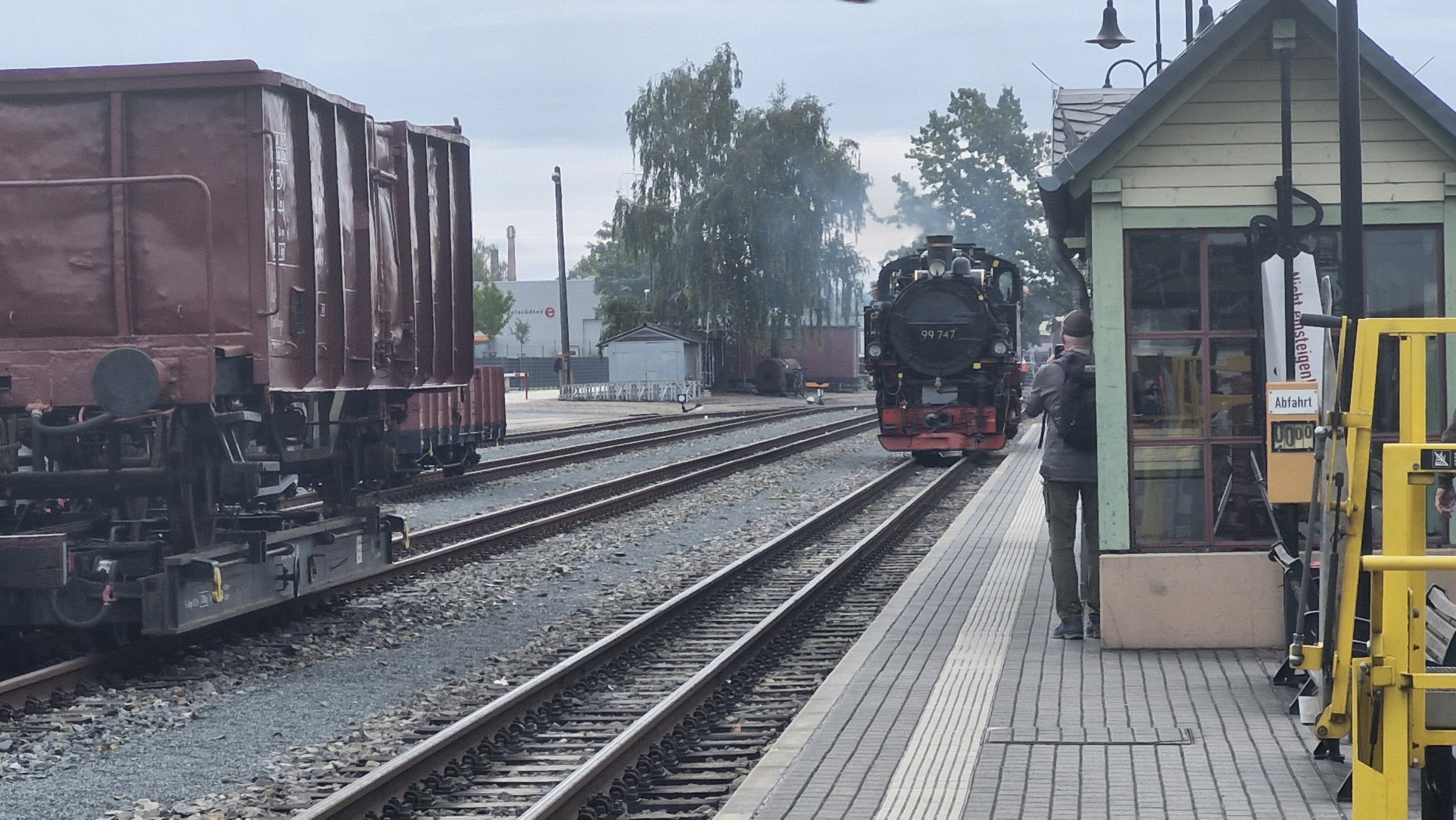
Locomotive 99 747 backing down onto its train at Radebeul Ost.
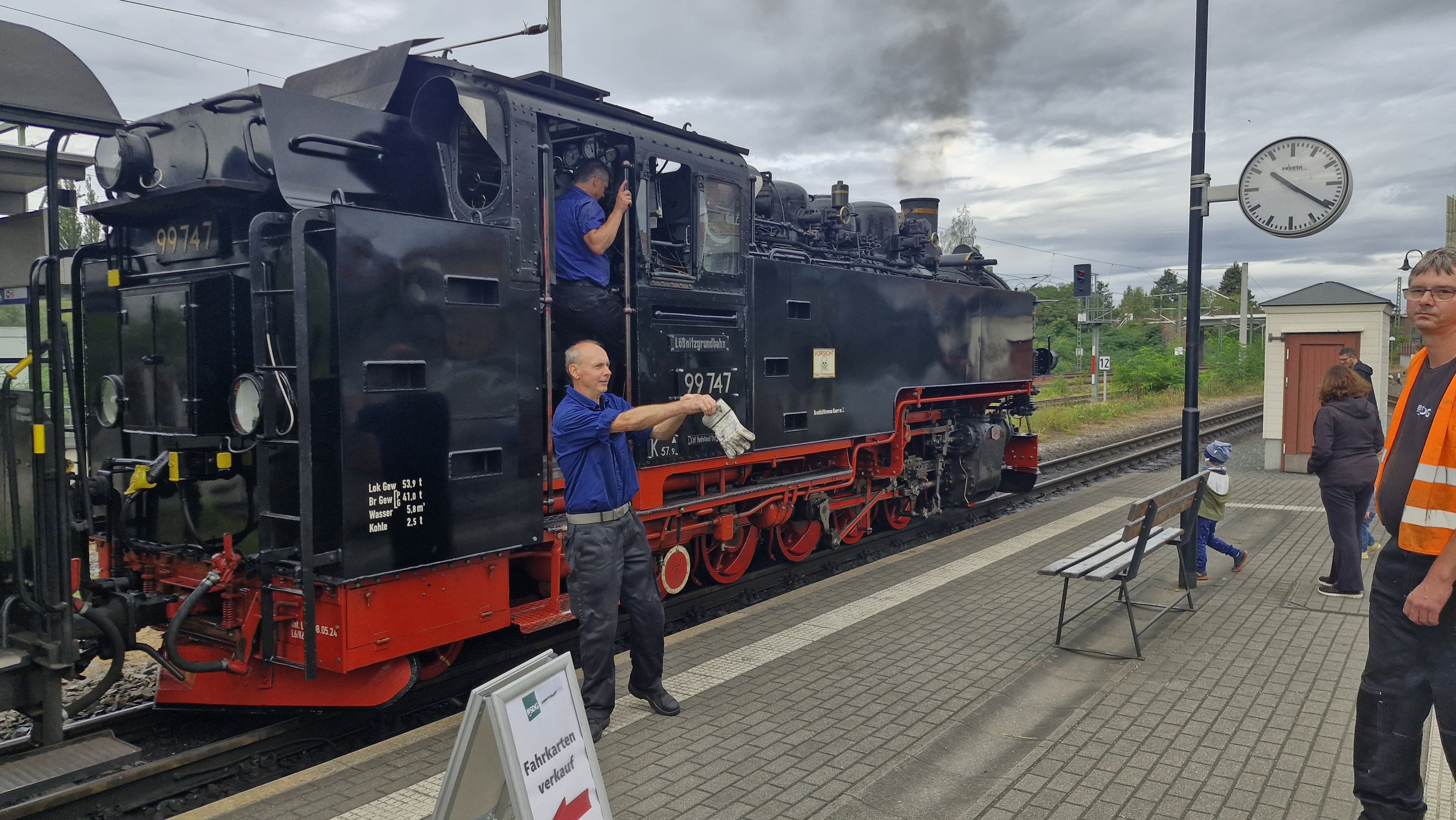
The narrow-gauge Lößnitzgrundbahn steam train getting ready to leave Radebeul Ost for Moritzburg, with the crew happy to give us a wave.
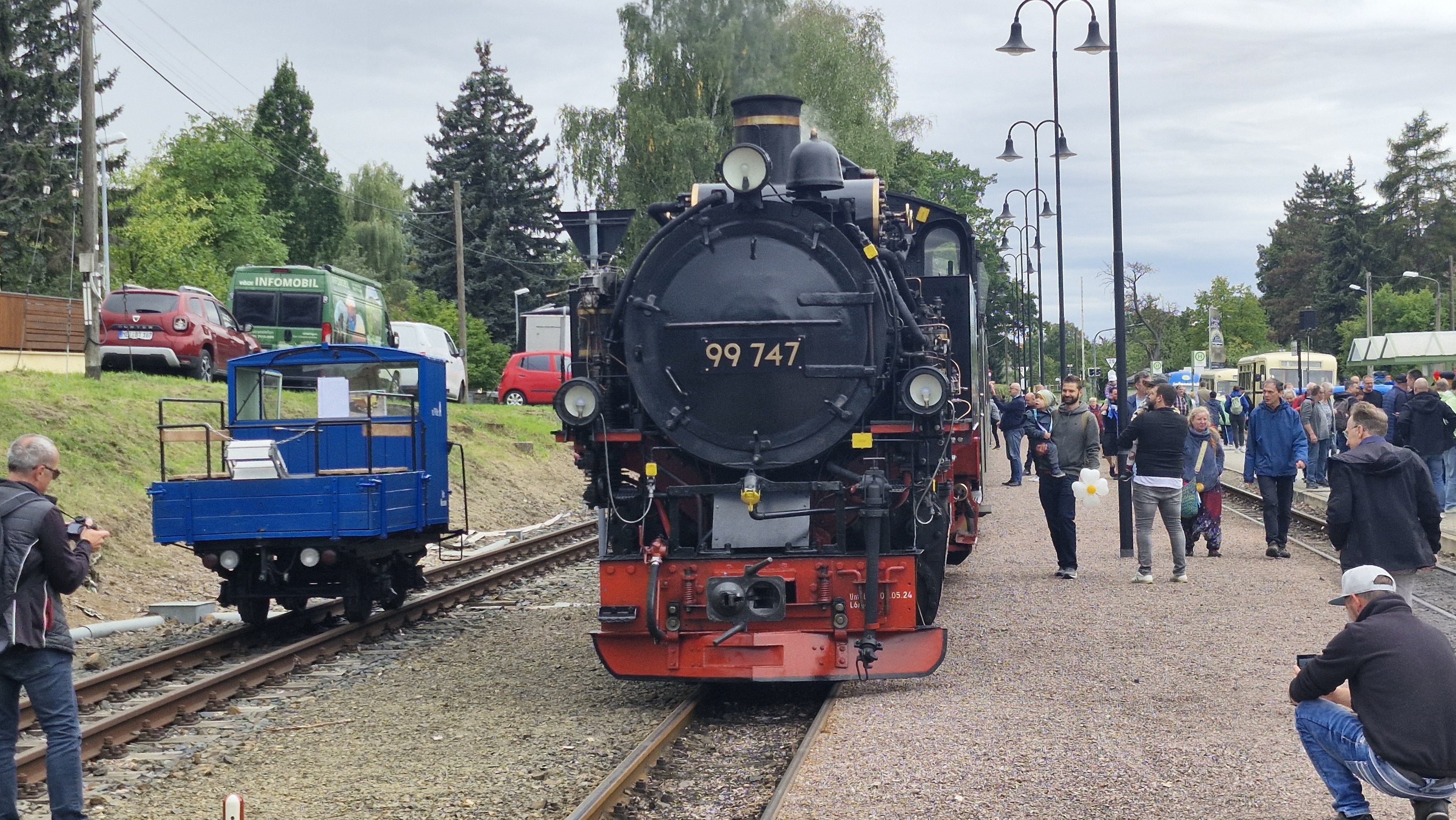
We rode the train up the Lößnitzgrund valley to Moritzburg, where 99 747 drew a crowd of photographers as it ran around its train.
Riesa to Torgau (Monday, September 21, 2026)
A gentle day along the river brought us to Repitz, just across the Elbe from Torgau, with the old town and Schloss Hartenfels lining the opposite bank.
A quirky art installation of yellow tubes and discs beside the Elbe path at Gröba, on the edge of Riesa.
Not what we expected to meet along the Elbe - an ostrich keeping a curious eye on us from a farm near Strehla.
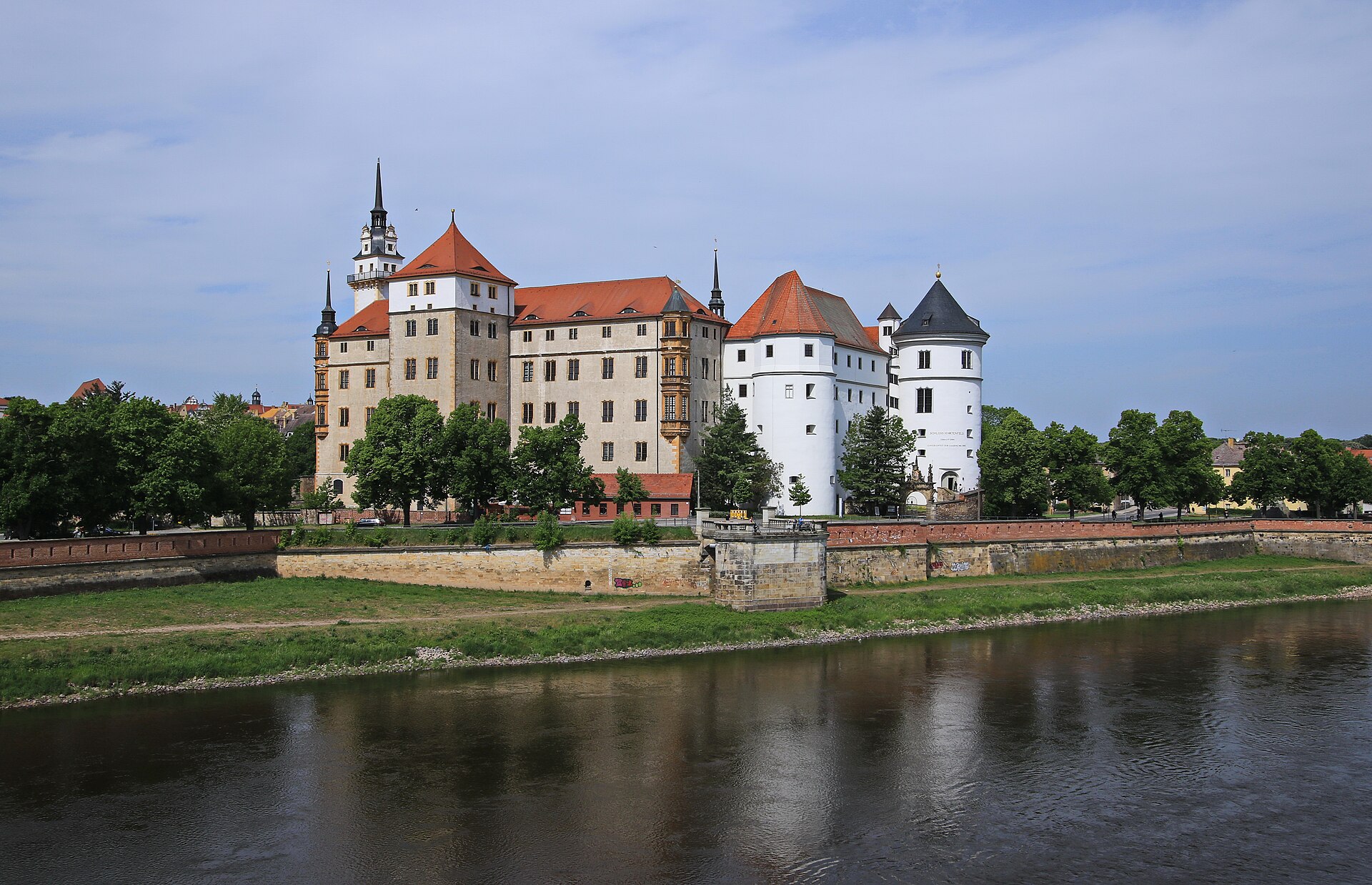
Torgau's Renaissance castle seen from the west bank of the Elbe - the view across the river from Repitz, where we stayed the night.
Photo: Kora27, Wikimedia Commons, CC BY-SA 4.0
The Bears of Torgau (Tuesday, September 22, 2026)
Torgau, on the Elbe, is where American and Soviet troops famously met in April 1945. Today the town's best-known residents live in the moat of Schloss Hartenfels.
After visiting the bears we rode on to Lutherstadt Wittenberg, where Martin Luther is said to have nailed his 95 Theses to the door of the Castle Church in 1517 and set off the Reformation. A good place to stop for a couple of days and take the train to Berlin.
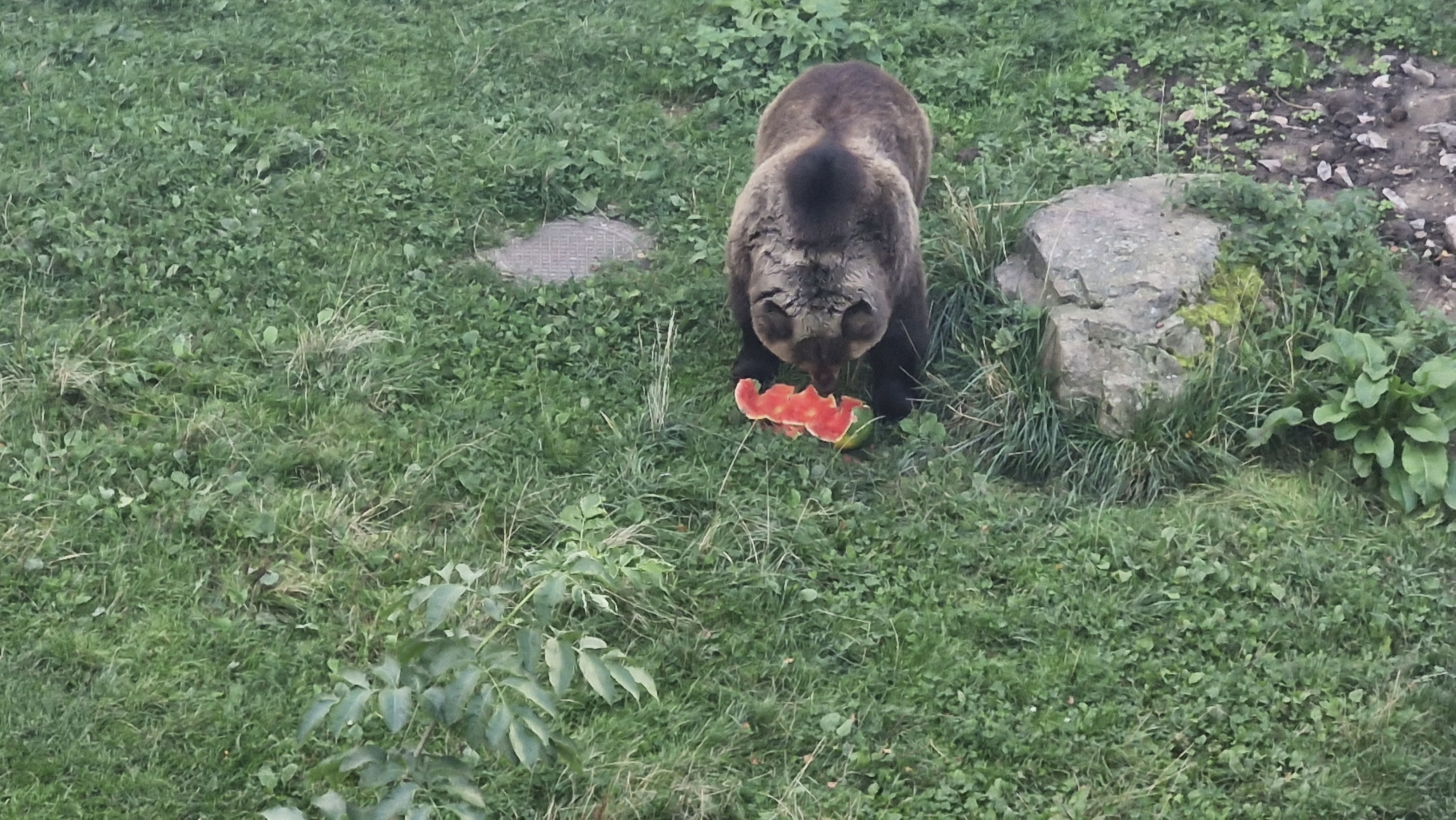
Brown bears have been kept in the moat of Torgau's castle on and off since the 15th century. This one was very much enjoying its watermelon.
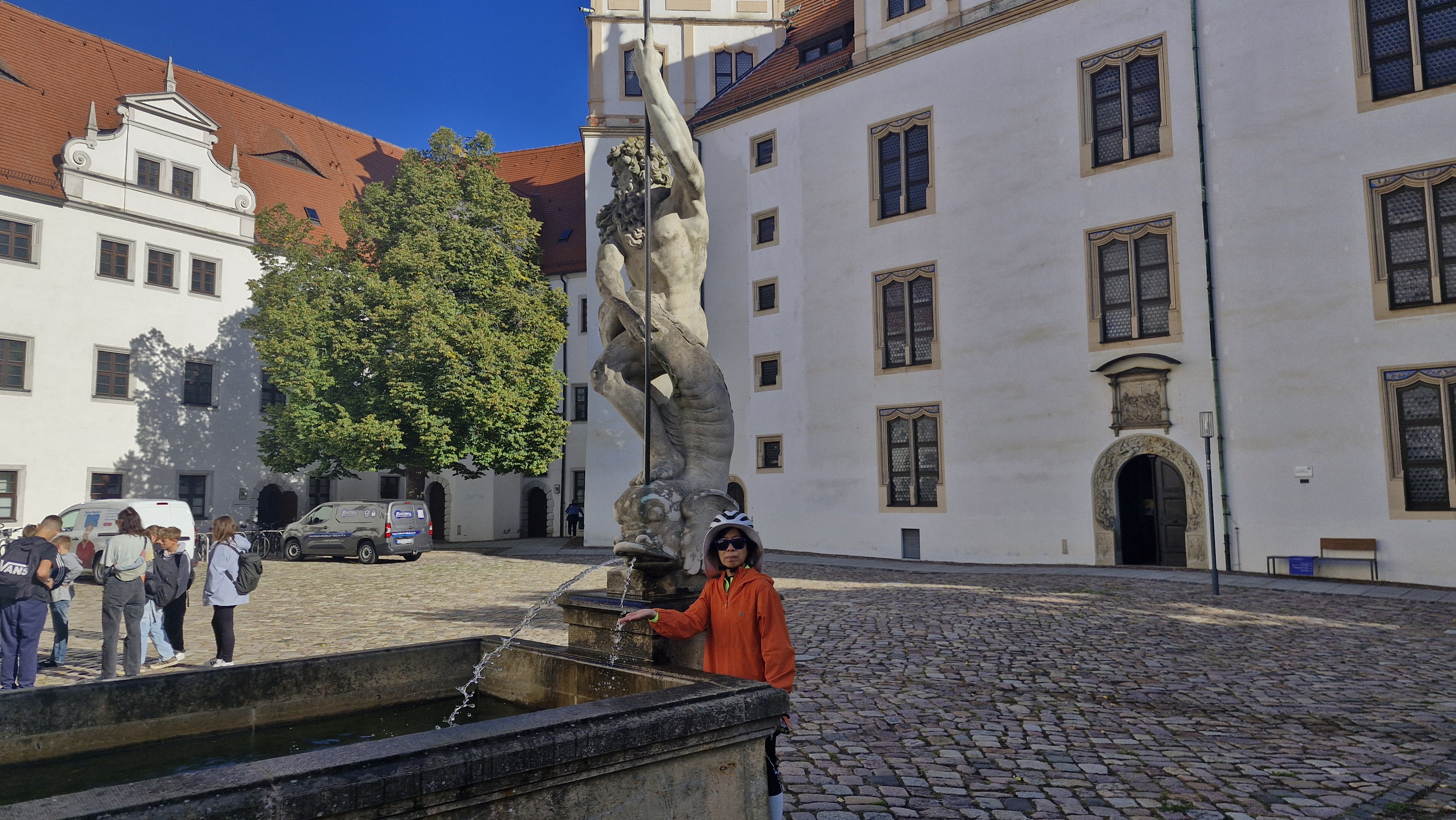
Choy by the fountain in Torgau's old town, beneath the white Renaissance walls of Schloss Hartenfels.
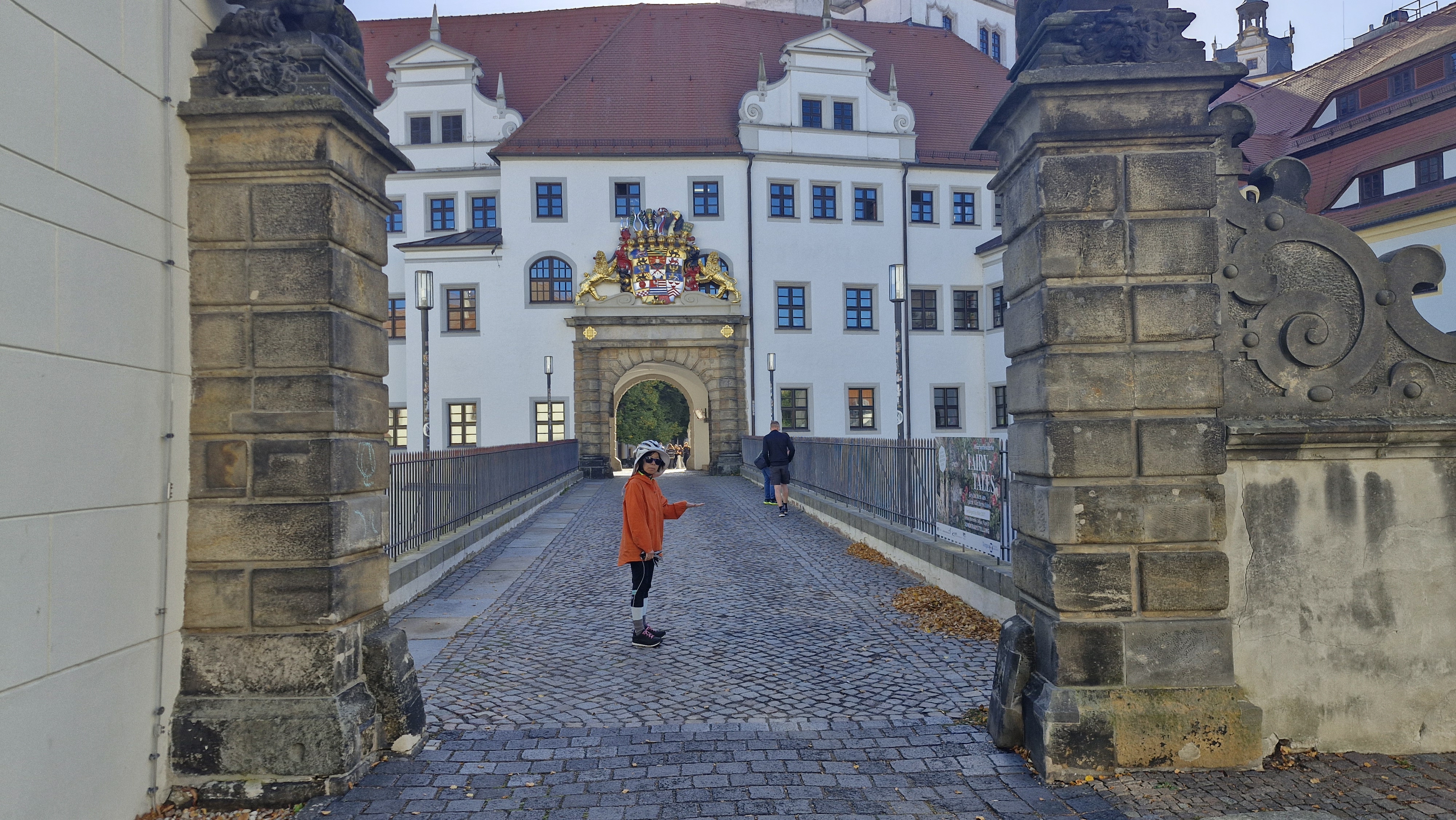
Choy crosses the bridge into Schloss Hartenfels, with the coat of arms above the gateway - the bear moat is just below.
Berlin (Thursday, September 24, 2026)
A detour off the Elbe took us to the capital, where we traded the bike for museums and palaces.
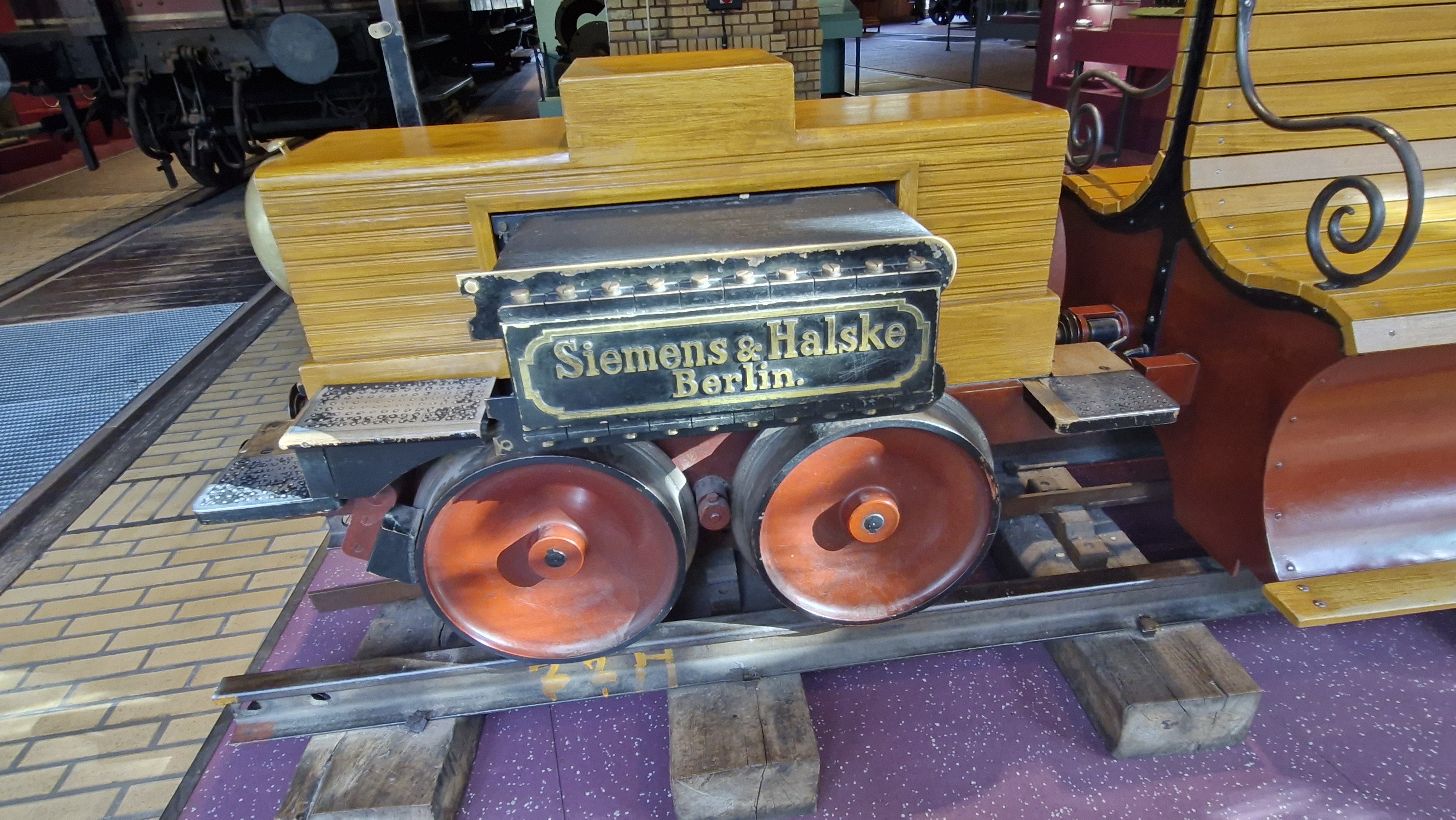
A replica of the little Siemens & Halske electric locomotive of 1879, shown at the Berlin trade fair as the world's first practical electric railway.
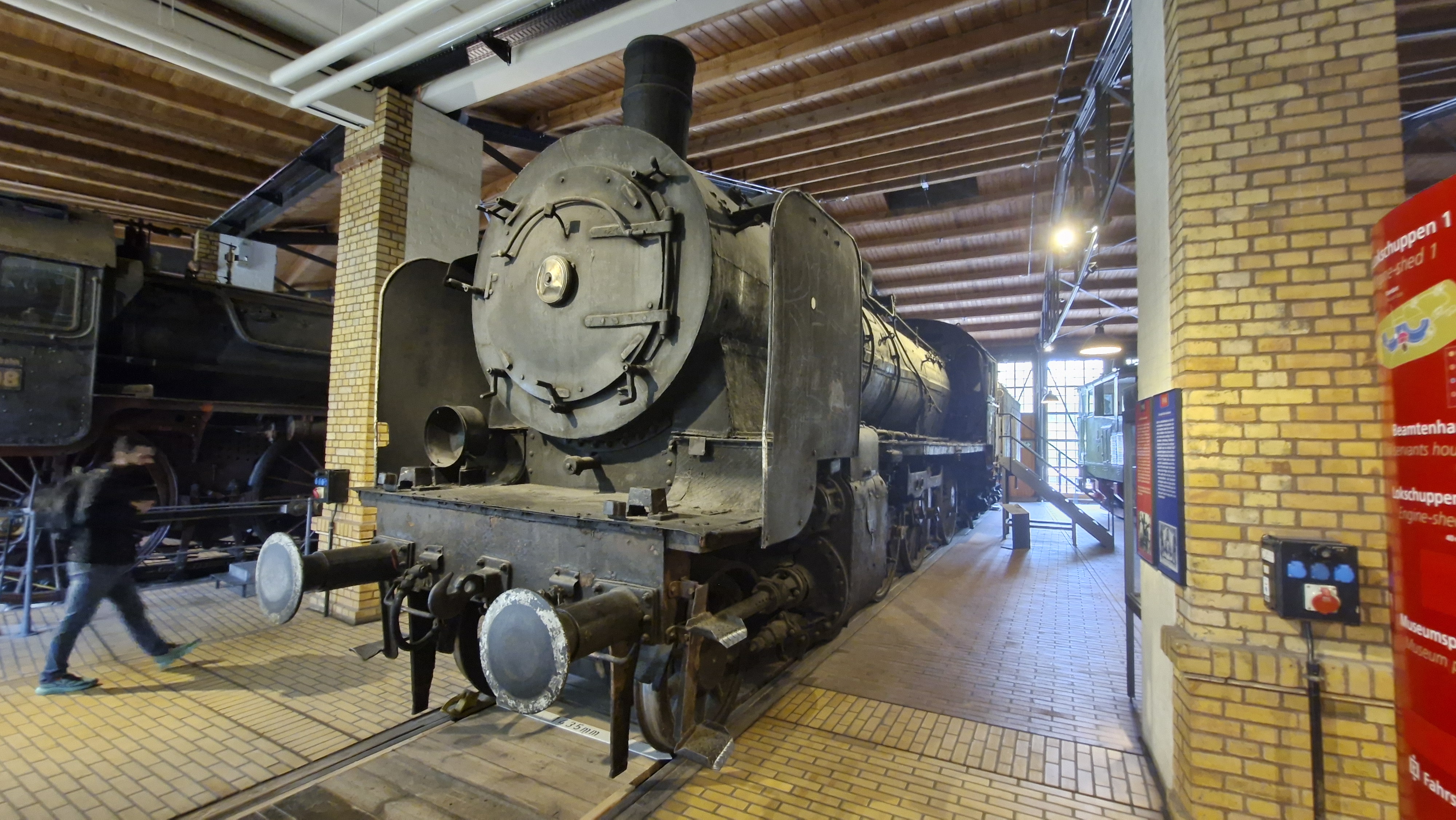
One of the original roundhouses at the German Museum of Technology (Deutsches Technikmuseum) in Kreuzberg, filled with steam locomotives from the age of the Prussian railways.
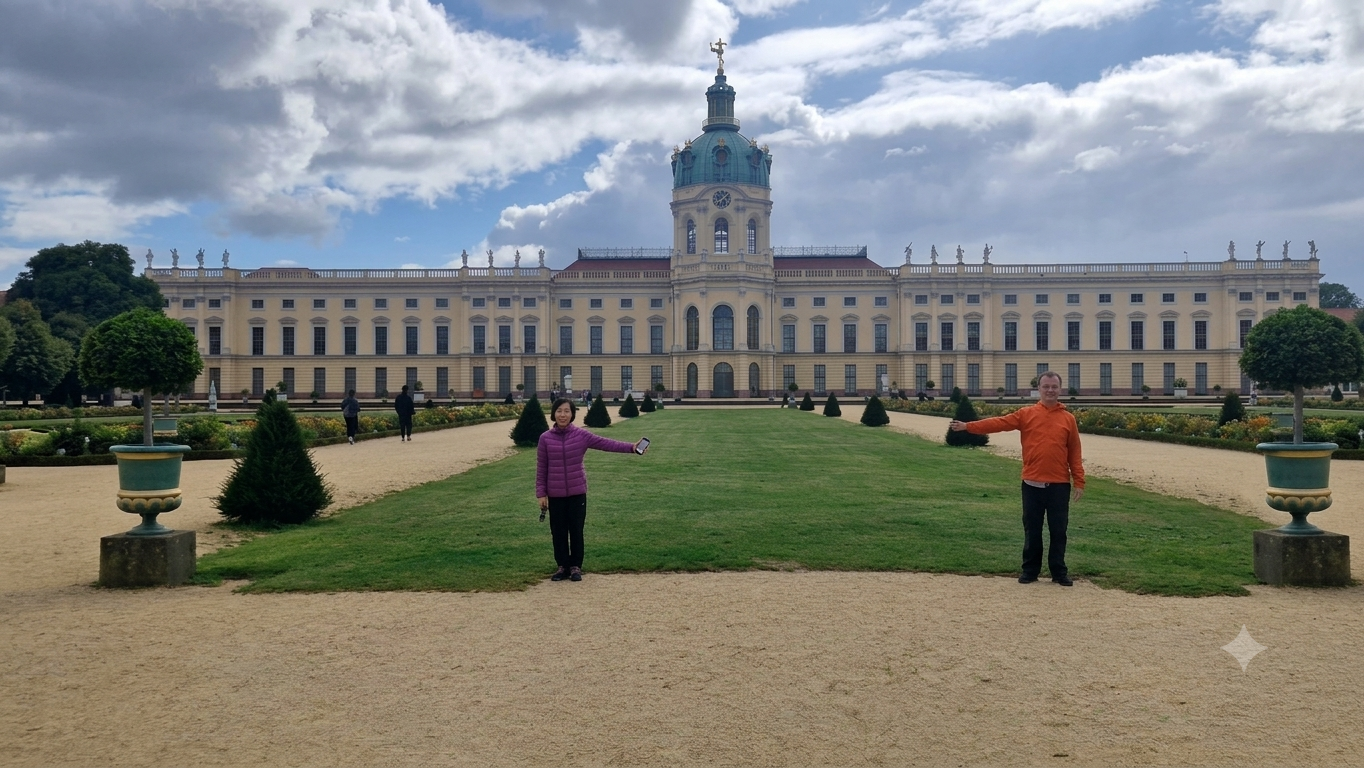
Framing Schloss Charlottenburg, the largest palace in Berlin, from its formal baroque gardens.
Into the Fläming Hills (Friday, September 25, 2026)
Short in distance but one of the hilliest days of the trip, as we left the Elbe and climbed into the Fläming hills. We ended in Bad Belzig, a small spa town watched over by the medieval Eisenhardt Castle.
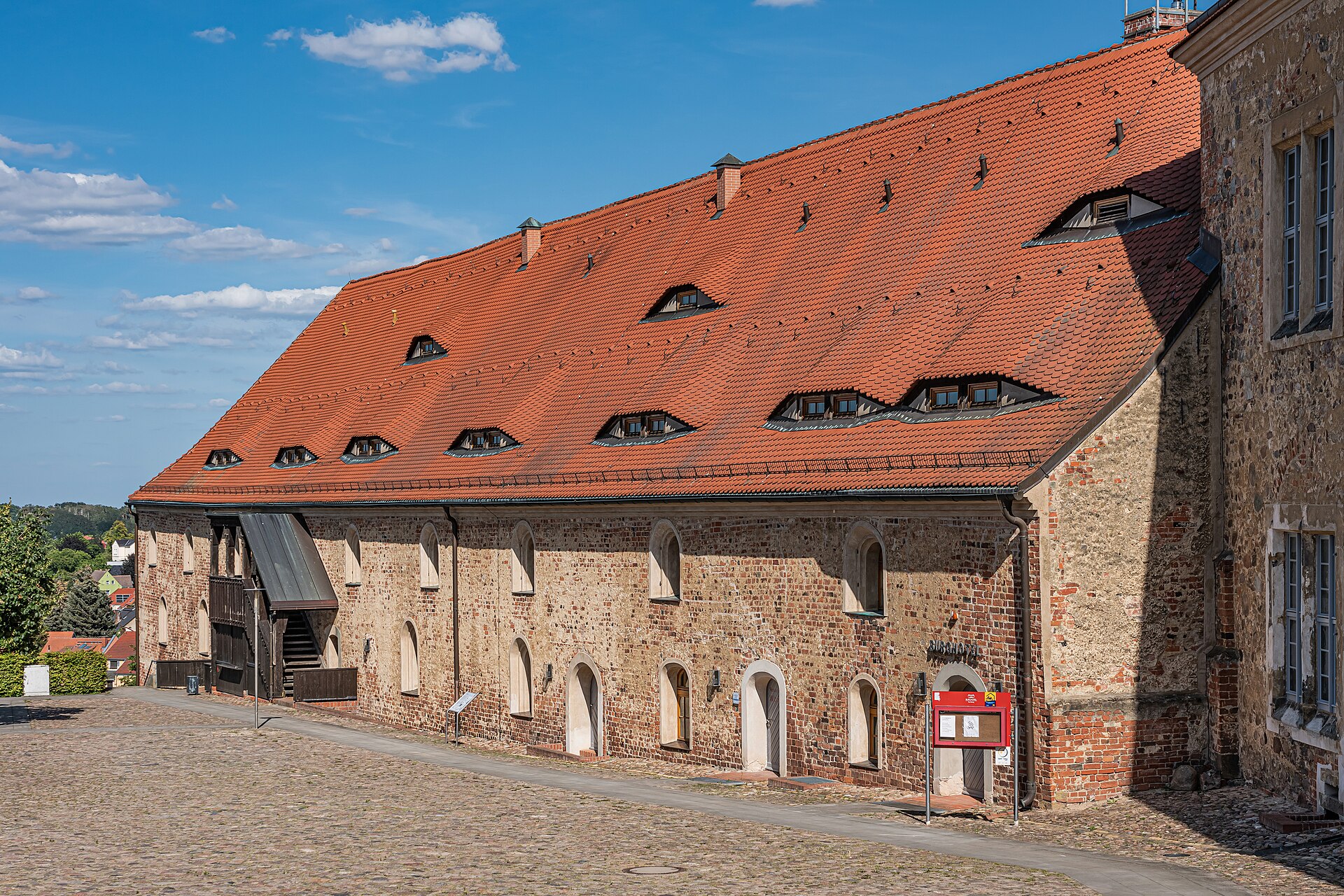
The medieval Burg Eisenhardt watches over Bad Belzig from its hill on the edge of the Fläming.
Photo: A.Savin, Wikimedia Commons, FAL
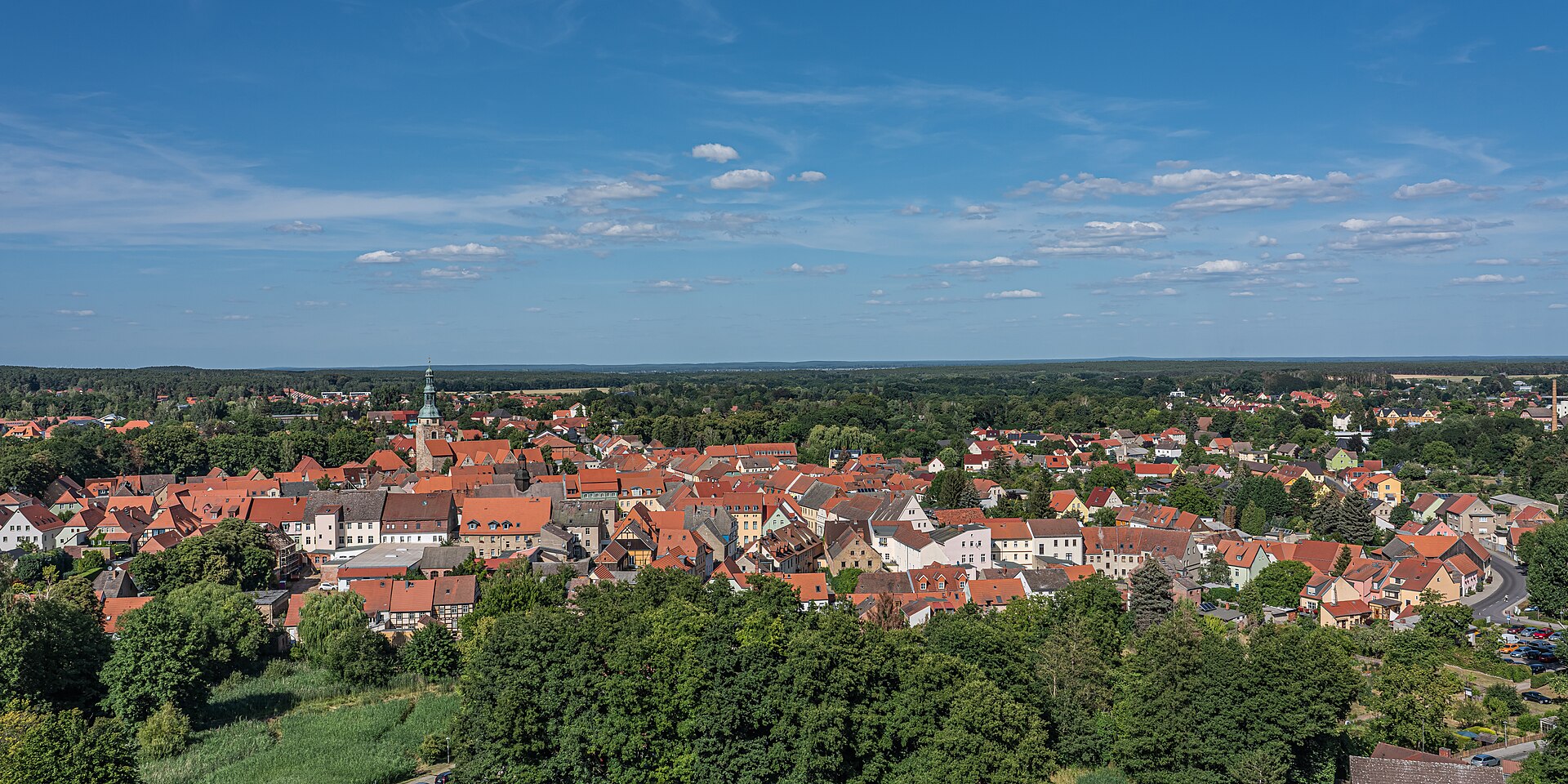
The view from the castle across the red roofs of Bad Belzig and out over the wooded Fläming hills.
Photo: A.Savin, Wikimedia Commons, FAL
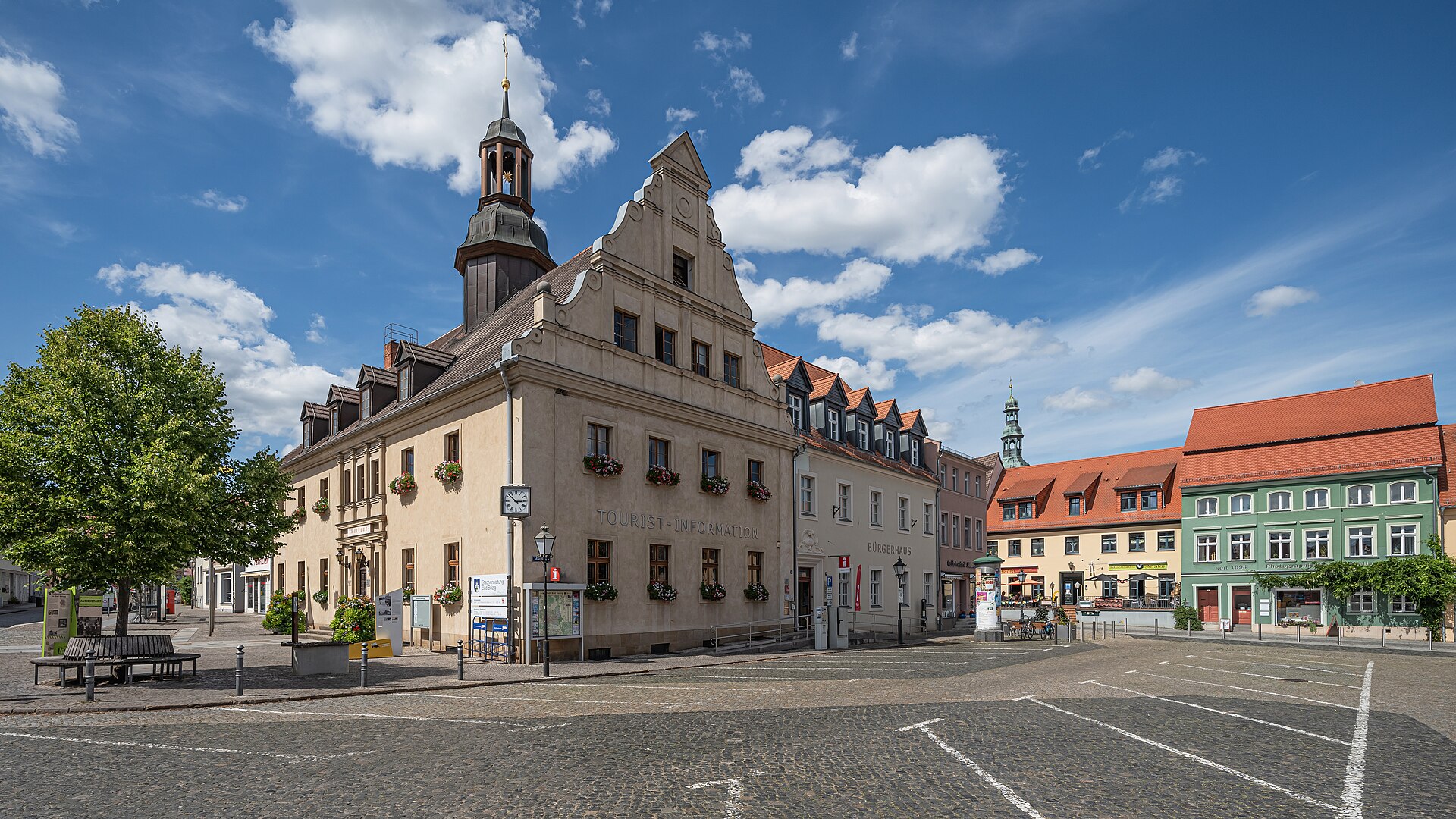
The stepped-gable town hall on Bad Belzig's market square.
Photo: A.Savin, Wikimedia Commons, FAL
Wiesenburg (Saturday, September 26, 2026)
Back on the road through the quiet Fläming region of Brandenburg.
Via the castle park at Wiesenburg, we dropped back down to the Elbe at Dessau-Roßlau - the home of the Bauhaus school of design and its famous modernist buildings.
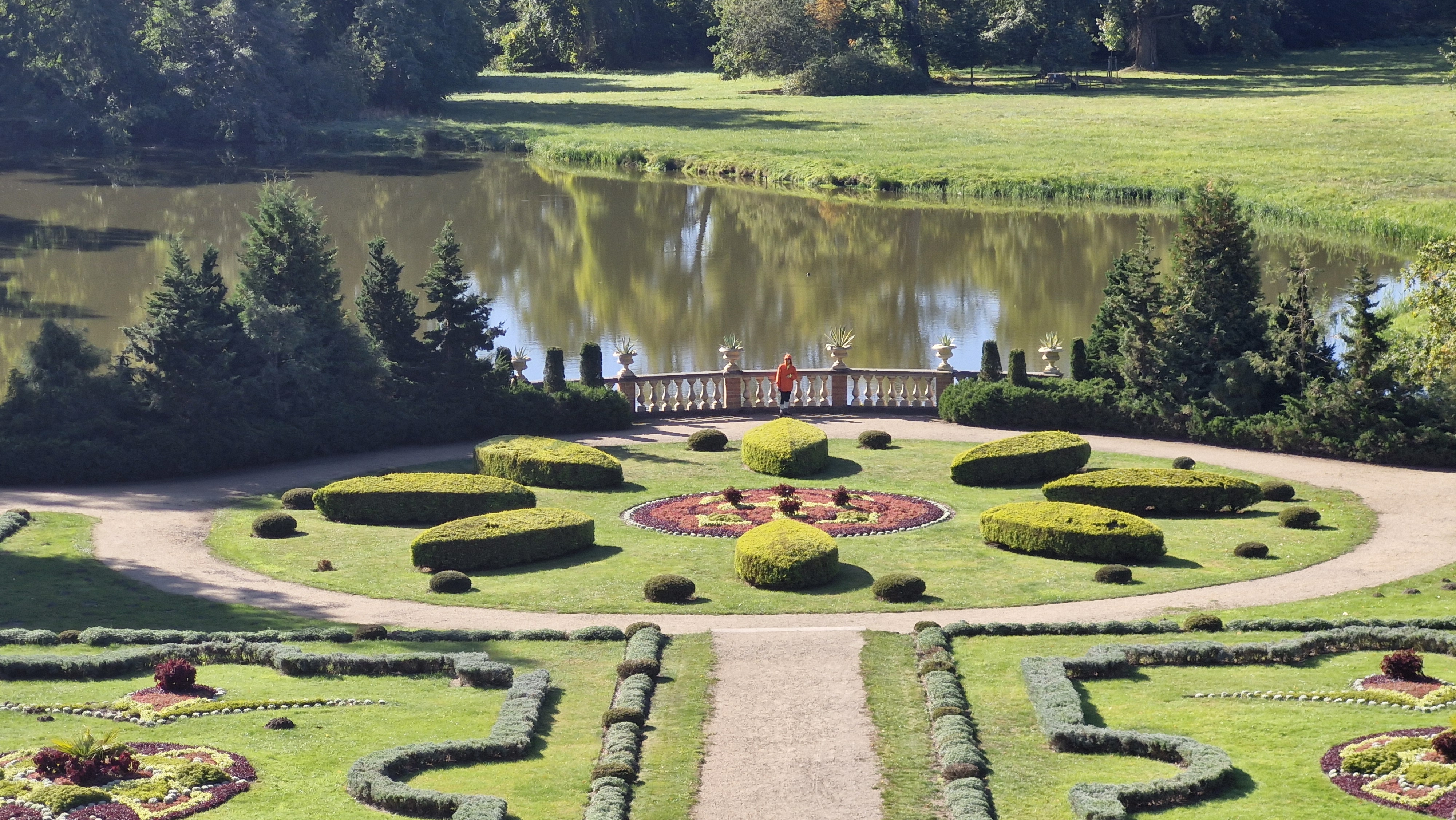
Looking down from the castle at Wiesenburg over its formal parterre, clipped hedges and lake - with a tiny figure in orange at the balustrade for scale.
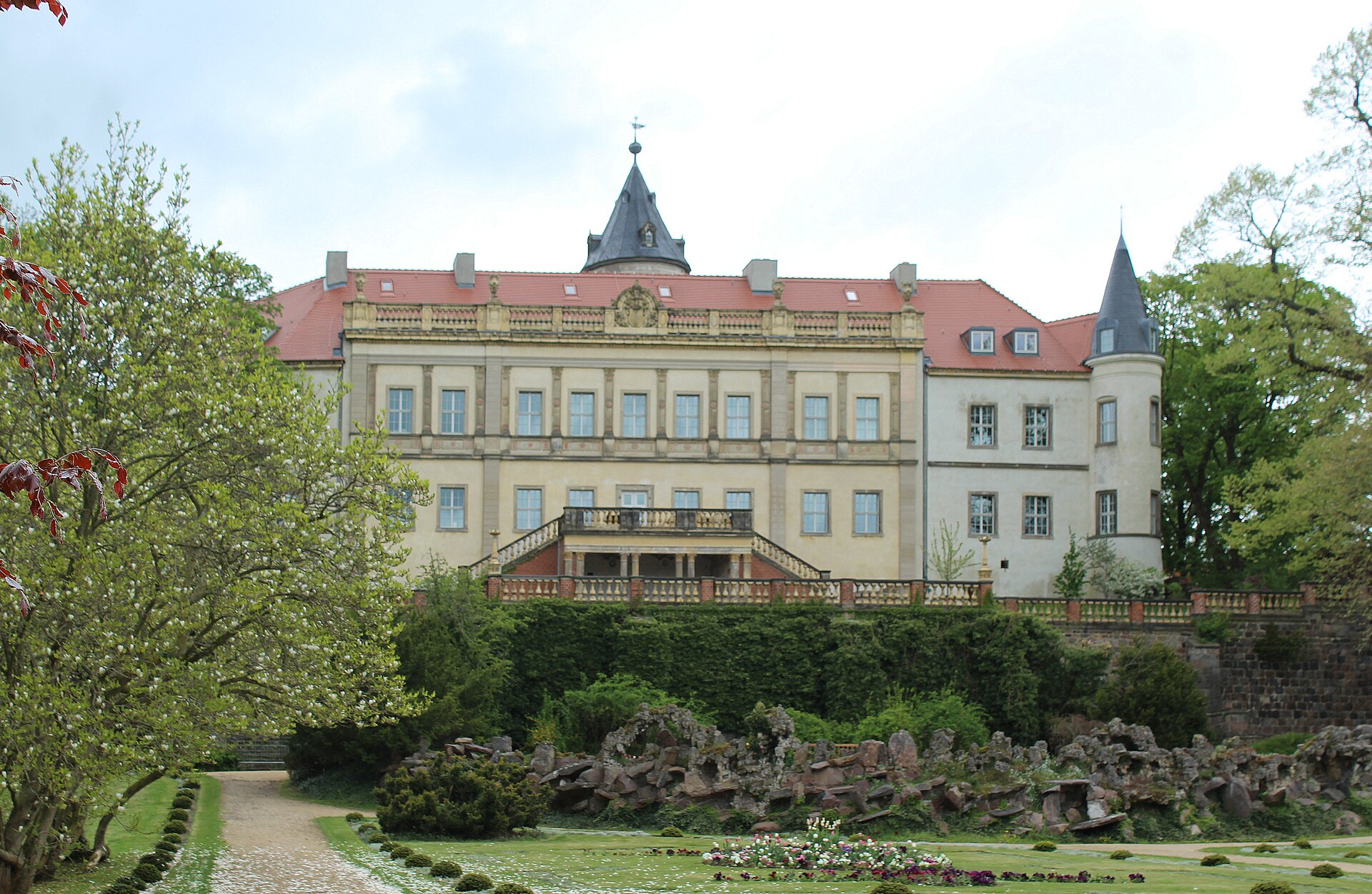
The castle at Wiesenburg, sitting above the formal gardens and park we looked down on during the ride.
Photo: Dguendel, Wikimedia Commons, CC BY 4.0
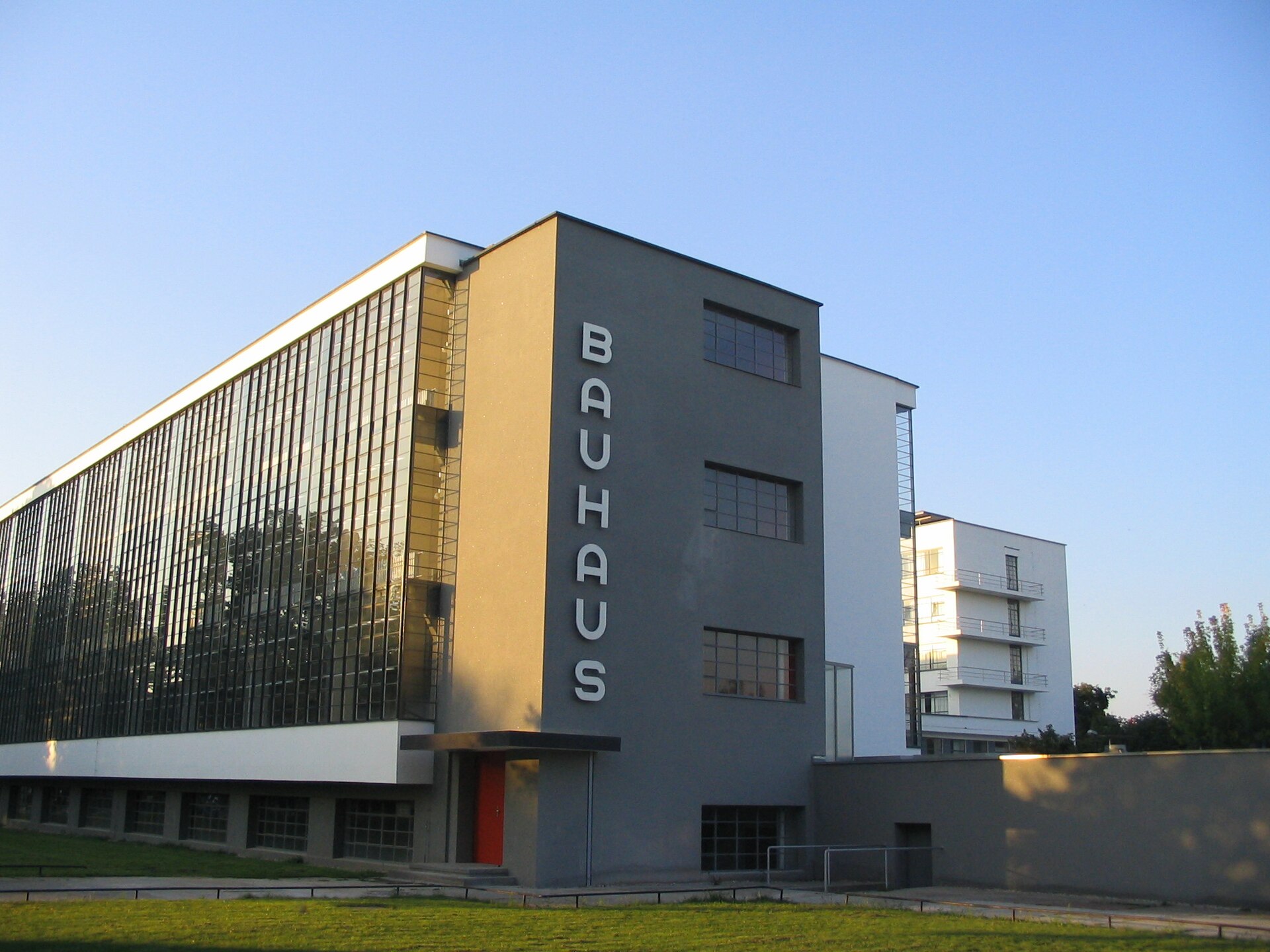
Walter Gropius's Bauhaus building, completed in 1926 and now a UNESCO World Heritage Site - the birthplace of modernist design, and our stop for the night.
Photo: Wikimedia Commons, Public domain
On to Magdeburg (Sunday, September 27, 2026)
Our longest day so far followed the Elbe north to Magdeburg, the capital of Saxony-Anhalt, where the twin towers of the Gothic cathedral rise above the river.
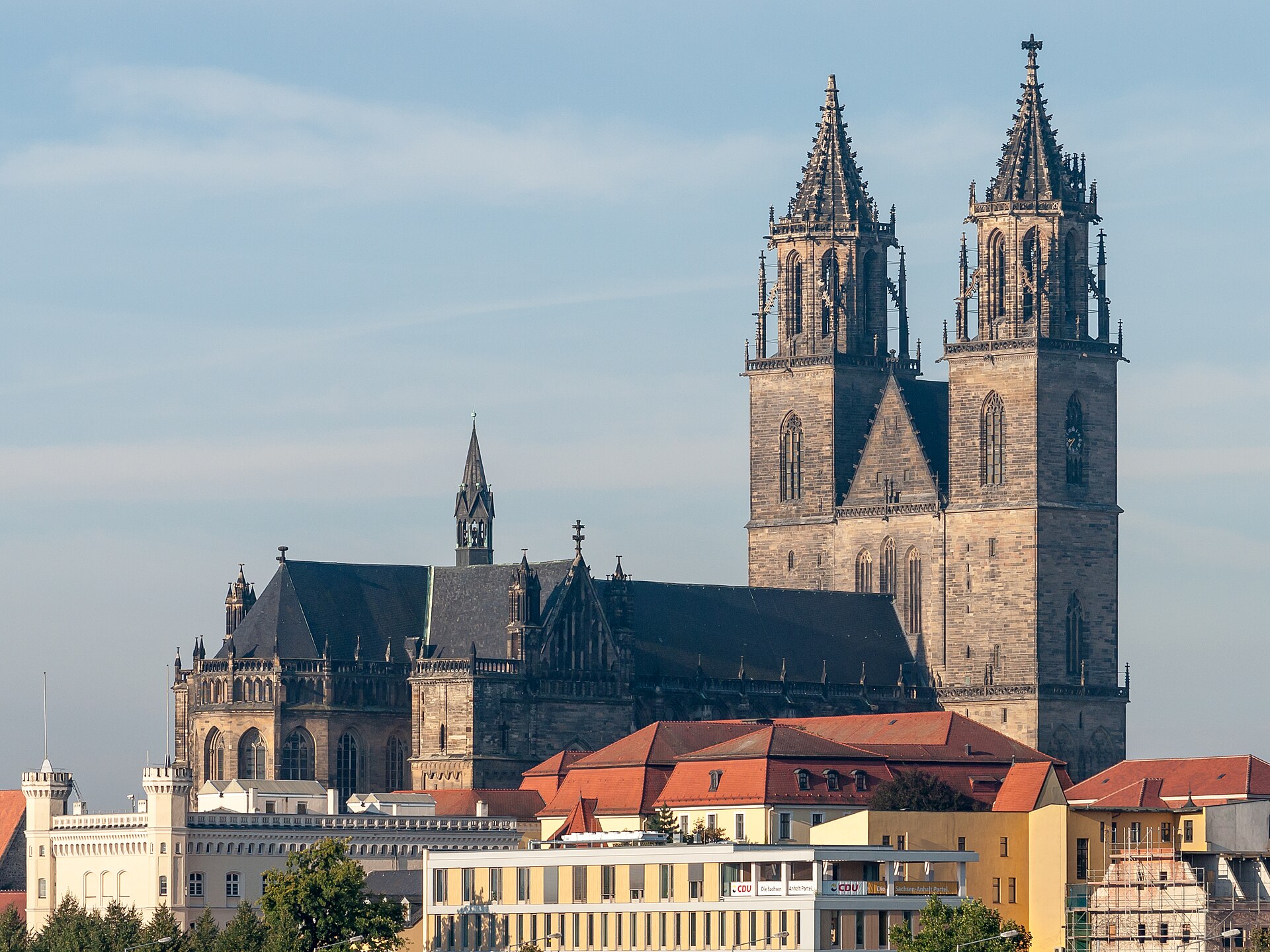
The twin spires of Magdeburg Cathedral rising above the Elbe. One of the oldest Gothic cathedrals in Germany, it is also the burial place of Emperor Otto the Great.
Photo: Ajepbah, Wikimedia Commons, CC BY-SA 3.0 de
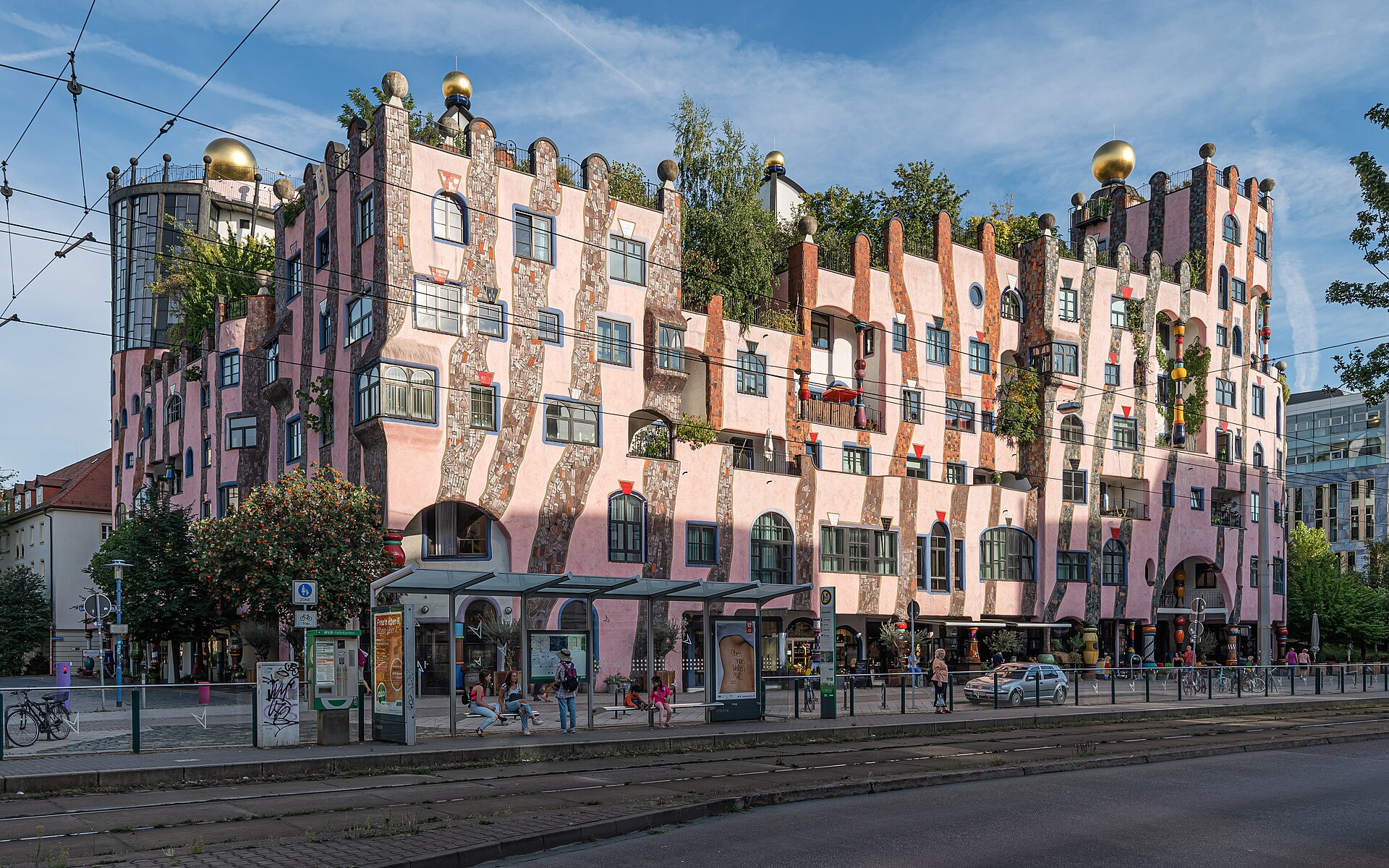
Friedensreich Hundertwasser's pink, tree-topped Green Citadel - the last building he designed, completed in 2005 - is impossible to miss in the centre of Magdeburg.
Photo: A.Savin, Wikimedia Commons, FAL
Where a Canal Crosses a River (Tuesday, September 29, 2026)
Just north of Magdeburg is one of the more extraordinary pieces of engineering we've ridden past: the Magdeburg Water Bridge, where the Mittelland Canal crosses over the top of the Elbe.
After crossing the water bridge we carried on to Tangermünde, one of the best-preserved medieval towns along the Elbe, with its red-brick walls, gates and castle - a real highlight to arrive in.
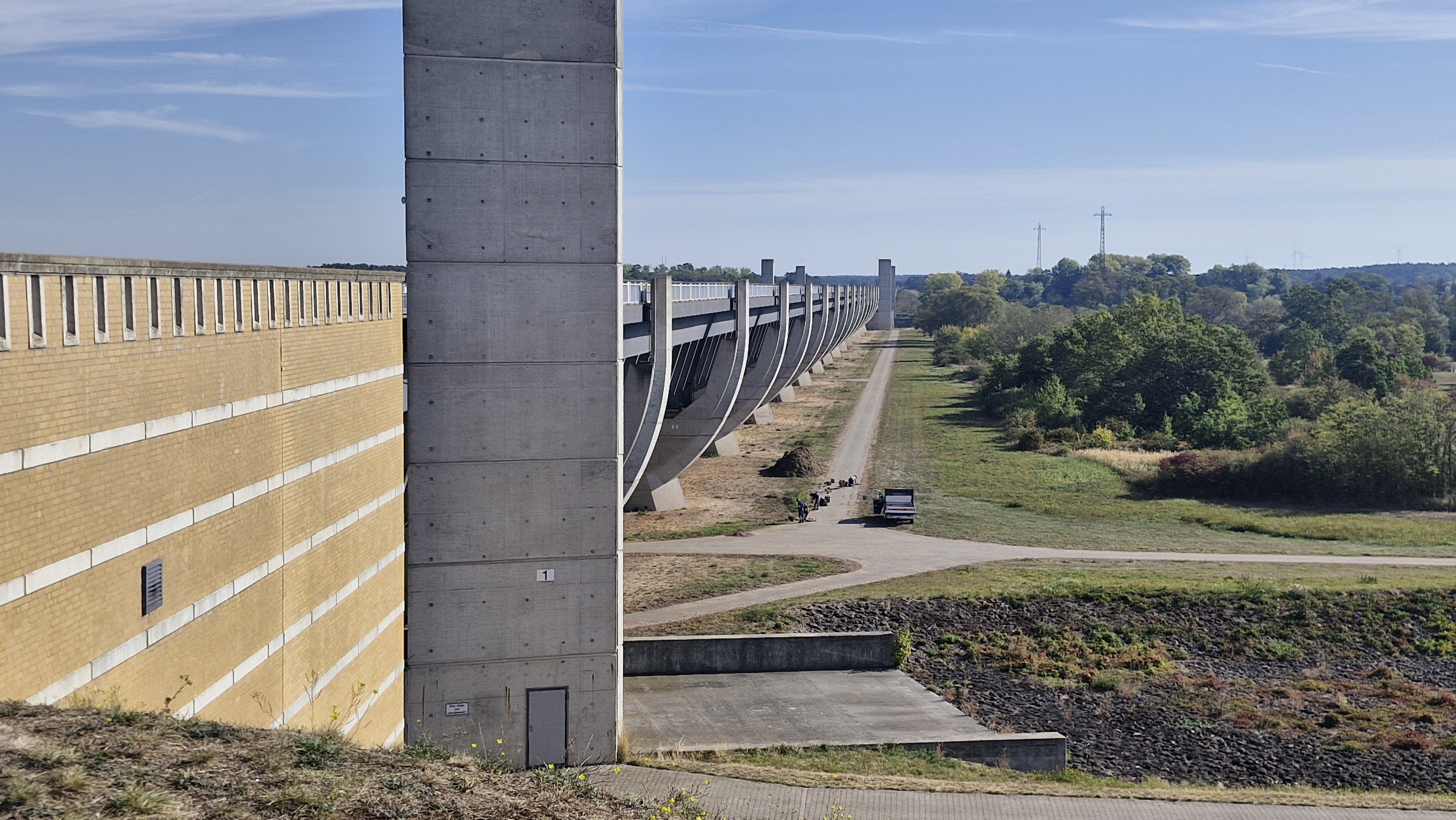
At 918 metres, it's the longest navigable aqueduct in Europe - a steel trough full of water carrying ships high above the river and its floodplain.
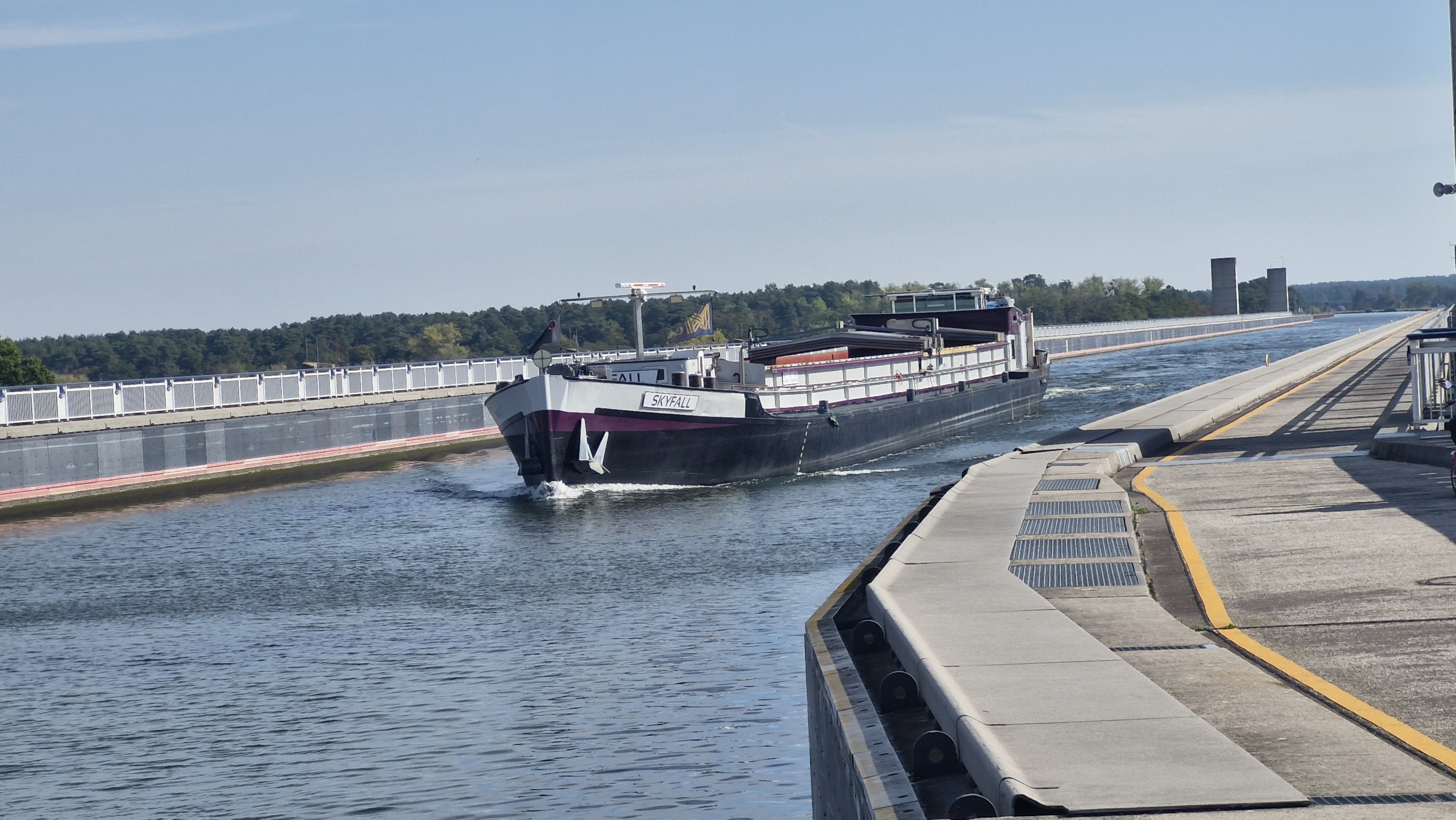
The barge 'Skyfall' cruises across the water bridge - a strange sight knowing the Elbe is flowing underneath it.
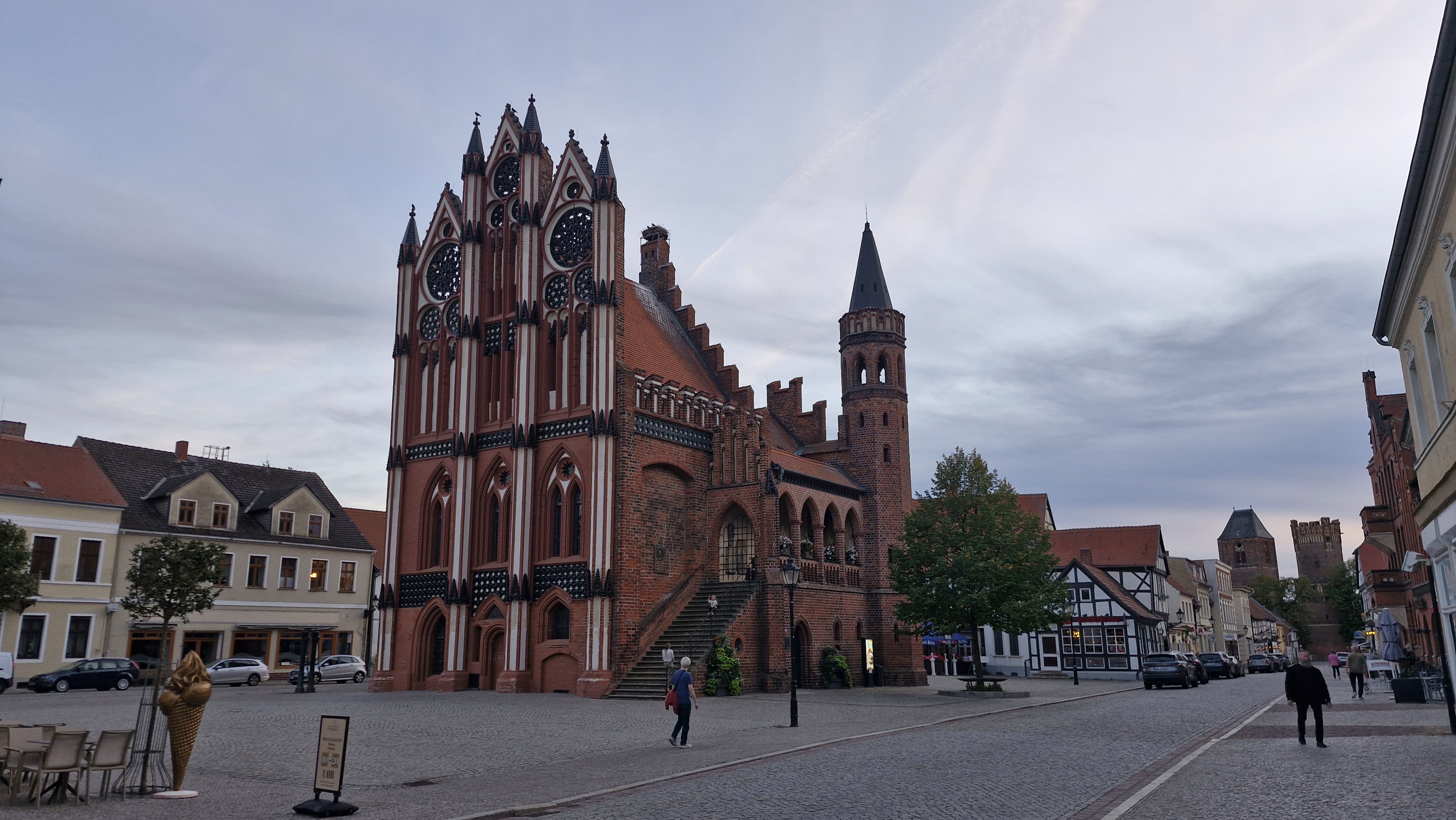
The ornate brick Gothic town hall in Tangermünde, glowing in the evening light as we arrived.
Tangermünde and Arneburg (Wednesday, September 30, 2026)
Further down the Elbe, the medieval brick town of Tangermünde was one of the most atmospheric stops of the trip.
We crossed the river to Havelberg, where the old town sits on an island in the Havel, close to where it joins the Elbe, with the cathedral looking down from the hill above.
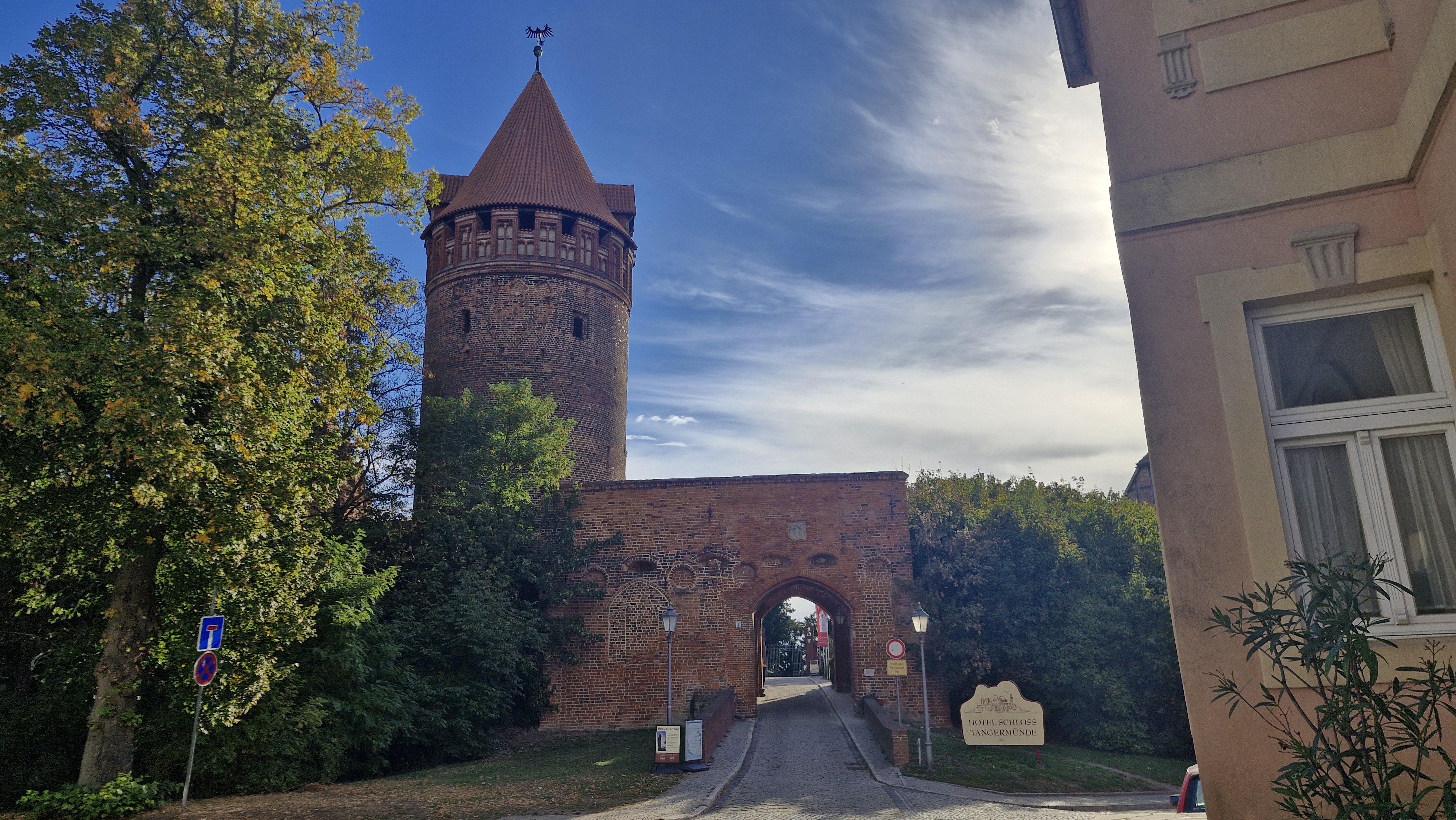
The red-brick gate and tower of Tangermünde's castle, built in the North German brick Gothic style that we saw all the way down the lower Elbe.
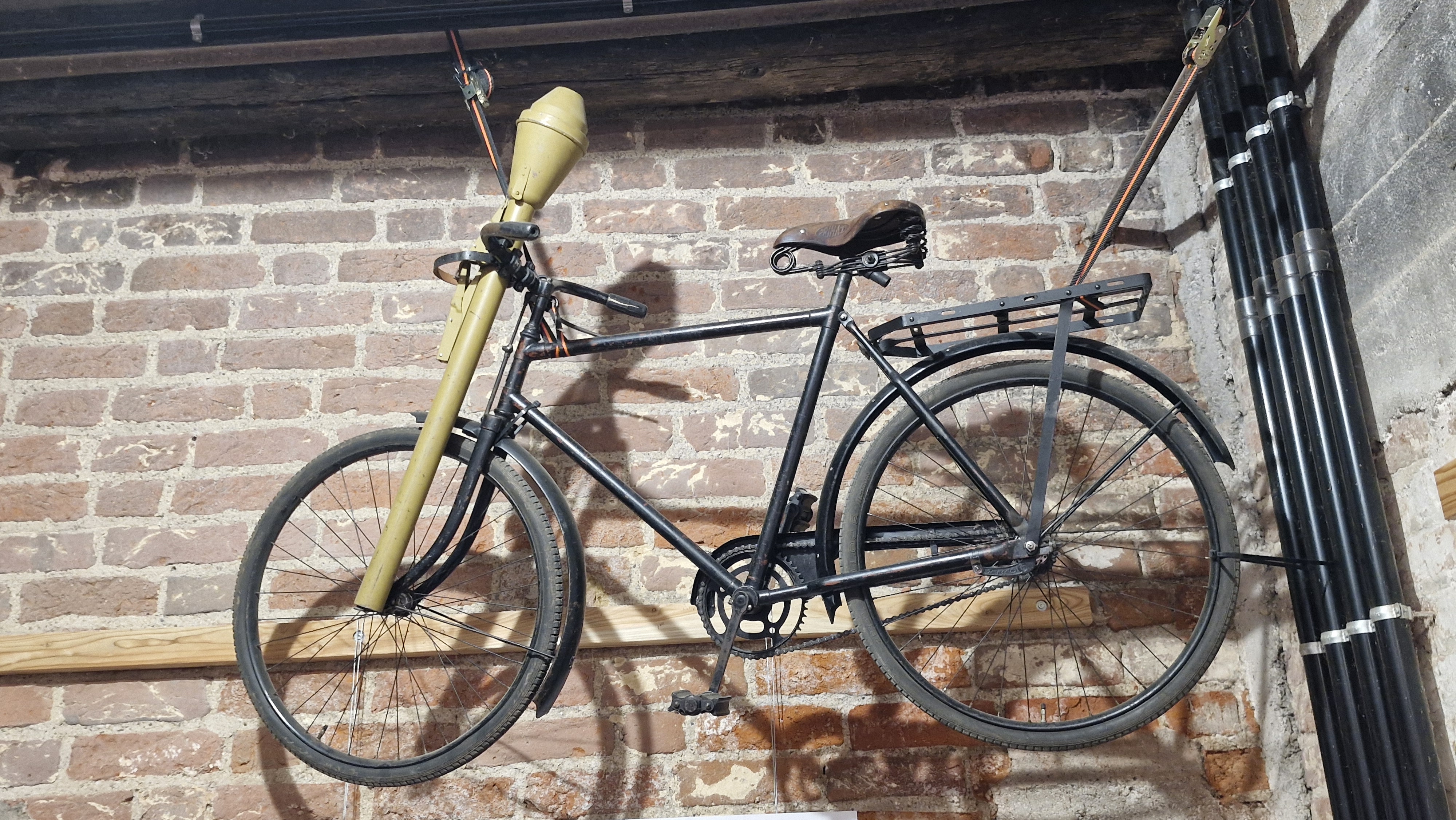
An unusual exhibit in Tangermünde - an old black roadster with an anti-tank weapon strapped to the front fork, a sobering reminder of how bicycles were used in the last days of the Second World War.
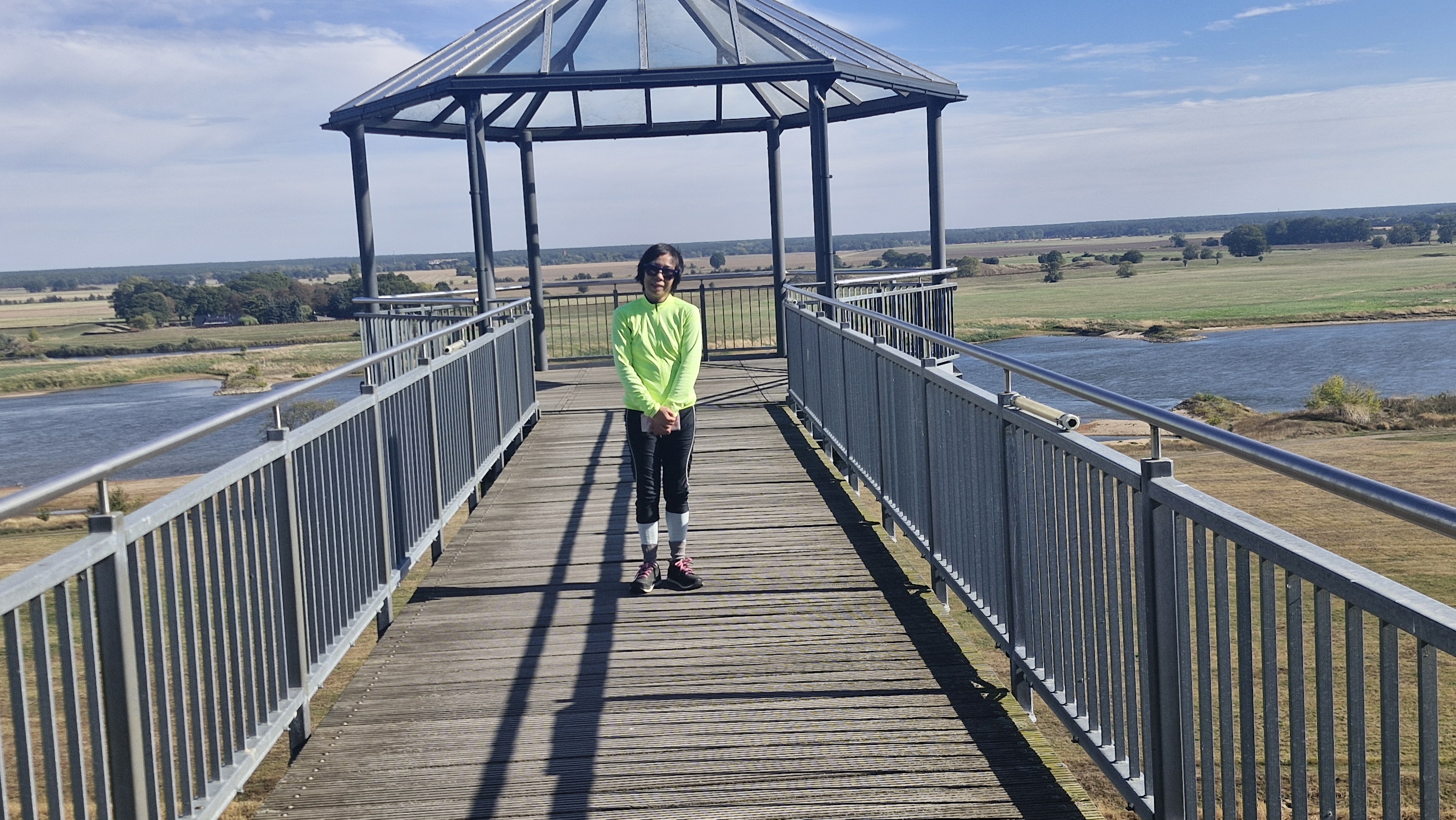
Choy at the riverside lookout in Arneburg, with views across the wide, slow-moving Elbe and its meadows.
Havelberg to Wittenberge (Thursday, October 1, 2026)
A short, flat day to Wittenberge - despite the name, a completely different town from Lutherstadt Wittenberg, Martin Luther's town where we had stayed the week before, around 150 km back up the Elbe. Wittenberge is an old river port and railway town, and its skyline is dominated by the huge clock tower of the former Singer sewing machine factory.
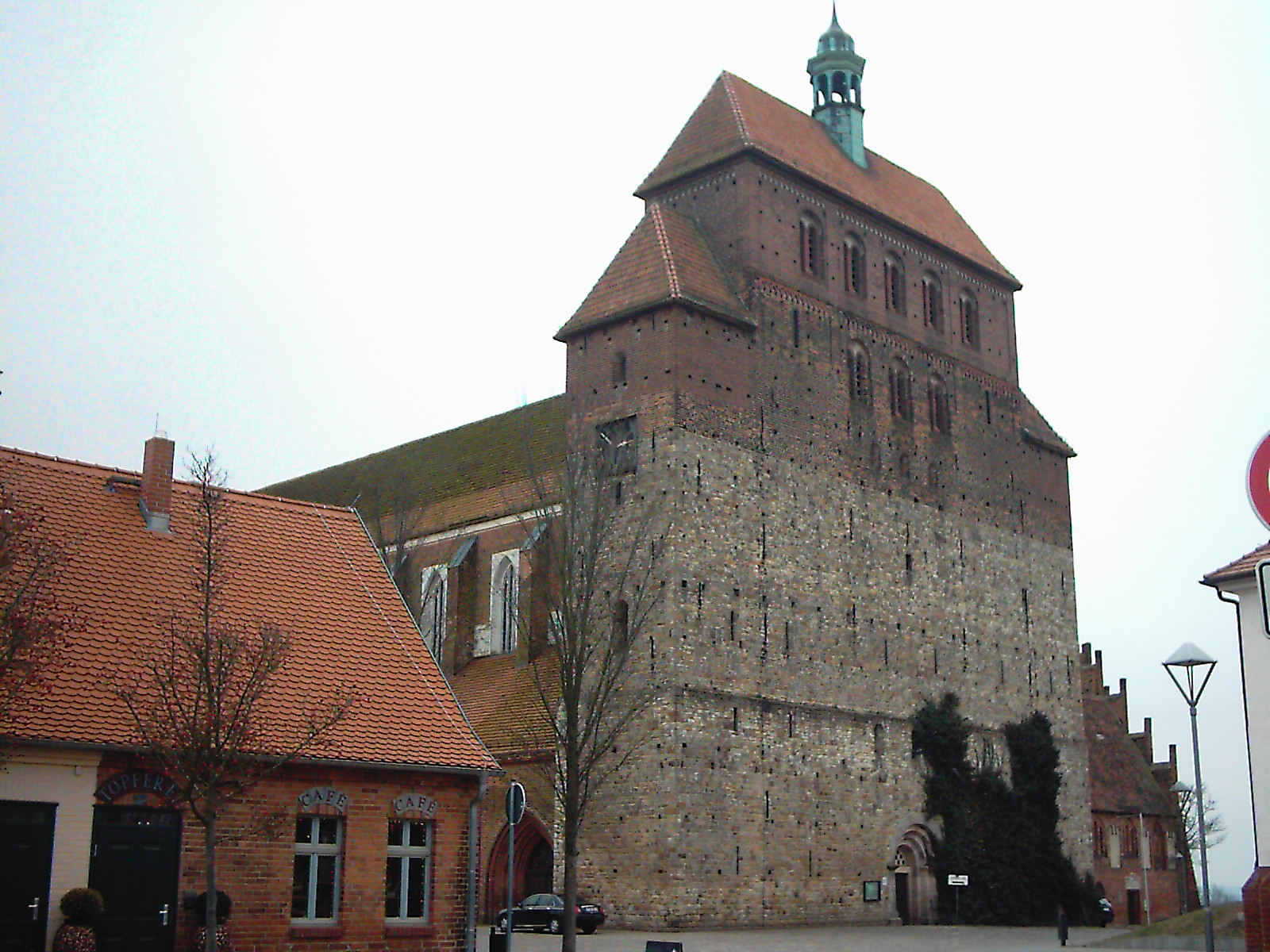
The massive stone tower of St. Mary's Cathedral looks down on Havelberg's island old town from the hill above the Havel.
Photo: Zairon, Wikimedia Commons, Public domain
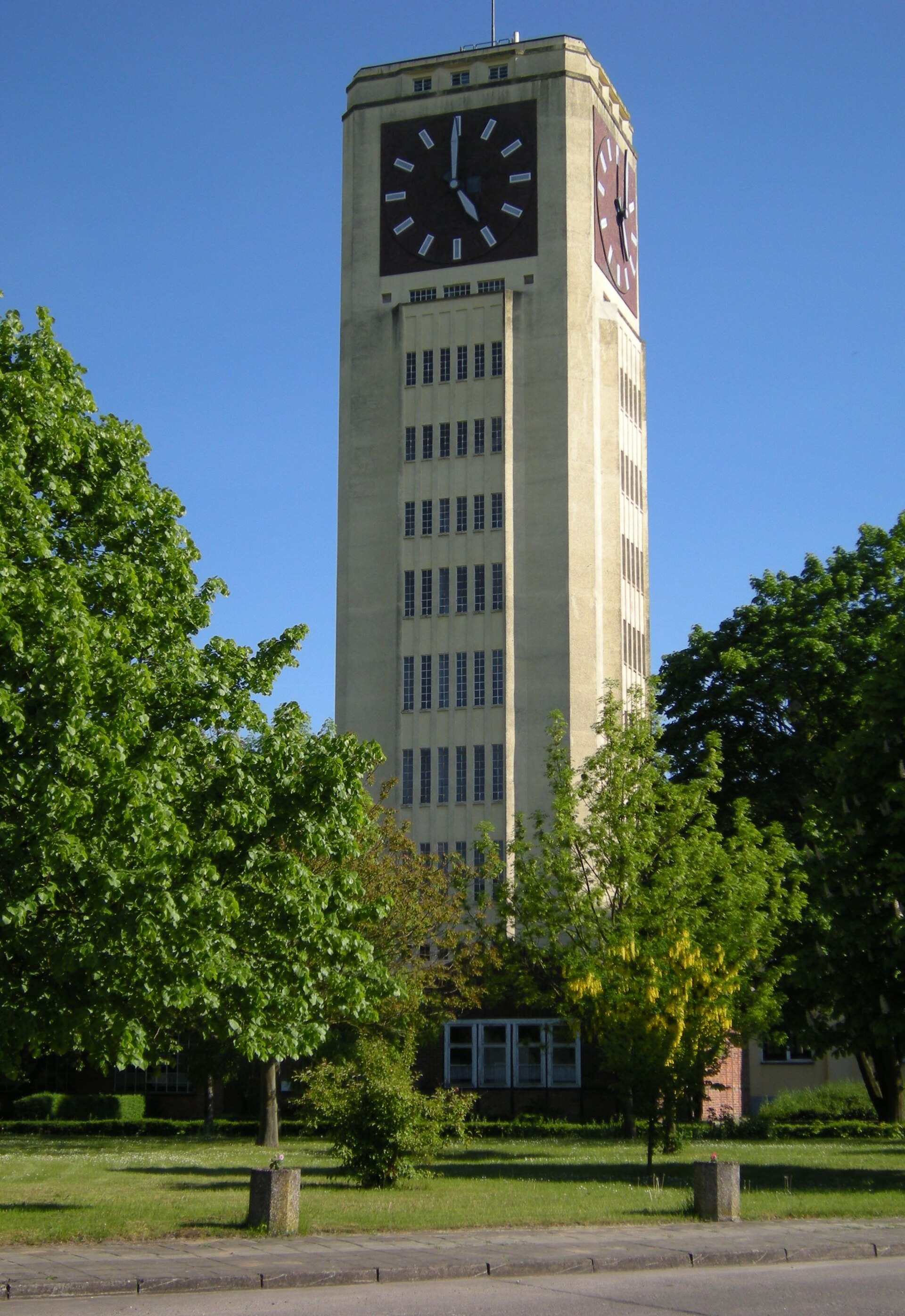
The clock tower of the former Singer sewing machine factory, still the landmark of Wittenberge.
Photo: Franzfoto, Wikimedia Commons, CC BY-SA 3.0
Ferries and Floodplains (Friday, October 2, 2026)
Today we crossed the Elbe by ferry and rode along the dykes of the Elbe River Landscape biosphere reserve.
One of our longest days ended in Hitzacker, a pretty half-timbered town on an island where the Jeetzel meets the Elbe. We finished the day with a walk up the hill above town for the view over the rooftops and the floodplain.
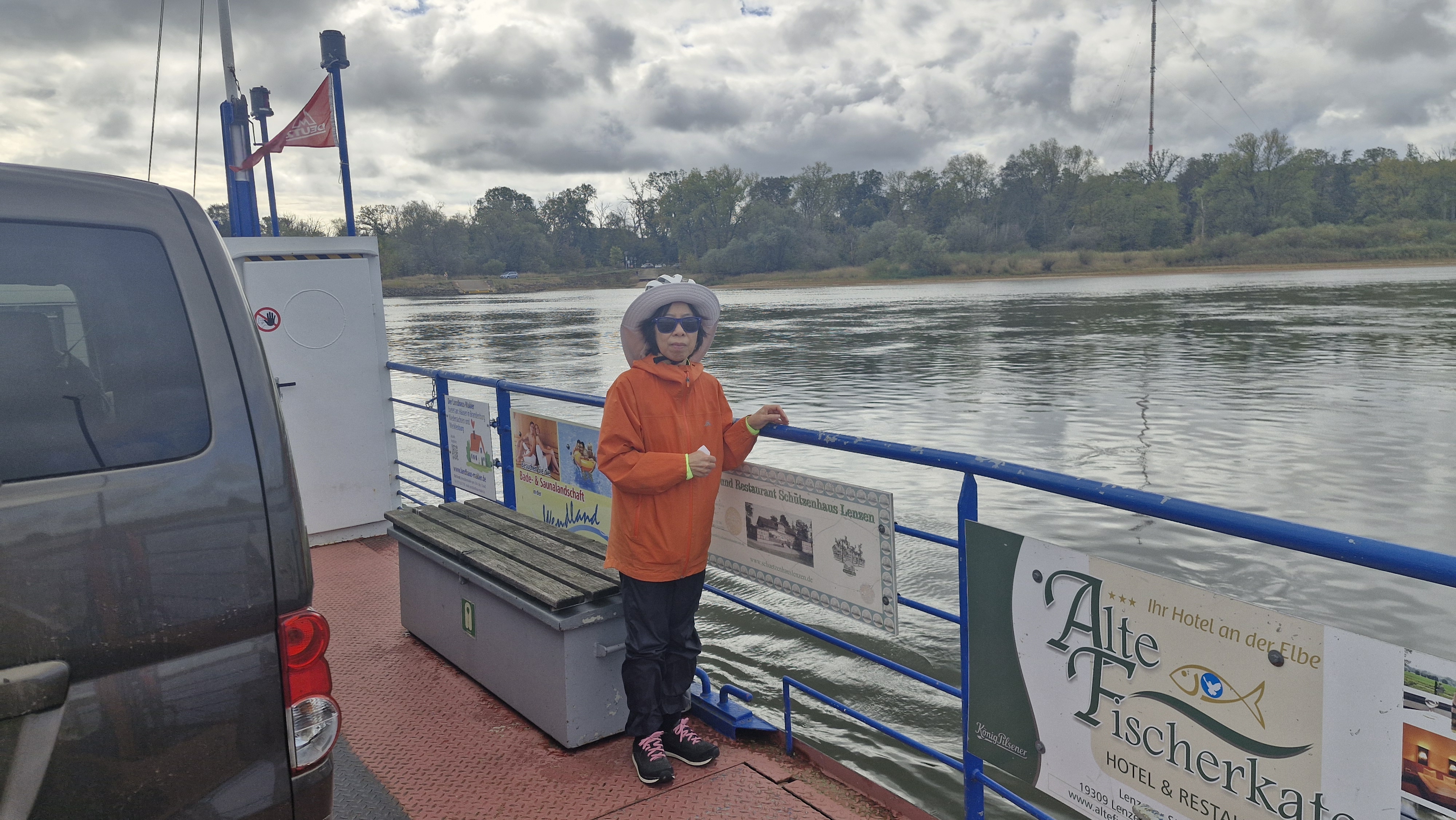
Choy on the ferry across the Elbe at Lenzen - one of many small car and bike ferries that link the two banks where there are no bridges.
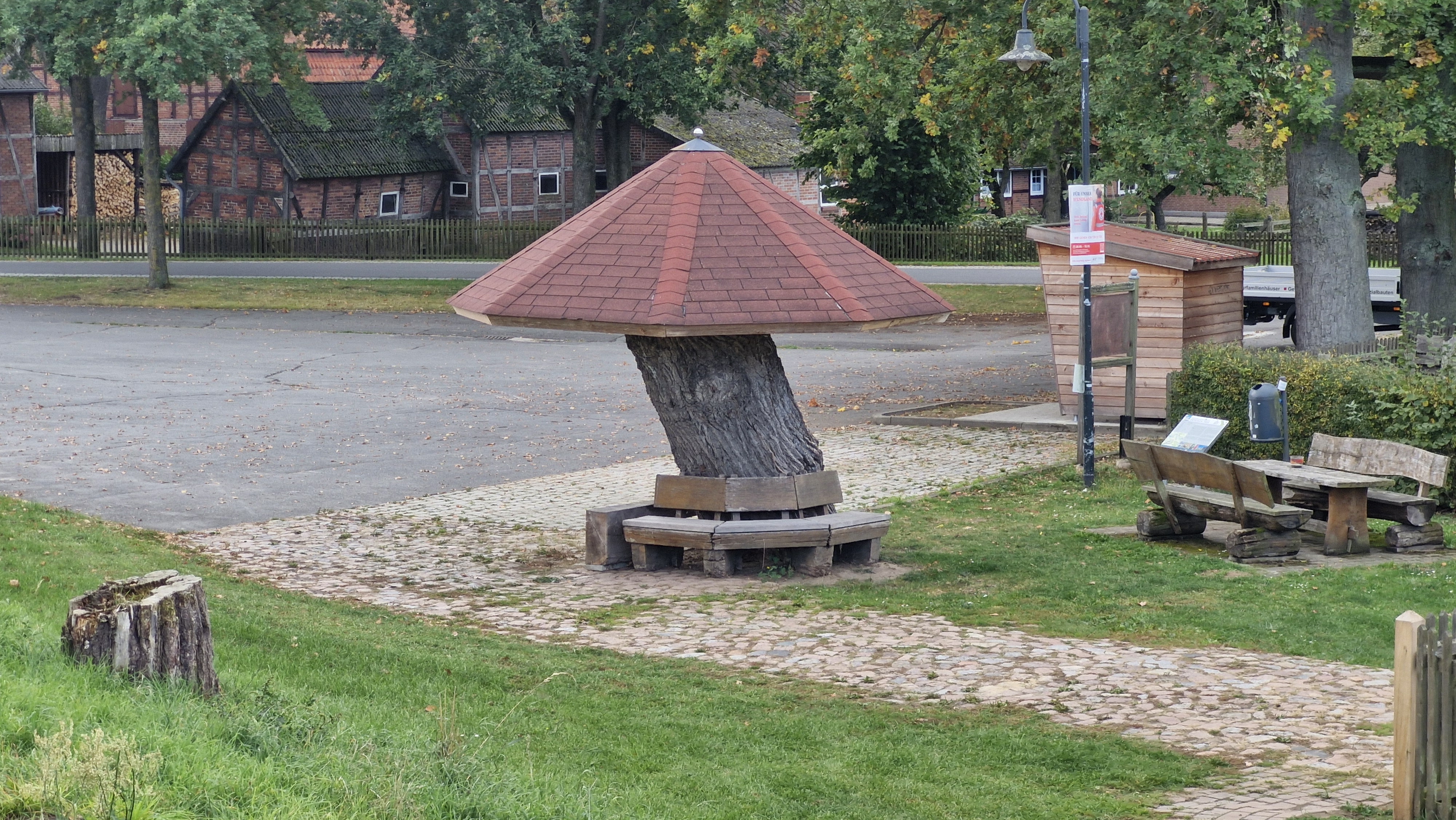
In the tiny village of Barnitz, an old hollow tree trunk has been given its own little shingle roof and a ring of seats - a perfect rest stop.
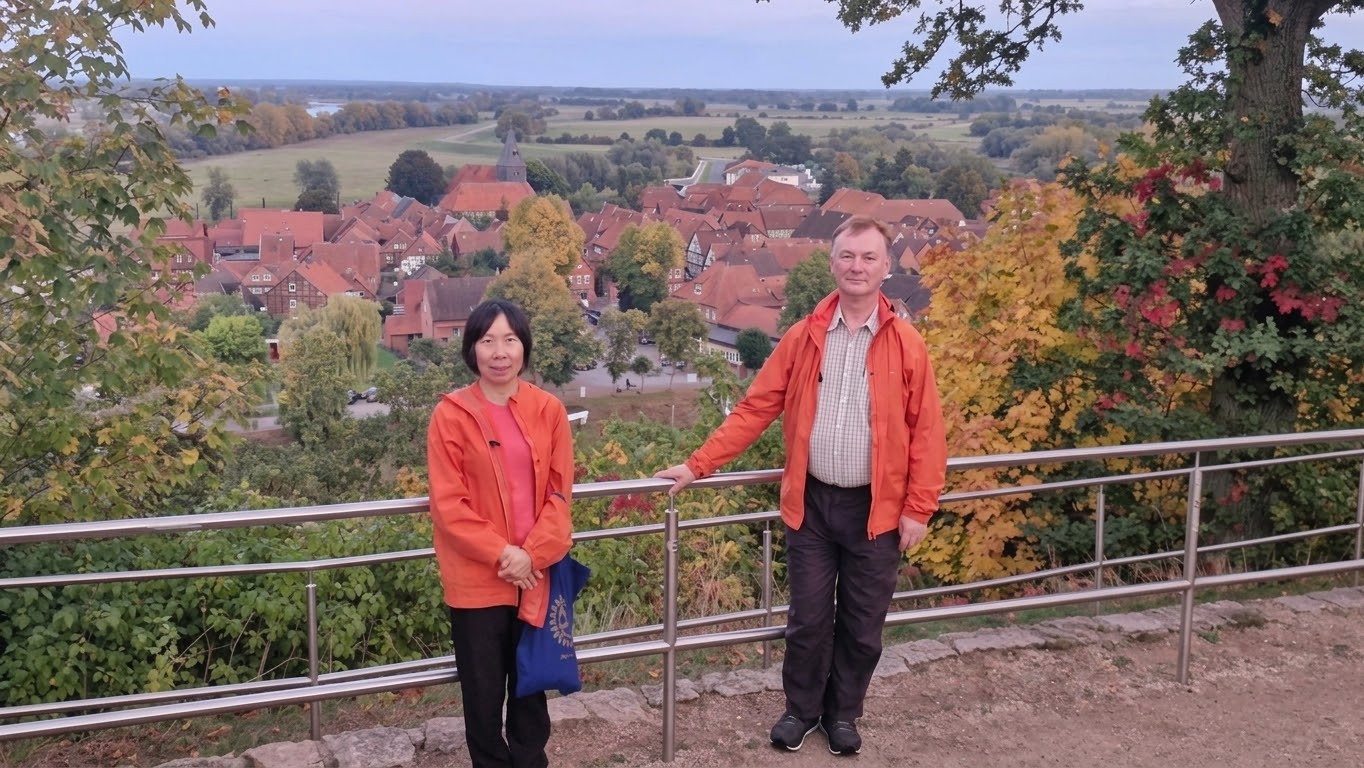
Looking out over the red roofs of Hitzacker and the Elbe floodplain from the hill above town, surrounded by autumn colours.
Steam in Geesthacht (Saturday, October 3, 2026)
Our second steam train of the trip, on the doorstep of Hamburg.
We ended the day in Geesthacht, home to the Elbe's last weir. Below it the river is tidal all the way to the North Sea - a sure sign that Hamburg is close.
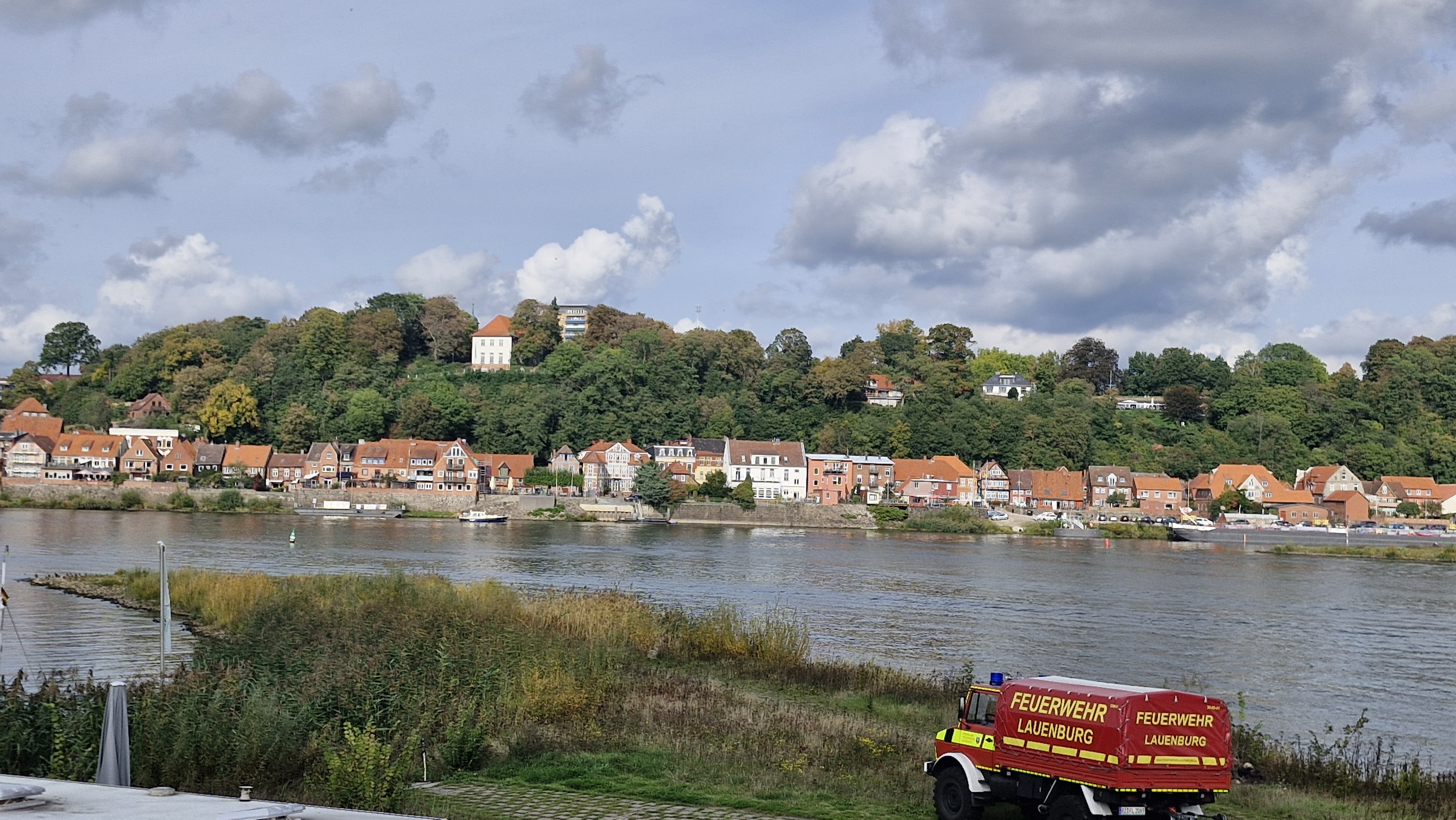
Looking across the river from Hohnstorf to the old town of Lauenburg, its houses stacked up the steep riverbank.
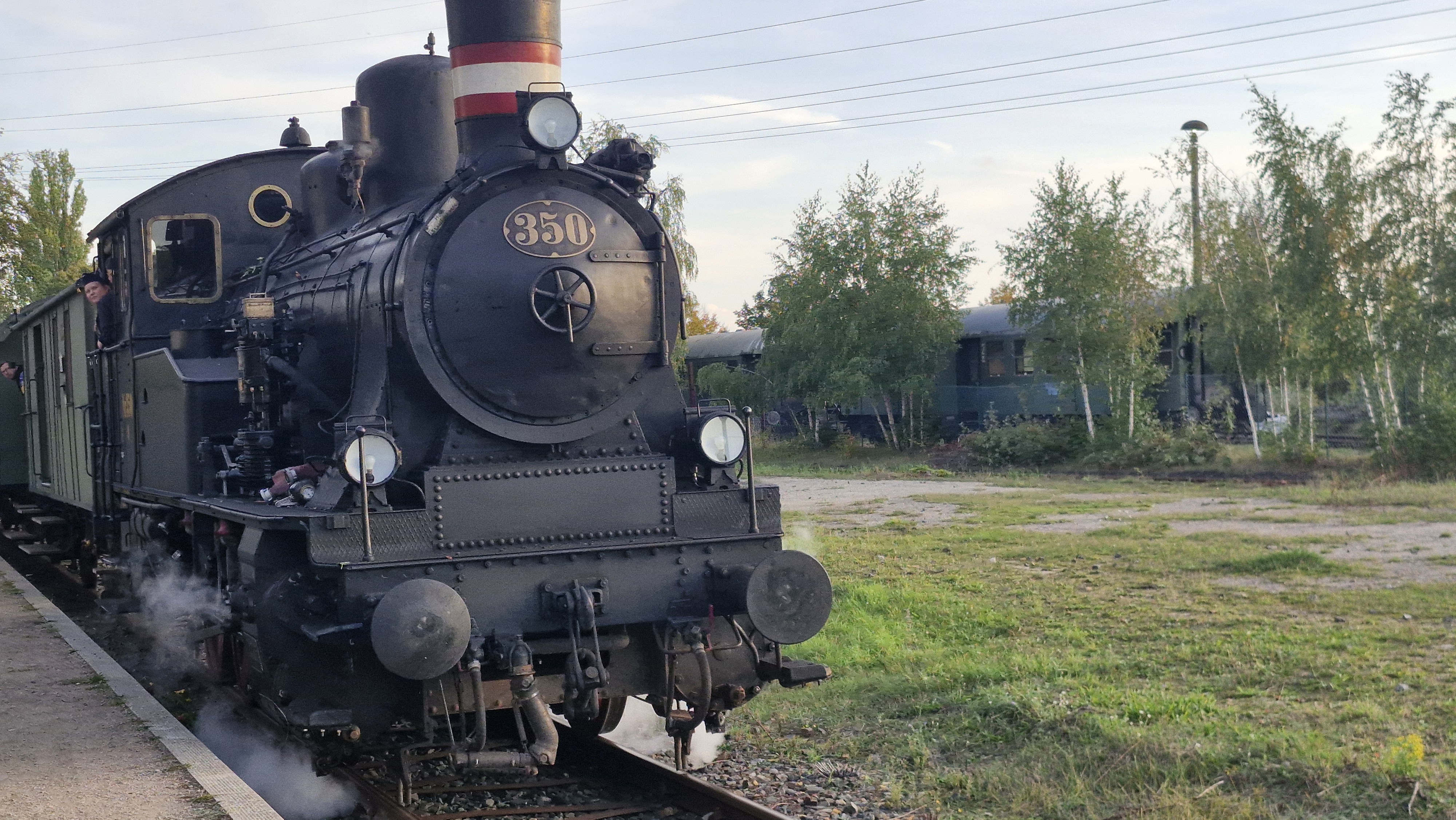
Steam locomotive 350 of the Geesthachter Eisenbahn, the museum railway that runs heritage trains between Geesthacht and Hamburg-Bergedorf.
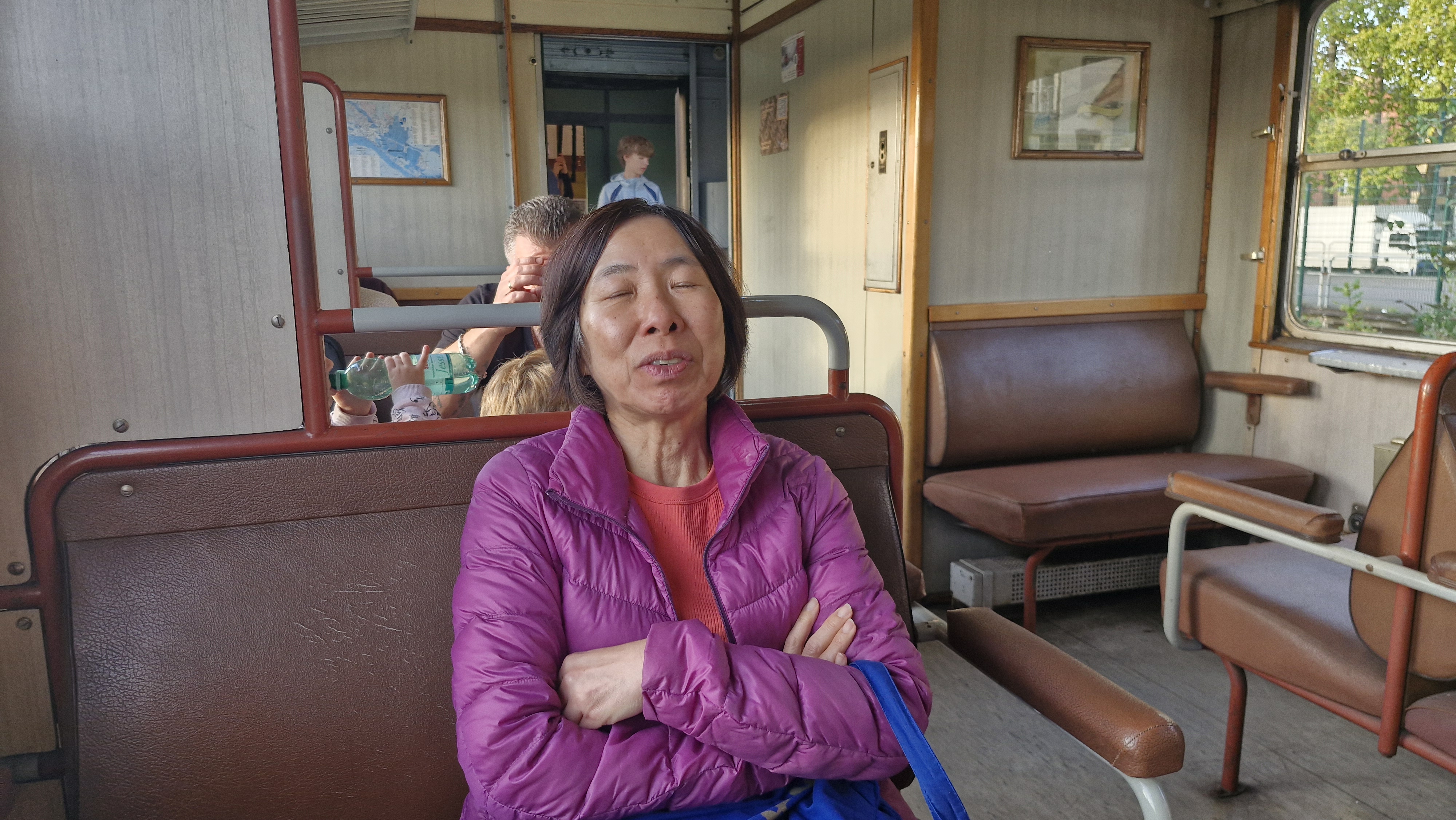
Choy settles into a wood-panelled carriage on the Geesthachter Eisenbahn, ready for the steam ride.
Hamburg (Sunday-Thursday, October 4-8, 2026)
The end of the road - Hamburg, where the Elbe meets the sea. We spent our last few days exploring the city on foot, from the warehouses of the Speicherstadt to the tunnel under the Elbe.
The final leg along the Elbe brought us into Hamburg, Germany's great port city and the end of our ride along the river from Prague.
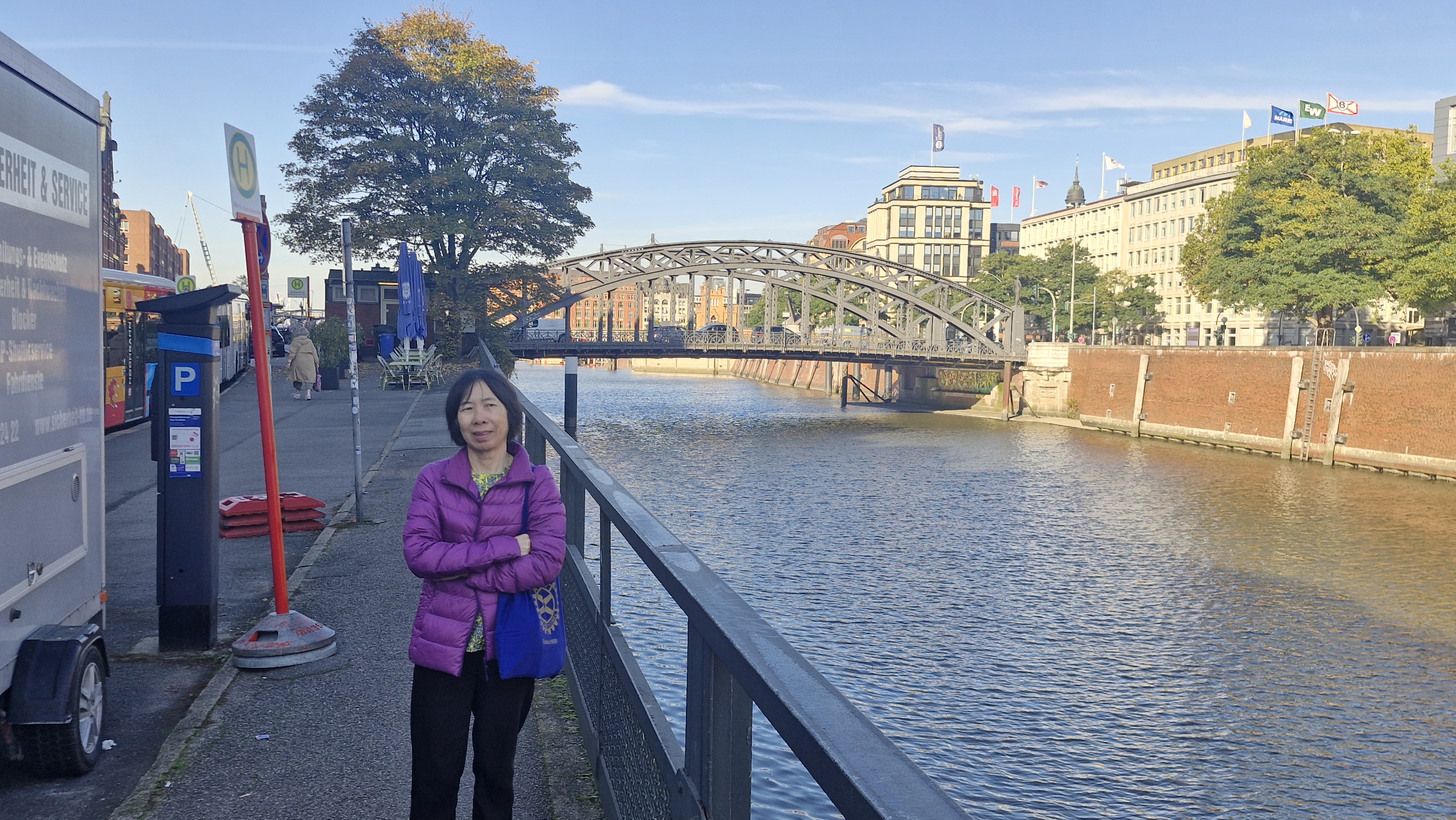
Choy beside one of the canals on the edge of the Speicherstadt, Hamburg's red-brick warehouse district, with an old iron bridge arching across the water behind her.
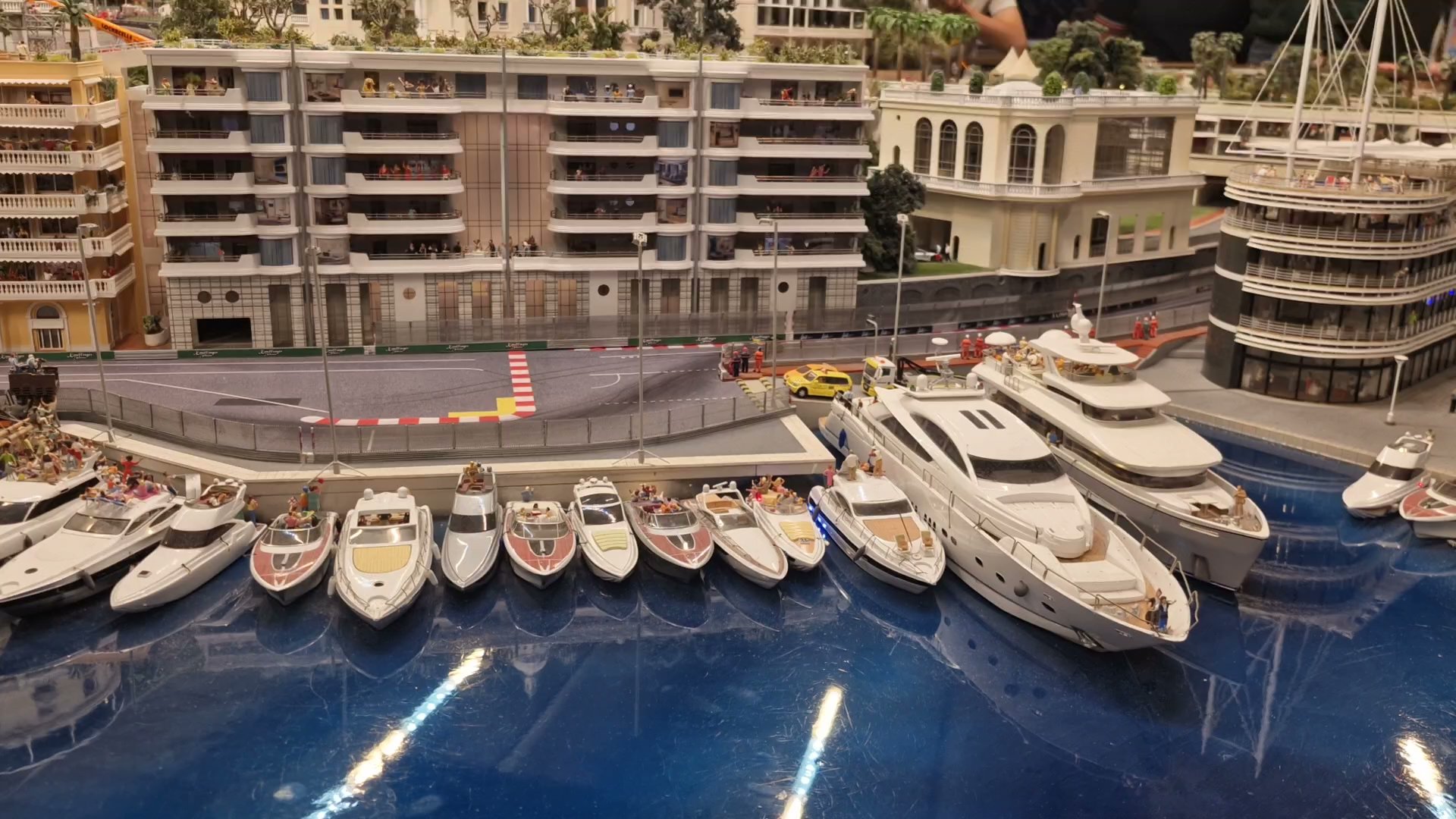
Miniatur Wunderland's Monaco section, complete with yachts in the harbour and the Grand Prix circuit running along the waterfront.
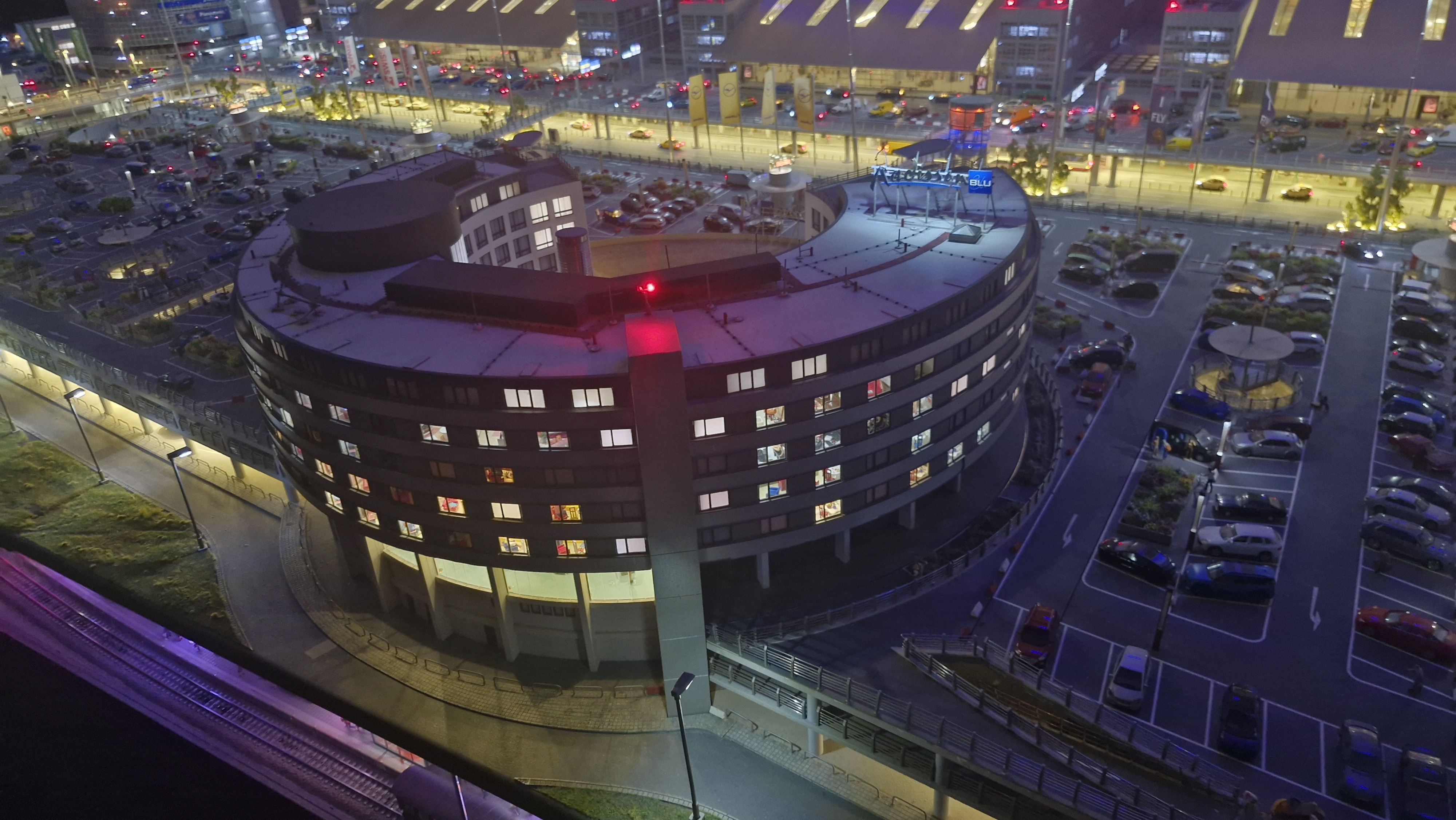
In the Speicherstadt, Miniatur Wunderland is the world's largest model railway - this is part of its model airport, complete with parked cars, a working hotel and planes that actually take off.
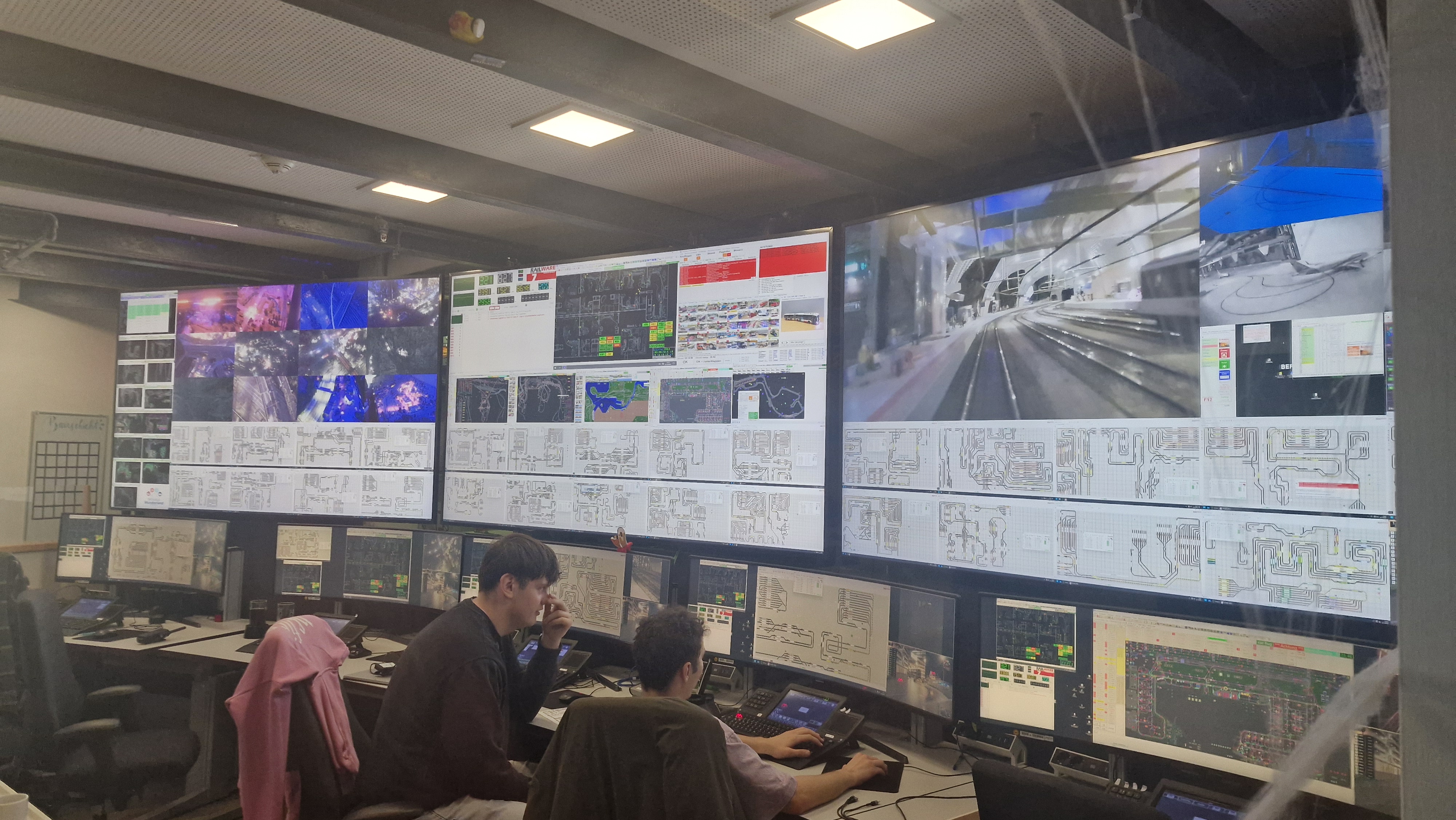
The control room at Miniatur Wunderland, where the staff keep watch over hundreds of trains, cars and planes across the layout - a glimpse most visitors never get.
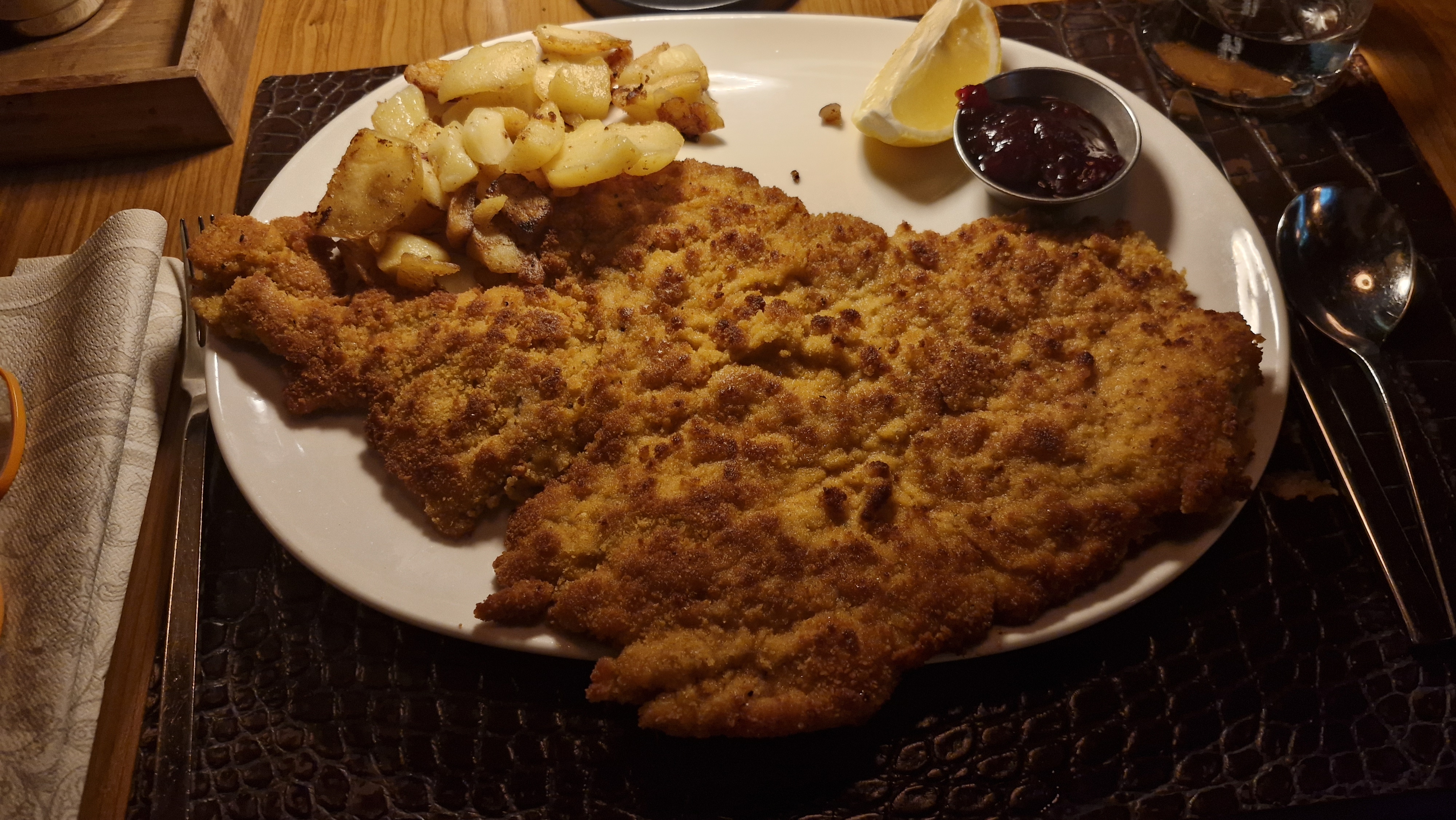
Fuelling up before the concert with a schnitzel that hung over both sides of the plate, served with fried potatoes and lingonberry.
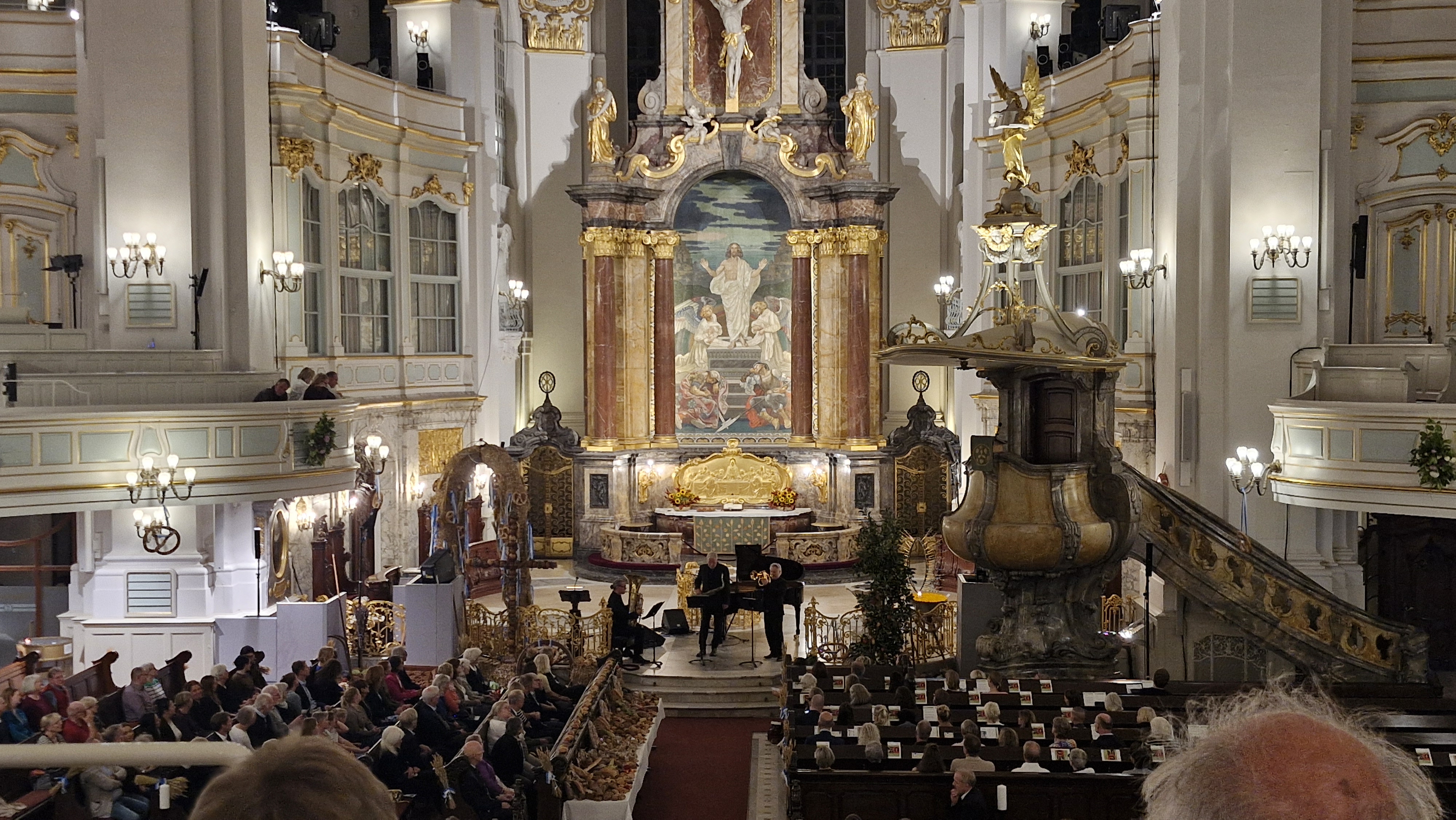
Inside St. Michaelis - 'the Michel' - Hamburg's landmark baroque church, where we went to an evening concert.
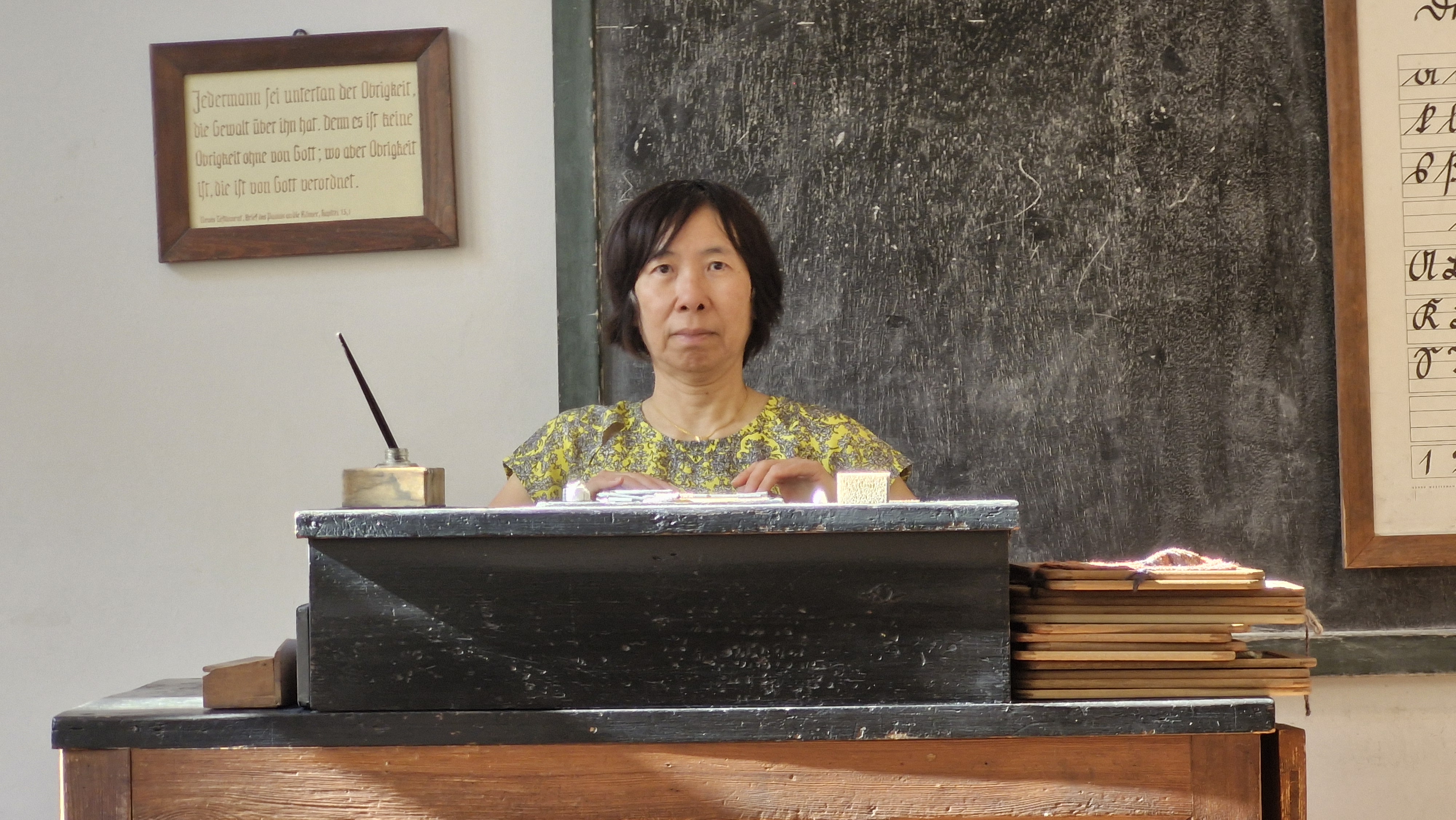
Choy takes the teacher's seat in an old classroom at the Hamburg School Museum in St. Pauli, complete with blackboard, slates and copperplate alphabet.
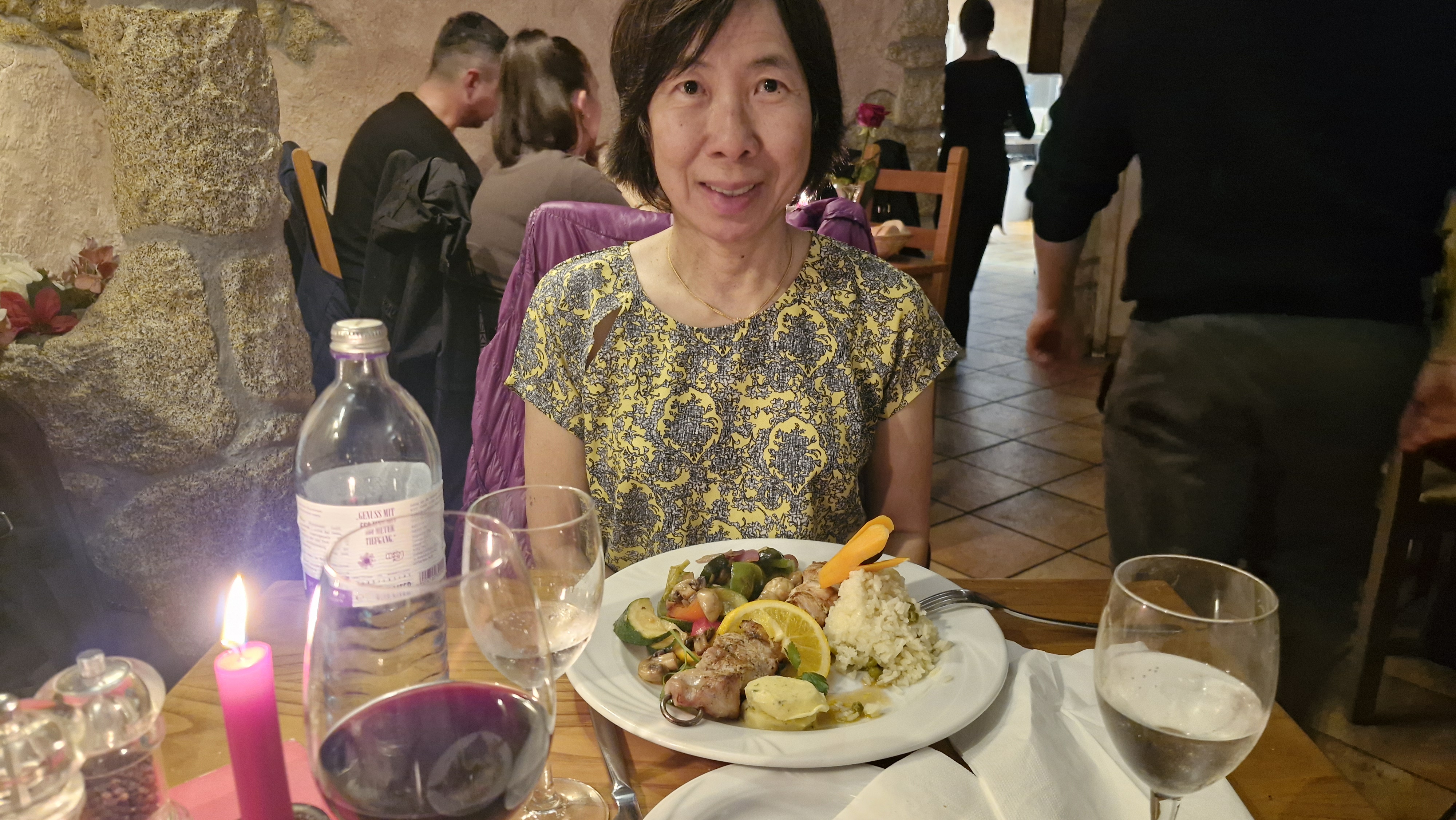
A relaxed dinner in Hamburg's Portuguese Quarter near the harbour, known for its many Portuguese and Mediterranean restaurants.
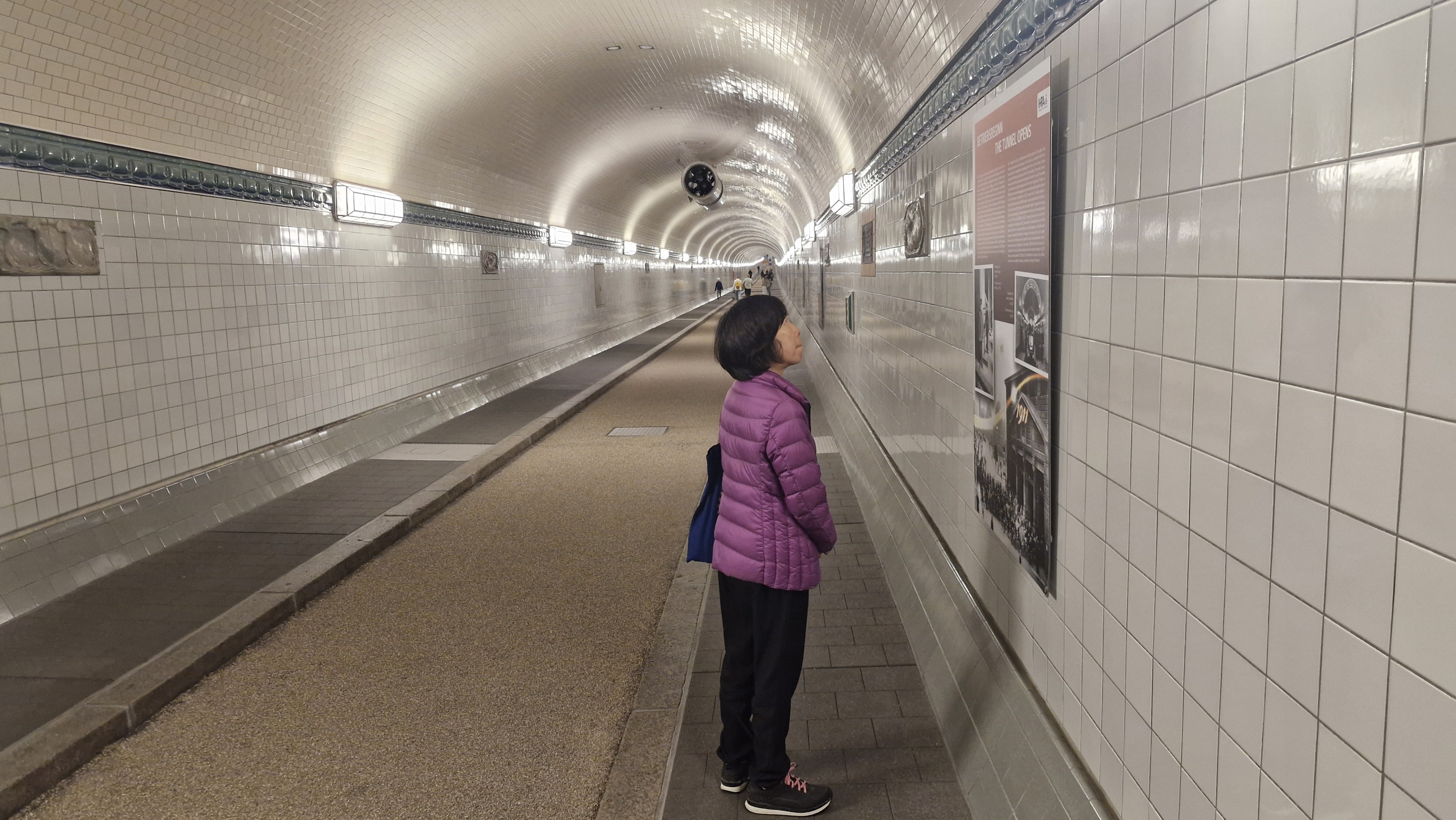
Walking under the river through the tiled St. Pauli Elbe Tunnel, opened in 1911 and still used by pedestrians and cyclists to cross to the docks on the other side.
Our final ride took us across the city to the Radisson Blu Hotel at Hamburg Airport, ready for the flight home. The route was excellent and it was easy to ride right up to the hotel - a great way to finish the trip.